



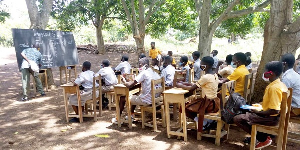
 The Ghana Education Trust Fund (Amendment) Bill will expand equal access to education
On Thursday, December 11, 2025, the Parliament of Ghana passed the Ghana Education Trust Fund (Amendment) Bill. This bill marks a major milestone in Ghana’s quest to expand equal access to education.
The amendment seeks to (i) ensure sustained financing for the Free Senior High School (Free SHS) programme, (ii) establish free tertiary education for persons with disabilities (PWDs), (iii) expand free education for learners with special educational needs, and (iv) permit the deductibility of the GETFund levy for tax purposes.
This review analyses the policy objectives, expected impacts, fiscal and administrative implications, and potential objections to the amendment. It concludes with recommendations to strengthen the effectiveness and sustainability of the reform.
Established in 2000, the Ghana Education Trust Fund (GETFund) was designed to provide additional funding for education, considering educational infrastructure, teaching and learning materials, scholarships, and research grants. Over the years, GETFund has become a core financing mechanism, especially for secondary and tertiary education.
The passage of the amendment comes at a time when: • Free SHS continues to face funding gaps, delayed disbursements, and a huge infrastructure pressure. • The national disability agenda is calling for stronger inclusion in tertiary education. • Special education services in Ghana remain underfunded, with limited trained personnel and inadequate learning materials. • Businesses have requested clarity on the deductibility of the GETFund levy, which has long created tax interpretation challenges.
The amendment, therefore, seeks to streamline the Fund and align it with emerging national priorities.
This amendment comes with some key pillars.
a. Financing for Free SHS
The amendment formally mandates GETFund to contribute to the funding of Free SHS. This policy is justified on the grounds that high school enrolment has increased significantly since 2017, straining the budget and depleting the achievement rate of the core policy objectives as a result of the pressure on facilities and the lack of other essential materials. And also, this policy will create a dedicated and protected financing line to ensure programme continuity.
b. Free Tertiary Education for Persons with Disabilities
GETFund will now support full financing of tertiary education for PWDs. This policy move responds to Ghana’s commitments under the Disability Act (2006) and UN Convention on the Rights of Persons with Disabilities, and also bridges the gap between the unequal access to education among minority groups, especially that of Persons with disabilities. Moreover, the policy will enhance the inclusion and economic participation of Persons with disabilities.
c. Free Education for Learners with Special Educational Needs
GETFund is empowered to support Special schools, Special needs teaching materials and Training of specialised educators. Only 1–2% of children with special needs receive adequate support, which deprives the greater percentage from participation. With that, the amendment solidifies the financing backbone for inclusive education in Ghana.
d. The amendment introduces tax relief on the GETFund Levy to reduce the overall tax burden on taxpayers. Businesses can now deduct the GETFund levy as an allowable tax expense. This will improve clarity and reduce business tax burdens, and equally ensure predictability in corporate taxation.
Potential Benefits of the Amendment
This amendment has the potential to strengthen and sustain education financing in Ghana. A clearly defined mandate for GETFund reduces dependency on irregular budget allocations and supports long-term planning.
Heighten Equity Education and Inclusiveness
The introduction of free tertiary education for PWDs and commitment to support the special needs of learners addresses long-standing educational disparities that hinder the access to education of most PWSs in Ghana.
And also, the policy is viable for improving the quality of education in Ghana. With more funds channelled to infrastructure, teaching materials, and specialised instruction, the amendment may improve effective learning and produce positive outcomes, particularly at the senior high school level.
Better Business Environment is another key feature of this amendment, on account that tax relief improves compliance, reduces litigation with GRA, and builds investor confidence.
e. Fiscal and Administrative Implications
Fiscal Burden
Increasing the financing mandate raises pressure on the Fund. Free SHS alone consumes a significant budget share; adding special needs and tertiary support could overstretch GETFund if revenue inflows do not also increase significantly.
Potential Crowding Out
The original functions of GETFund, such as infrastructure development and tertiary scholarships, could face reduced funding if Free SHS absorbs a large share of its funding.
Administrative Capacity
Managing new programmes, especially for PWD tertiary financing and special needs education, will require new operational frameworks, new disbursement criteria, monitoring and evaluation mechanisms, coordination with the Ministry of Education, GES, and disability institutions.
Tax Revenue Implications
Allowing tax relief may somewhat lessen short-term tax revenues, even though improved compliance could offset this loss.
Risks and Challenges associated with the amendment.
Inasmuch as the amendment has a lot of positive potential, it also comes with some risks and challenges.
Revenue unpredictability due to reliance on VAT-based collections could be a major challenge to the amendment, and also leakages and inefficiencies if monitoring systems remain weak
Additionally, possible politicisation of GETFund allocations, especially during election cycles and pressure from competing priorities, potentially reduces funding for tertiary infrastructure.
Inadequate data systems to identify PWDs and special needs learners accurately, and implementation delays if administrative capacity is not strengthened.
Policy Recommendations
For this policy to realise its full potential, strengthening transparency and reporting is a factor to consider.
Publishing annual GETFund allocation reports and creating an online dashboard for real-time disbursement tracking will boost the potential of the policy.
Restricts Funds for Special Education and PWD Tertiary Support Establishing a protected budget ceiling to prevent Free SHS from consuming all available funds.
It is pertinent to expand domestic revenue mobilisation; improve the account of VAT compliance mechanisms, and also explore earmarked education bonds for capital-intensive projects.
The amendment will build institutional capacity by training administrative officers on disability financing frameworks and partner with special schools and NGOs for programme implementation.
Strengthen Monitoring, Evaluation and Learning by conducting annual impact assessments alongside improving data collection systems across all education levels.
It is also recommended that there should be stakeholder engagement, which involves teacher unions, CSOs, disability groups, and local governments, to promote surveillance, oversight, and feedback concurrently.
In essence, the Ghana Education Trust Fund (Amendment) Bill represents an advanced policy shift toward equitable, inclusive, and sustainable education financing. By supporting Free SHS, expanding access for persons with disabilities, and strengthening special needs education, the bill amendment aligns with Sustainable Development Goals 4 and 10, which talk about quality education and reducing inequality, respectively.
The amendment further has the potential to substantially improve Ghana’s human capital development. However, its success will emphasise strong reliance on effective implementation, robust fiscal management, and transparent governance. Ensuring these safeguards will be essential to maximising the amendment’s long-term impact on Ghana’s education system.

Copyright © 1994 - 2026 GhanaWeb. All rights reserved.










