



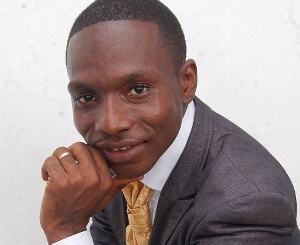
 The author, Isaac Ofori is a Social Activist and Human Rights Advocate
Ghana’s democracy is often described as maturing.
Yet, this maturity is increasingly disconnected from the everyday realities of citizens.
What has emerged is a cyclical democratic order that appears to serve a narrow political class and its affiliates rather than advancing a shared national vision of development, equity, and integrity.
For many Ghanaians, the promise of a society grounded in accountability and free from corruption remains distant.
The two dominant political parties of the Fourth Republic have perfected the art of justifying misconduct while in office.
At the same time, opposition politics has been reduced mainly to one objective: regaining power.
The more profound concern, however, lies beyond these parties. It rests with the institutions that ought to restrain them.
Civil society organisations, once central to democratic accountability, have seen their credibility steadily erode.
Many individuals who claim neutrality are, in practice, deeply embedded partisan actors.
CSOs that should provide independent oversight and advocate for good governance have increasingly functioned as extensions of political machinery.
Their public posture often shifts depending on which party they align with, and some have gone so far as to openly defend governments even in moments of apparent failure.
The result is a weakened system of checks and balances, in which institutional vigilance is compromised by political loyalty and personal ambition.
The media, too, has drifted from its constitutional role as the fourth estate. Rather than serving as a fearless watchdog, much of the media landscape has become entangled in partisan interests.
Prominent journalists now rely on political patronage, and media ownership is closely tied to political power.
This alignment has hollowed out the media’s moral authority.
Instead of interrogating power, media platforms increasingly defend the ruling government or amplify opposition narratives.
The ordinary Ghanaian is left without an independent voice, watching as truth is filtered through fear, convenience, or financial gain.
Other influential bodies have not been spared.
The Christian Council of Ghana, the Catholic Bishops’ Conference, and similar civic or faith-based organisations appear to have lost their moral voice in national discourse.
Whether through overt politicisation or quiet self-interest, their engagement in governance has weakened.
Ghana’s universities and higher institutions, which should be engines of critical thought and public reasoning, have similarly fallen short.
Academic voices are muted, often constrained by political alignment or institutional caution, leaving national debates impoverished of evidence-based critique.
At the core of this democratic erosion is unchecked self-interest.
The recent GOLDBOD controversy, involving losses exceeding $200 million, is not merely a financial scandal.
It is a stark illustration of institutional decay.
It reveals how weakened democratic actors have become and how easily political leaders can rationalise grave missteps under the guise of national interest.
The issue is not only the loss itself but what it represents: a democracy suffocated by selective silence, convenient justifications, and competing interests focused on survival rather than national progress.
This moment demands urgent reflection.
Ghana’s democracy is not failing because of elections or constitutional form, but because the institutions meant to protect it have traded principle for proximity to power.
Without a deliberate recommitment to independence, integrity, and public accountability, democratic maturity will remain an illusion, and its cost will continue to be borne by the very citizens it was meant to serve.

Copyright © 1994 - 2026 GhanaWeb. All rights reserved.










