



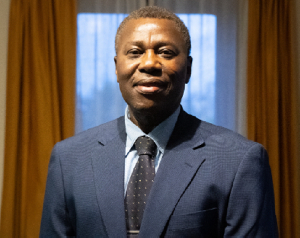
 Isaac Yaw Asiedu is the author of this article
Across Ghana today, many citizens are becoming emotionally exhausted by politics. Election after election, Ghanaians are presented with beautiful slogans, emotional speeches, manifesto promises, sector committees, policy blueprints, and endless declarations that “this time things will be different.” Yet the everyday realities confronting ordinary citizens remain painfully unchanged.
The recent GhanaWeb article celebrating the NPP’s newly launched sector committees is another example of the political performance culture that has trapped Ghana for decades. Ghanaians have heard these promises before. Different names. Different committees. Different campaign language. But the same national suffering continues.
The painful truth is that Ghana does not suffer from a shortage of political committees. Ghana suffers from a shortage of honest leadership, institutional discipline, accountability, patriotism, and national sincerity.
For years, both major political parties have mastered the art of saying exactly what citizens want to hear during opposition, only to reproduce similar failures once they enter government. The NDC criticizes corruption and economic hardship while in opposition, but struggles with accountability when in power. The NPP speaks about transformation, digitization, industrialization, and jobs, but ordinary citizens continue battling unemployment, rising living costs, unreliable public services, and declining trust in governance.
The tragedy is not only the failures themselves. The tragedy is that many citizens continue to emotionally invest in these political cycles as though salvation will suddenly emerge from the same structures that have repeatedly disappointed the nation.
How many committees has Ghana formed since independence?
How many manifestos have been launched?
How many “bold visions” have been announced?
How many “economic recovery plans” have citizens heard?
Yet the ordinary Ghanaian still wakes up uncertain about healthcare, jobs, electricity, education quality, corruption, and the future of their children.
This is why many citizens are beginning to see modern Ghanaian politics as a sophisticated system of emotional manipulation rather than genuine national transformation.
Political parties now understand that public memory is short. Every four years, they redesign language, create fresh slogans, restructure campaign narratives, introduce committees and advisory teams, and present themselves as if they were never part of the very failures they now condemn.
But serious nations do not develop through permanent campaigning.
No committee can solve Ghana’s problems if the political culture itself remains dishonest.
The article claims that the committees address “every pain point Ghanaians face.” But Ghanaians no longer need politicians to identify their pain. Citizens live that pain every day. They experience it in hospitals without medicine, schools without quality outcomes, communities flooded by poor planning, collapsing sanitation systems, rising youth frustration, corruption scandals, selective accountability, and endless political blame games.
The issue is no longer diagnosis. The issue is political sincerity.
What makes the situation even more dangerous is the growing normalization of deception in Ghanaian politics. Politicians make promises they know may never materialize. They speak emotionally about patriotism while political polarization destroys national unity. They criticize corruption while protecting politically connected individuals. They demand sacrifice from citizens while political elites continue enjoying privileges disconnected from ordinary national suffering.
Over time, this destroys the moral foundation of democracy itself.
Democracy survives on trust. Once citizens begin believing that elections merely recycle elite interests under different party colors, democracy starts weakening psychologically. People may still vote, but internally many lose faith that politics can genuinely improve national life.
That is a dangerous place for any country to reach.
The saddest part is watching ordinary citizens defend political parties with extraordinary emotional intensity while receiving very little in return. Ghanaians insult one another online, fight over party colors, destroy friendships, and divide families over politicians who often collaborate comfortably behind closed doors once elections are over.
Meanwhile, the ordinary citizen remains trapped in economic uncertainty.
The problem is not that Ghana lacks intelligent people. Ghana is filled with talented, hardworking, and creative citizens. The problem is that politics has become too disconnected from national morality and accountability.
What Ghana needs today is not another wave of political excitement. Ghana needs political seriousness.
The nation must begin demanding measurable outcomes instead of emotional speeches. Citizens must stop rewarding propaganda and begin rewarding integrity, competence, transparency, and accountability. Political loyalty should never become blindness.
Ghanaians must also stop normalizing failure simply because it comes from their preferred political party. Wrongdoing does not become acceptable because it is committed by “our people.” Corruption does not become patriotic because it benefits one’s political side.
A nation cannot progress when truth becomes partisan.
The continuous cycle of promises without transformation is creating deep psychological frustration among the youth. Many young people no longer believe hard work alone guarantees success. Some increasingly believe political connection matters more than competence, innovation, sacrifice, or honesty. This perception is extremely dangerous for national development because once citizens lose faith in fairness, patriotism begins collapsing.
Countries develop when citizens trust institutions, believe sacrifices matter, and feel leadership is serious about national progress beyond elections.
Ghana’s political class must therefore understand something very important: citizens are no longer impressed by committees, slogans, launches, conferences, or public relations language.
Ghanaians are waiting for evidence.
Evidence of accountability.
Evidence of discipline.
Evidence of fairness.
Evidence of competent governance.
Evidence that national interest matters more than party survival.
Until then, many political announcements will increasingly sound like recycled performances in a democracy struggling to maintain public trust.
Ghana deserves better than endless political storytelling.
The nation deserves leadership that fears history, respects citizens, protects public trust, and places Ghana above party interests.
Because without truth and accountability, democracy itself becomes another campaign slogan.
This reflection builds on concerns previously raised regarding public trust, accountability, and governance in Ghana.

Copyright © 1994 - 2026 GhanaWeb. All rights reserved.










