



 Esthy Ama Asante is the writer
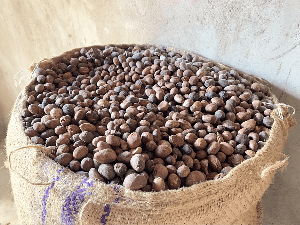
Ghana forfeits immense value each year by exporting raw shea kernels instead of processing them domestically. Over 90,000 metric tons of raw shea nuts, worth approximately US$90 million, leave our borders annually.
This represents not only a direct loss of billions in potential value-added earnings but also a weakening of our local processors, who are forced to compete against foreign refiners with deeper pockets and stronger global networks.
The situation is compounded by the steady rise in shea nut prices — from US$2.45 per kilogram in 2018 to over US$3.05 in 2022, an increase of more than 25 percent in just eight years.
For Ghanaian processors, this translates into higher input costs and shrinking margins, while foreign companies continue to profit from our raw heritage.
Other West African nations have already acted decisively.
Burkina Faso and Nigeria banned raw shea nut exports, ensuring that value addition takes place within their borders.
Their processors are thriving, women-led cooperatives are empowered, and their economies are capturing the full benefits of their harvests. Ghana, by contrast, remains entangled in bureaucracy.
The government has announced a phased ban, citing the need to rehabilitate the Buipe Shea Processing Factory to handle 60,000 tons annually, eventually scaling to 180,000 tons.
Officials argue that this gradual approach will prevent market disruption and ensure local processors are ready to absorb the raw nut supply. Yet these justifications, while pragmatic on paper, fail to address the urgency of the crisis.
Every delay strengthens foreign dominance and weakens Ghanaian producers.
The path forward requires more than promises of capacity-building.
Ghana must establish systems that validate and elevate the quality of our shea butter.
The Ghana Standards Authority should be mandated to certify shea butter produced locally as organic, ensuring compliance with international benchmarks and unlocking premium markets.
Beyond certification, Ghana must recognize shea nuts as part of our cultural and ecological heritage.
Just as Morocco successfully secured UNESCO protection for the argan seed, Ghana should pursue similar recognition for shea.
Such a designation would not only safeguard the resource but also affirm its rightful ownership by the communities who harvest and process it.
The frustration of local producers is palpable. They see livelihoods eroded by lobbying from foreign associations, cloaked in the language of “market convenience.”
They know that every shea kernel exported is a job lost, a cooperative weakened, a processor pushed closer to collapse.
This is not merely an economic issue; it is a moral one. Allowing foreign interests to dictate the destiny of our God-given resources is exploitative, unethical, and unsustainable.
Ghana stands at a crossroads. The government’s phased approach may appear cautious, but caution in this case is costly.
The systems to support immediate enforcement can and must be accelerated. Certification, heritage protection, and investment in local processing are not distant goals — they are urgent necessities.
As Esthy Ama Asante, Founder and CEO of Organic Trade & Investments, stated:
“Ghana has always stood at the forefront of history; the first sub‑Saharan African nation to gain independence in 1957, the home of the AfCFTA Secretariat, and today the leader of the global reparations campaign for the Transatlantic slave trade.
We are a nation blessed with extraordinary talent and abundant natural resources. It is therefore imperative that the Government of Ghana, as custodian and protector of our national heritage, rise above negotiations that serve foreign organizations with no local interest at heart.
Our responsibility is to thrive alongside nations that believe in Ghana’s promise, not to play double standards that weaken our people.
Protecting shea is about more than economics; it is about creating generational wealth, keeping our youth at home with pride and opportunity, and ensuring that every Ghanaian feels valued and appreciated. Leadership means acting now, with integrity, to safeguard what is ours and to secure a future worthy of our history.”

Copyright © 1994 - 2026 GhanaWeb. All rights reserved.










