



 Confidence Tsikudo is the author of this article
The traditional office cubicle, once the face of modern work, is slowly giving way to a new order: remote work. The shift, accelerated by the COVID-19 pandemic, is reshaping jobs across the globe, including in Ghana’s rural communities.
A Shift Beyond the Pandemic
When the pandemic forced businesses to shut down offices, millions of workers had no choice but to operate from home. What began as an emergency measure has now become a permanent feature for many organisations.
Companies have discovered that employees can remain productive without being physically present, while workers enjoy flexibility, reduced commuting stress, and more time with family.
Opportunity for Rural Communities
For communities like Warawobeba in the Western Region, remote work presents a unique opportunity. Traditionally, young people in such areas migrate to urban centres like Accra and Kumasi in search of jobs, often leaving rural communities with limited manpower.
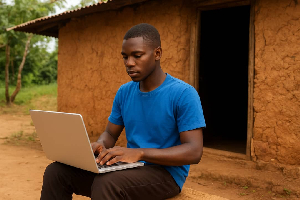
Remote work, however, can change that narrative. With a laptop and reliable internet, a graduate in Warawobeba can now work for a technology company in Europe or America while living in their hometown. This keeps talent in the community and channels income into local economies.
“I never imagined I could stay in Warawobeba and still work for an international organisation,” said Kwame Mensah, a recent graduate who now works remotely as a graphic designer. “It means I don’t have to leave my family behind to chase jobs in Accra.”
The New Demands of Work
However, the shift to remote work comes with fresh demands. Employers are now prioritising soft skills such as time management, discipline, and digital literacy. Workers must also be comfortable with tools such as Zoom, Slack, and Microsoft Teams.
“Remote work is not just about having a laptop,” explained career coach Abena Owusu. “It requires discipline, the right skills, and most importantly, strong internet connectivity. Without these, rural youth will struggle to compete.”
At the same time, access to reliable electricity and stable internet remains a challenge in some parts of Ghana. Without such infrastructure, rural communities may struggle to fully benefit from the opportunities remote work provides.
What Lies Ahead
Experts predict that the future of work will not be entirely remote, nor will it fully return to the traditional office setting. Instead, a hybrid system, where employees split their time between home and the office, is expected to dominate.
A Changing World of Work
The office cubicle may not disappear completely, but its dominance is waning. Remote work is opening doors for communities once considered cut off from global opportunities. For places like Warawobeba, this could mean reduced rural-urban migration and more young people staying to contribute to local development.
The world of work is changing, and this time, it is happening right from the comfort of home.
By: Confidence Tsikudo - student at the University of Education, Winneba (Department of Journalism and Media Studies)
GhanaWeb's latest documentary, Sex for Fish, that explores the plights of teenage girls in coastal communities, all in an attempt to survive, is out. Watch it below:

Copyright © 1994 - 2026 GhanaWeb. All rights reserved.










