



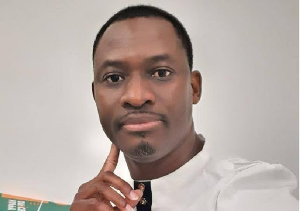
 Dr John-Baptist Naah
The replacement of Mahama Ayariga with James Agalga as Majority Leader of Ghana’s 9th Parliament came as something of a surprise to me. However, following President John Dramani Mahama’s decision to move Ayariga to the Ministry of Local Government, Chieftaincy and Religious Affairs, there was naturally the need for a new Majority Leader.
The experienced Member of Parliament for Builsa North and former Deputy Minister for the Interior is a good replacement. He is no stranger to Parliament, government, or the rough and tumble of Ghanaian politics.
As James Agalga is still settling into the role as the Majority Leader, he has demonstrated firmness, composure and political dexterity required to manage government business in a Parliament where the NPP Minority, despite its considerably smaller numbers, has remained extremely vocal and determined to make its presence felt. Agalga’s Interview with Joy News, Evans Mensah, confirmed my assessment above.
As he assumes this important responsibility as Majority Leader and Leader of Government Business, I wish him well. I also have some open advice for him. The task before him is not simply about managing parliamentary numbers.
It is about ensuring that the overwhelming mandate Ghanaians gave the NDC in 2024 is translated into effective parliamentary action that supports President Mahama’s Resetting Agenda.
1. Never forget why Ghanaians gave the NDC this absolute Majority
The first point Hon. Agalga must constantly remember is that the commanding NDC Majority in Parliament did not fall from the sky. It came directly from the verdict of Ghanaian voters in the 2024 general elections. Ghanaians decisively rejected the previous political order and handed President Mahama and the NDC a historic opportunity to govern, reset the country and deliver a different direction.
That mandate must therefore be protected and used responsibly. Ghanaians expect Parliament to pass good laws, scrutinise public expenditure, strengthen institutions and facilitate policies capable of addressing the country’s economic, social, environmental and political challenges.
An absolute Majority cannot behave as though it is operating in a hung Parliament. Neither should it become timid in exercising the mandate entrusted to it. The numbers must be translated into parliamentary results that support the broader national Resetting Agenda.
2. Ghana must learn from the difficult experience of the 8th Parliament The closely divided 8th Parliament produced some memorable democratic moments, but it was also characterised by confrontation, procedural disputes and unfortunate incidents that did Parliament and the country little service.
The near equal numerical strength of the two major political parties understandably made parliamentary business difficult on several occasions. The 2024 electoral verdict changed that situation dramatically.
Ghanaians gave the NDC a decisive parliamentary Majority, and this should allow the 9th Parliament to function with greater stability, direction and effectiveness.
The lesson from the 8th Parliament should therefore be clear. Disagreement is part of democracy, but disagreement should not be allowed to produce permanent dysfunction. The current Majority must learn from that experience and ensure that Parliament does not return to unnecessary paralysis when the electorate has already provided a clear mandate for governance.
3. Consensus is important, but Parliament must not be held hostage Consensus building is important in Parliament and in national development generally. The Majority should listen when the Minority raises legitimate concerns, proposes useful amendments or presents superior arguments. That is how parliamentary democracy should work.
However, consensus building must not become an excuse for allowing a small Minority to unnecessarily delay or frustrate the business of Parliament. The NPP Minority under Hon. Alexander Afenyo-Markin has demonstrated that it intends to be loud, combative and assertive in the House. That is its democratic right, but the Majority Leader must be able to distinguish between legitimate parliamentary scrutiny and political obstruction.
Ghanaians did not elect Members of Parliament to spend endless hours watching political theatre while important national business remains unattended to. Debate must take place, scrutiny must take place and alternative views must be heard, but Parliament must eventually take decisions.
Agalga must therefore be firm. The Majority should pursue consensus where consensus advances the national interest, but it should never surrender its responsibility to lead Parliament simply because the Minority is loud.
4. The “Mighty Minority” must not drown the voice of the Majority The NPP Minority has described itself as a “Mighty Minority”. Political slogans are part of democratic politics, and the Minority is entitled to project itself in whatever legitimate way it considers politically useful.
However, slogans must not change political reality. The reality is that Ghanaians spoke decisively in 2024. They gave the NDC an overwhelming parliamentary Majority and returned President Mahama to office with a mandate to govern and reset the country. A Minority, no matter how vocal it becomes, must not be allowed to rewrite that democratic verdict.
This is where I expect Hon. Agalga to demonstrate firmness. The voice of the Majority should not be drowned by the noise of what I would describe as a micro-Minority simply because its Members shout louder, prolong proceedings or dominate public commentary surrounding parliamentary activities.
The appropriate response is not intimidation of the Minority. Rather, it is a confident, disciplined and intellectually prepared Majority that knows why it is in Parliament and understands the mandate behind its numbers.
When the Minority makes a compelling argument, the Majority should listen. When it raises legitimate concerns, those concerns should be addressed. But where political theatrics, unnecessary obstruction or deliberate delay threaten the work of the House, the Majority Leader must respond firmly and move parliamentary business forward. This was one quality I appreciated under Hon. Mahama Ayariga, particularly during some difficult ministerial vetting sessions. He demonstrated that parliamentary scrutiny could take place without allowing proceedings to become endless. Agalga should continue that firmness.
5. Turn the strength of the Majority into parliamentary results Ultimately, Hon. Agalga will not be remembered simply for how effectively he responds to Hon. Afenyo-Markin or how many parliamentary exchanges the Majority wins. He will be judged by what the Majority he leads helps Parliament accomplish for Ghana.
The NDC Members must therefore remain organised, disciplined, knowledgeable and present when important parliamentary business is conducted. Numerical strength should never become an excuse for complacency. Indeed, the greater the Majority, the greater the responsibility to demonstrate seriousness.
Bills must be properly scrutinised. Government policies must be competently defended. Committees must function effectively. Members must prepare adequately for debates and ensure that Parliament contributes meaningfully to national development.
Most importantly, the parliamentary Majority must help translate the Resetting Agenda into concrete legislation and public policy. Ghana requires an economic reset that creates opportunities and restores confidence. We require a social reset that strengthens education, healthcare and social protection. We urgently need an environmental reset that tackles illegal mining, environmental destruction and other threats to our natural resources. We equally require a political and governance reset that strengthens accountability, public institutions and trust in leadership.
That is where the strength of this Majority must ultimately be felt. Conclusion: An Absolute Majority Must Deliver Absolute Results Hon. James Agalga assumes the position of Majority Leader at an important moment in Ghana’s democratic journey. He inherits not only parliamentary numbers, but also the weight of an extraordinary political mandate given to the NDC by Ghanaians in 2024.
The Minority must perform its constitutional role, scrutinise government, question policies and expose weaknesses where necessary. But the Majority must equally perform the role for which Ghanaians elected it. It cannot allow itself to be politically intimidated, procedurally paralysed or rhetorically drowned by a micro-Minority describing itself as a “Mighty Minority”.
The democratic verdict of 2024 must remain unmistakable inside Parliament. Ghanaians chose President Mahama and the NDC to govern. They chose them to reset a country facing serious economic, social, environmental and political challenges. Parliament must therefore become one of the principal engines through which that mandate is delivered.
My open advice to Hon. Agalga is consequently straightforward: be firm, protect the mandate, build consensus where necessary, resist needless obstruction, keep the Majority disciplined and convert its overwhelming numerical strength into overwhelming parliamentary results.
A “Mighty Minority” may make plenty of noise, but it must never be permitted to drown the voice of the absolute Majority elected by the Ghanaian people or change the national narrative arising from the 2024 verdict. The NDC has the numbers. It has the mandate. It has the opportunity. What Ghanaians now expect are the results.

Copyright © 1994 - 2026 GhanaWeb. All rights reserved.










