



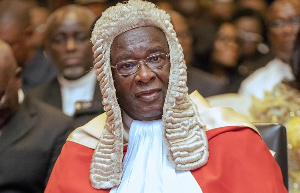
 Paul Baffoe-Bonnie is the Chief Justice of Ghana
Your Lordship,
Please accept my warmest congratulations on your well-deserved appointment as Chief Justice of the Republic of Ghana. Your elevation reflects not only your distinguished judicial service but also the nation’s confidence in your capacity to lead a transformative era for the administration of justice.
At this defining moment in Ghana’s legal evolution, the criminal justice system stands at a crossroads—burdened by delays, overwhelmed dockets, and structural bottlenecks.
As someone who has served within both the Ghanaian and the England and Wales systems, I respectfully write to offer actionable reflections informed by the model used in England and Wales—particularly its structured approach to case management, custody time limits, and prosecutorial coordination.
1. Constitutional and Legal Imperatives for Reform
Ghana’s 1992 Constitution is clear:
• Article 14(3): An arrested person must be brought before a court within 48 hours.
• Article 14(4): If a person is not tried within a reasonable time, they must be released on conditions or unconditionally.
• Article 19(1): Everyone is entitled to a fair and expeditious trial.
Despite these protections, the reality remains stark—delays are widespread, remand prisoners are held for excessive periods, and case progression is inconsistent across jurisdictions.
2. Lessons from England & Wales: A Functional Template
Having worked in the England and Wales system as a Senior Crown Advocate, I have witnessed first-hand how procedural structure, statutory limits, and prosecutorial discipline significantly enhance speed and fairness.
Key strengths include:
(i) Statutory Custody Time Limits (CTLs)
A legally enforced timeframe within which a criminal trial must commence, backed by judicial oversight.
(ii) Robust Criminal Procedure Rules
Judges actively manage cases, set deadlines, enforce disclosure, limit adjournments, and ensure readiness for trial.
(iii) Blended Prosecution Model
Public agencies can instruct independent barristers to prosecute, enabling flexibility and reducing bottlenecks.
(iv) Digital Case Systems
Paperless processes, digital evidence, and virtual hearings improve efficiency.
These principles can be adapted to Ghana’s legal culture without undermining its unique constitutional values.
3. Introducing Statutory Custody Time Limits in Ghana
Ghana currently lacks a statutory framework that imposes maximum pre-trial detention periods. As a result, persons may remain on remand for months or years without meaningful court action.
Proposal
Enact a Custody Time Limits Act inspired by England and Wales:
• 60 days for summary offences
• 120 days for indictable offences
• 180 days for the most serious cases
Extensions should only be granted where the prosecution demonstrates due diligence and expedition—not mere administrative delay.
This will give practical effect to Article 14(4) and substantially reduce prison overcrowding.
4. Strengthening Prosecutorial Capacity and Reducing Case Backlog
Current Problem
• Police prosecutors often lack legal training.
• State Attorneys are insufficient in number to handle the national caseload.
• Complex cases suffer extensive delays.
England & Wales Model
The Attorney General (via CPS) may brief independent barristers.
Proposal for Ghana
Permit the Attorney-General to formally brief qualified private practitioners, ensuring:
• Increased advocacy capacity
• Faster progression of cases
• Specialised handling of complex matters
• A more balanced workload across regions
This would mirror the referral-Bar model that has stabilised prosecution capacity in England and Wales for decades.
5. Fast-Track Criminal Case Management Rules
Ghana’s courts can benefit from a more assertive judicial case-management regime.
Recommendations
• Mandatory case management hearings within 30 days of charge
• Strict oversight of disclosure timelines
• Limits on adjournments (with written reasons required)
• Fast-track courts for sexual offences, corruption, robbery, and long-pending remand cases
These reforms empower judges to control the pace of litigation rather than allowing cases to drift.
6. Digital Transformation of Criminal Procedure
To eliminate logistical delays:
• Expand the e-Justice system across all regions
• Adopt a national Criminal Case Tracking System
• Encourage virtual hearings for remand renewals and preliminary matters
• Implement digital disclosure and evidence platforms
This modernisation mirrors the UK’s Digital Case System, which has revolutionised efficiency and document integrity.
7. Enhancing Police-Prosecution Collaboration
Early engagement between investigators and prosecutors should be institutionalised.
Recommendations
• Embed State Attorneys within investigative units
• Mandatory pre-charge advice for complex or serious matters
• Training programmes to upgrade police prosecutors into fully qualified legal officers
This reduces weak charges, aborted trials, and prolonged remand periods.
8. Conclusion
Your Lordship, the reforms outlined here—rooted in constitutional necessity, informed by comparative experience, and tailored to Ghana’s context—offer a credible roadmap for improving speed, fairness, and efficiency in criminal justice.
Your leadership presents an unprecedented opportunity to reshape the architecture of criminal justice delivery. With strategic legislative reform, digitalisation, enhanced prosecutorial capacity, and assertive case management, Ghana can achieve a system that truly reflects the ideals of justice our Constitution demands.
I once again extend my heartfelt congratulations and express my confidence in your ability to lead this transformative journey.

Copyright © 1994 - 2026 GhanaWeb. All rights reserved.










