



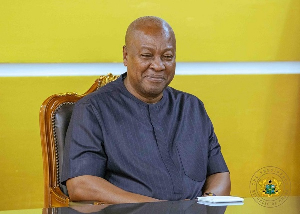
 President Mahama pushes reforms on economy, jobs, and governance
Since returning to office in January 2025, President John Dramani Mahama has moved with speed and focus on his “Resetting Ghana” agenda, delivering measurable gains across the economy, education, social services, governance, and infrastructure.
In the last 15 months, the president has demonstrated his determination to reset Ghana to the better Ghana we all want.
Economic Stabilisation and Growth:
Tax relief and cost of living: The 2025 budget scrapped the E-levy, COVID levy, 10% betting levy, and Emissions Levy, easing burdens on businesses and households. Inflation dropped to a four-year low and the cedi strengthened.
Macro stability: Economists have commended the administration for maintaining macroeconomic stability in 2025, with disciplined fiscal management supporting growth.
Energy security: The government rescued the power sector to avoid an energy crisis and effectively contained the era of frequent outages, or “dumsor.”
120-day social contract: 18 of 25 major commitments were fully accomplished within the first 120 days — a 72% completion rate.
All Cabinet members were named within 14 days and the “leanest and most efficient government in the Fourth Republic” was constituted within 90 days.
Education and Youth Empowerment
Access and affordability: The ‘No Academic Fee’ policy for first-year students in public tertiary institutions launched, with a portal live as of 29 April 2025.
Free tertiary education for persons with disabilities was also implemented.
Basic education: The administration allocated the highest funding for basic education in nearly five years. Free SHS has been maintained with its highest budget ever.
Girls’ education: A nationwide free sanitary pad distribution programme launched on 24 April 2025 to combat period poverty and keep girls in school.
Jobs and skills: The ‘Adwumawura,’ ‘National Apprenticeship,’ and ‘One Million Coders’ programmes launched to drive job creation. 6c765877
Healthcare and Social Protection
Infrastructure for all regions: Plans were announced for a modern Ahafo Regional Hospital, fulfilling the pledge to give all 6 new regions state-of-the-art regional hospitals.
NHIS and funding: National health budget increased by 13.4%, with NHIS funding up 66%. The Ghana Medical Care Trust “Mahama Cares” Fund was launched to support treatment of non-communicable diseases not fully covered by NHIS.
Maternal health: Community-based Health Planning Services (CHPS) zones expanded from 868 in 2009 to 1,675 in 2011, bringing primary and reproductive health closer to rural areas.
Maternal mortality fell to 350 per 100,000 live births in 2010 and was projected to reach 185 by 2015.
Disaster relief: After the Kantamanto market fire, President Mahama donated GHS1 million to affected victims and ordered tighter surveillance and better fire coverage at markets.
Agriculture, Industrialisation and Green Growth:
Agriculture as economic engine: The administration is modernising agriculture through mechanisation, positioning Ghana for food self-sufficiency and export.
Agro-industrial projects across crop farming, aquaculture, and livestock are being invited to reduce import reliance.
Seven-pillar agenda: Economic revitalisation, agricultural modernisation, job creation, trade promotion, green energy, industrialisation, and infrastructure transformation under “The Big Push.”
Infrastructure Plan: GH¢13.9 billion allocated to “Big Push” in 2025, with GH¢30 billion planned for 2026 across health, education, agriculture and sports.
Women’s Empowerment and Inclusion:
Women’s Development Bank: GHS 51 million in seed funding announced in the 2025 budget to provide women with access to financial services.
The initiative aligns with the African Union’s Decade of African Women’s Financial and Economic Inclusion.
Gender parity: Emphasis on women’s empowerment as both a social justice and economic imperative, with progress toward gender parity in school enrolment.
Governance, Transparency, and Rule of Law:
The introduction of Code of Conduct is an indication of a government determined to lead by example with standards for government officials launched on 6 May 2025. Political appointees banned from purchasing state assets.
Accountability: This government has shown determination to be accountable to Ghanaians. Investigations reopened into the 2020 election killings, Ahmed Suale’s murder, and other unresolved crimes.
A probe into the Akosombo and Kpong Dam spillage disaster began in March 2025.
There has also been a concerted effort to address Illegal mining: Ban on illegal mining in forest reserves and water bodies, with ‘Water Guard’ environmental recovery programmes were launched.
Legacy Foundation: 2012–2017:
Mahama’s earlier presidency also laid groundwork through the “Power for All” initiative that increased electricity generation, Progressive Free Senior High School policy, and major road construction projects connecting remote areas to urban centres.
From scrapping nuisance taxes and stabilising power, to expanding hospitals, funding women entrepreneurs, and putting students first, the Mahama administration’s performance has been marked by fast delivery on core promises and a clear focus on inclusive growth.

Copyright © 1994 - 2026 GhanaWeb. All rights reserved.










