



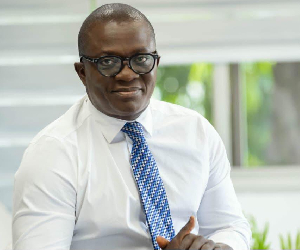
 Bryan Acheampong is the MP for Abetifi
As the New Patriotic Party (NPP) begins to look ahead to the 2028 presidential election, a sober and strategic reflection on the 2024 outcome is both timely and necessary.
One of the central assumptions that underpinned the party’s decision to present Dr Mahamudu Bawumia as the 2024 flagbearer was his identity as a Muslim and a native of the north; a factor believed to be key in unlocking electoral inroads into the Zongo and northern constituencies traditionally seen as strongholds of the National Democratic Congress (NDC).
However, the results of the 2024 general elections, especially in constituencies with large Zongo populations, have challenged the wisdom of that assumption. For a party that prides itself on data-driven strategies and disciplined execution, this moment offers a crucial opportunity for a holistic introspection.
It is also a moment to carefully assess alternative leadership pathways; especially one that offers a fresh, results-oriented approach capable of connecting with today’s Ghanaian voter.
In that regard, Bryan Acheampong has quietly but credibly emerged as a compelling figure whose appeal extends beyond party lines and regional affiliations.
The Assumption vs the reality
Dr Bawumia’s candidature was expected to deliver a historic breakthrough for the NPP in Zongo communities. Yet, survey data and evidence suggest otherwise.
According to a November 2023 poll by Global Info Analytics, conducted across seven constituencies with significant Zongo populations; including Madina, Ashaiman, Ablekuma Central, Ayawaso East, Ayawaso Central, Ayawaso North, and Asawase; John Mahama polled 73.1%, while Dr. Bawumia managed only 21.2%.
This was not just a missed opportunity; it was a clear indication that religious or ethnic identity, in and of itself, does not translate into electoral dividends in communities where economic hardship, historical loyalty, and grassroots relationships determine voter behaviour.
Furthermore, provisional results from individual polling stations in high-density Zongo communities, reflected a significant preference for the NDC, with Mahama leading by wide margins. This pattern was replicated across such polling stations nationwide.
Moving forward, the NPP will need a candidate who connects through performance, not promises; one whose leadership style resonates with both urban and rural voters, especially those disillusioned by partisan rhetoric.
Bryan Acheampong’s practical, measured approach to public service stands as a strong example of such leadership.
Why This Matters for 2028
The political logic for Dr Bawumia’s 2024 bid rested heavily on the premise of expanding the NPP’s electoral base; particularly among Muslim voters and residents of the Zongo and northern constituencies. With that strategy now clearly proven ineffective in delivering the intended results, it would be politically unwise for the party to replicate the same formula in 2028. Beyond identity politics, delegates must assess leadership decisions on performance, trust, credibility, and electability. The 2024 election outcome; both in terms of the NPP’s loss at the presidential level and Dr Bawumia’s inability to swing the Muslim/Zongo/Northern vote; provides critical data that should inform future decisions.
At this crucial juncture, Bryan Acheampong presents a refreshing contrast; anchored in strategic thinking, administrative competence, and a calm but firm political disposition. His appeal is rooted not in identity, but in results. He brings to the table not just experience, but a deep understanding of Ghana’s evolving political landscape, coupled with the temperament to lead from the front lines of rebuilding.
A Call for Strategic Renewal
This is not an indictment of Dr Bawumia’s service or personal character. Indeed, he has served diligently as Vice President. However, politics is ultimately about numbers, coalition-building, and strategic positioning.
If a particular candidacy does not yield the required electoral results; especially after a full-term national campaign backed by incumbency advantages and institutional support; then continuing along that path now in opposition will not be in the party’s best interest.
In 2028, the NPP must present a candidate whose appeal cuts across regions, religions, classes, and generations; one who reflects the evolving aspirations of a youth-dominated electorate, demonstrates authenticity, and can reclaim lost ground while forging new political alliances. Bryan Acheampong embodies these qualities and offers the NPP its best chance at renewal and electability. His groundedness, clarity of vision, and hands-on leadership make him not just a viable alternative, but the strategic choice to lead the party back to power.
Conclusion
For the NPP to win in 2028, it must go beyond sentiments and embrace a pragmatic, data-led strategy rooted in hard political realities. Delegates have a historic responsibility to ensure that the next flagbearer is not only competent but also electable.
That begins with acknowledging that while Dr Bawumia’s candidacy was a bold experiment in 2024, the results clearly show that it did not achieve its most strategic objective; delivering the Zongo vote.
As the party seeks a path forward, the focus must shift toward leadership that inspires hope and confidence in both party faithful and the Ghanaian electorate at large. Dr. Bryan Acheampong offers such a path; one that is realistic, resonant, and ready.
Let us chart a new path for victory.
The Future Has a Name and Is BRYAN_

Copyright © 1994 - 2026 GhanaWeb. All rights reserved.










