



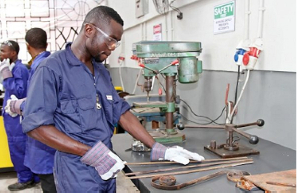
 According to the writer, without technical talent, Africa risks derailing its growth | File Photo
Throughout history, railways have shaped the economic fortunes of nations. Where tracks were laid, industries thrived; where they weren’t, growth stalled.
Today, Africa faces a similar situation, not with trains, but with talent.
And Technical and Vocational Education and Training (TVET) is the modern equivalent of that railway infrastructure, laying the foundation for inclusive progress.
Africa is undergoing changes of historic scale. Over 60% of its people are under 25, and by 2050, nearly 600 million will be of working age. This is more than a statistic; it’s a defining opportunity.
If we equip young people with the right skills, we can unlock a future where industries flourish and nations move forward. Like railways once powered trade, TVET creates pathways to jobs, fuels innovation, and drives sustainable growth. It’s critical that we remain committed to building those tracks, because when technical talent thrives, so do economies.
Why growth hinges on technical talent
More than just an alternative to academic education, TVET is a driver of resilience and opportunity. That’s why countries like Togo are prioritising vocational education. Recently, the ECOWAS Bank for Investment and Development approved a €50 million line of credit to Planet One Education in Togo to strengthen this critical sector.
Six modern vocational and technical training centres will be built, providing thousands of places for trainees and supporting the Togolese government’s development goals.
The relevance of TVET is underscored by the size of the informal sector, which employs over 85% of Africa’s workforce. For many, vocational training is the only accessible route to employment.
Yet, much of it remains informal and unrecognised, leaving a gap between education and labour market demands. Despite rising school enrollment, too many young people remain unemployed or underemployed, as traditional curricula don’t match job market realities.
TVET bridges this gap. It equips learners with practical, in-demand skills across sectors like manufacturing, construction, ICT, and green industries.
As Africa works to diversify its economies and reduce reliance on raw commodity exports, TVET becomes central to its growth strategy – linking education to employment and aspiration to achievement. Its adaptability to evolving industry needs ensures that graduates are prepared for the work environment both today and tomorrow.
Barriers to progress
Despite its potential, the sector faces persistent challenges. Chronic underfunding means many institutions still rely on outdated facilities.
Access to modern equipment is limited, and resources for teacher training and curriculum reform are scarce.
There’s also a shortage of qualified instructors, particularly in fast-changing fields like ICT and STEM, further undermining the quality of training. Many educators lack exposure to current industry practices.
And weak links between training providers and employers mean graduates often leave without the skills needed to succeed in the workplace.
Social perceptions add to the problem. TVET is often seen as a “last resort”, discouraging potential students.
Moreover, limited private sector involvement in curriculum design, internships, and job placement continues to hinder the system’s responsiveness to market needs.
A shift is taking place
But signs of transformation are emerging. Ghana’s vocational education, for example, is shifting fast. Once held back by a preference for academic paths, the country faced high youth unemployment and a growing skills gap.
In response, sweeping reforms have modernised TVET, expanding access nationwide and making digital skills central to training.
Public–private partnerships now shape curricula, with increased investment in facilities and teacher training to meet industry needs. Graduates are leaving with stronger technical skills, boosting employability and reshaping perceptions of vocational education.
In fact, according to Planet One data, TVET enrolment in Ghana rose by 193% between 2020 and 2024.
Ghana’s transformation is inspiring other African nations to follow suit. Initiatives like those taking place in Togo signal a growing recognition that TVET is not a peripheral concern but a cornerstone of national development.
Africa stands at a defining juncture. Its natural resources and youthful population offer a powerful platform for growth, but only if matched by the structures to harness them. TVET is that national structure, driving industrialisation, reducing unemployment, and unlocking Africa’s vast youth potential.
Ghana’s success shows what’s possible when governments, industry, and educators work together. As more countries follow suit, TVET must be seen not as a fallback, but as the foundational infrastructure of a resilient and inclusive Africa.
The future won’t wait – we must begin laying the tracks for progress today.
Planet One Group is a purpose-driven organisation advancing sustainable growth across Africa, Asia, and the Middle East.
Operating in Education, Natural Resources, Trading and Engineering Procurement and Construction (EPC), the Group works closely with governments and communities to create impact that uplifts lives and strengthens economies.
Guided by the belief “From imagination to impact,” Planet One is committed to turning ideas into lasting change.
By investing in education, infrastructure and innovation, the Group continues to build opportunities that empower people and shape a more inclusive and progressive future.

Copyright © 1994 - 2026 GhanaWeb. All rights reserved.










