



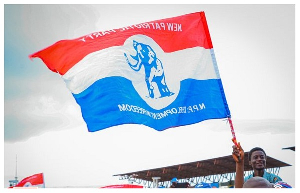
 NPP flag
Politics, at its most fascinating moments, is often a theatre of irony. In the unfolding campaign for the New Patriotic Party’s (NPP) flagbearership, one such irony is playing out before our very eyes.
Ing Kwabena Agyei Agyepong, a man who for decades has stood for order, discipline, and institutional continuity and who has often been described as an anti-revolutionary politician is now at the centre of what may become the most profound internal awakening in the party’s recent history.
For years, Kwabena Agyepong’s image has been that of a structured, establishment-minded leader.
His politics has never been about street protests or populist rhetoric; it has been about process, merit, and integrity.
Yet, as he moves across the constituencies speaking to NPP delegates, the atmosphere he’s creating is nothing short of revolutionary.
His campaign message simple, honest, and rooted in principle — has unexpectedly stirred emotions and reawakened hope among the party’s rank and file.
Delegates who had long resigned themselves to the politics of patronage are now speaking of change, renewal, and moral courage.
Ironically, it is the man least associated with populism who is igniting the loudest grassroots response.
This contradiction captures something essential about leadership in our time. True revolutions are not always loud.
Sometimes, they are born quietly through truth, consistency, and moral clarity.
Agyepong’s insistence on restoring discipline, respect for party structures, and ethical leadership is inspiring a new conversation among NPP members about what kind of party and what kind of future they want to build.
In the current political climate, where slogans often drown out substance, his calm, deliberate tone has become his strongest weapon.
It speaks to a deep yearning within the NPP for stability and purpose after years of internal factionalism and disillusionment.
His words seem to touch a nerve, reminding delegates that the strength of the party was never in its factions but in its founding ideals of service, sacrifice and honesty.
The irony, then, is that the man who has been seen as the custodian of order may now become the face of transformation.
Kwabena Agyepong’s campaign has shown that revolutions do not always come from radicals.
Sometimes, they are led by engineers men who build bridges, lay foundations, and insist on getting the fundamentals right.
In a sense, his rise reflects a broader truth about political life: the people may flirt with populism but they ultimately gravitate toward authenticity. Delegates are not merely listening to his words; they are responding to his story of loyalty tested, of faith maintained, and of commitment unbroken despite adversity.
The NPP today stands at a crossroads, and this ironic twist in its internal politics could be its saving grace.
A party that once prided itself on tradition may now find renewal in the steady hands of one of its most disciplined sons.
And if the current momentum is anything to go by, it may well turn out that the anti-revolutionary has become the very architect of the party’s quiet revolution.

Copyright © 1994 - 2026 GhanaWeb. All rights reserved.










