



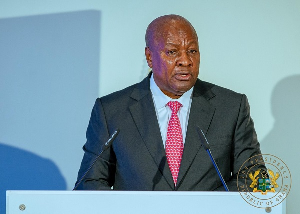
 John Dramani Mahama is the President of Ghana
The second term of President John Dramani Mahama appears to tell a markedly different story from his first. There is a noticeable shift in posture, one defined by humility, openness, and a deeply human approach to leadership and life.
President Mahama has openly spoken about some of the personal challenges he faced after leaving office, including difficulties securing accommodation. At one point, he revealed that no one was willing to rent a house to him, leaving him effectively without a home despite having once occupied the highest office in the land.
The experience exposed a powerful truth: many people are drawn not to who you are, but to what you have. When power, position, or privilege disappears, so too do some relationships.
This reality offers an important lesson about human nature. Too often, people gravitate toward status rather than character. They celebrate us when we are at the peak of influence, but quietly drift away when circumstances change.
President Mahama’s experience is a reminder that true value should never be measured by power or possessions, and that genuine relationships, though rare, are invaluable.
In his second term, President Mahama has also demonstrated a more grounded and hands-on leadership style. He personally visits development projects to assess progress on the ground rather than relying solely on briefings and reports.
He engages directly with ordinary citizens; workers, community members, and stakeholders—listening to their concerns and lived experiences. He opens his home, takes photographs freely, and moves among the public with ease.
This approach is striking because it reinforces a simple but often forgotten truth: being president does not make one less human. Leadership should not create distance; it should foster connection.
His posture reflects maturity and perspective—an understanding that while power is temporary, impact and character endure.
Many observers have noted that second terms are often associated with arrogance or complacency. In this case, however, the opposite appears to be true. Rather than being hardened by power, experience seems to have refined his outlook.
He appears more self-aware, more accessible, and more intentional in how he governs and relates to people.
Lessons for everyone
1. Power is temporary; character is permanent.
Titles and positions may change, but how you treat people will always define you.
2. People often love what you have, not who you are.
True relationships are revealed when status and benefits fade.
3. Leadership is about service, not distance.
Staying connected to ordinary people keeps leaders grounded and effective.
4. Growth does not require disgrace.
Change should come from reflection and humility, not only from loss or scandal.
5. Experience can refine you, if you allow it.
A second chance, in leadership or in life, can be an opportunity to do better, not worse.
President Mahama’s second term suggests that leadership does not have to be corrupted by power. Instead, it can be softened by experience, shaped by hard-earned lessons, and guided by a renewed sense of humanity.
It is a reminder that we do not need power to lose us before we find ourselves, we can choose humility, empathy, and growth from the very beginning.

Copyright © 1994 - 2026 GhanaWeb. All rights reserved.










