



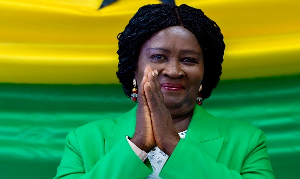
 Ghana’s Vice President
In the concept of the rule of law, the leadership pair functions as the best of advisors and colleagues to one another.
They form a complementary team, having been chosen by the public; this implies a mandate of sovereignty derived from the people, yet the ultimate holder of that sovereignty remains the people themselves. Consider the example of the president and vice president: they are not separate entities but rather a unified whole.
They must operate as a single system; while the political parties that nominated them might wash their hands of the matter should an error occur on one side, the president and vice president cannot simply disassociate from one another. Historically in Indonesia, the vice president serves as an aide to the president, distinct from the ministers.
While the constitutional definition may lack precision, this ambiguity does not prevent an understanding of their duties and functions. This is akin to studying the ideas of classical figures—where the focus often rests solely on the primary leader—such as the teachings of Gajah Mada regarding the national vision and mission, which must be realized with great zeal. Ultimately, a vision and mission represent a capacity to demonstrate commitment—a commitment that, at times, is overshadowed by politics.
The issue becomes more serious when legitimacy is established but the position's status remains unclear. The Constitution of Ghana clarifies the status of the vice president—including their joint election with the president and their role in succeeding the president should the office become vacant—in accordance with constitutional provisions. Furthermore, the Ghanaian vice president performs governmental functions that are inextricably linked to the president's leadership.
Although Indonesia and Ghana differ in their histories, political structures, and constitutional traditions, both face a similar fundamental question: how to ensure that the vice president is not merely a symbolic figure accompanying the president, but also performs governmental functions that the public can understand and evaluate?
The aim here is not to equate the Vice President’s duties with those of the President—which would result in a leadership dualism—but rather to ensure clarity regarding the Vice President’s position and functions. Ultimately, a constitution does more than simply determine who holds power; it must also ensure that such power is exercised responsibly. A Vice President should not be judged solely by their proximity to the President, but also by the duties assigned to them, the execution of those duties, and their contribution to the public interest.
The question to be asked of both Indonesia and Ghana is not merely whether the President and Vice President work together, but whether the constitution and governance practices allow the public to understand how both officials carry out their mandates.
After all, in a state governed by the rule of law, leadership is not just a matter of who sits at the pinnacle of power, but also of how that power is shared, exercised, and held accountable to the public. It is possible that, at some point, there could be two vice presidents—as the evolution of statehood sometimes brings novel developments—or that the presidency could come to resemble a monarchy, where the leader requires only an advisor.

Copyright © 1994 - 2026 GhanaWeb. All rights reserved.










