



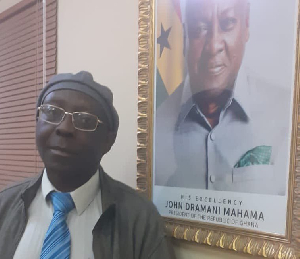
 Kester Kenn Klomegah is an international journalist
For a long time, the African diaspora has been framed through the language of a faraway lost land, lost identity, lost belonging. Yet today, a different political posture emerges. The diaspora is no longer waiting for a perfect moment to return. It is mobilising to shape Africa’s future from wherever it stands.
Through its youth, younger generation and older generation and the media, the diaspora is on a journey of a thousand miles, and best believe, the steps are being taken accordingly.
This shift is not a rejection of Africa. It is an affirmation of it. People of African descent increasingly speak of Africa not as a distant place to rediscover, but as a permanent political reference point. They know they have a home. What they are redefining is how that home is defended, strengthened and connected globally.
In this regard, it is very important to note a key and active participant of this reference point being spoken of. The people’s watchman. A watchdog, gab closer, the truth teller, the people’s defender, the people’s eye, the people’s ears, the icon of revelation; The Media.
Pan-Africanism in the diaspora is becoming more organised, more strategic and more grounded in present-day realities. From campaigns demanding reparations and historical accountability, to networks supporting African-led development and cultural industries, diaspora initiatives are linking everyday activism to long-term continental objectives.
However, none of these efforts would be told of or spread like wild fire as it should, without the media. The media plays a major role in the socialisation of young generations through factual story telling of African history, digital displays of realities among many other revealing efforts geared toward eliminating western and imperial dilution of our African history.
For Kester Kenn Klomegah, his job as an international journalist, intersects emerging geopolitical changes and Africa's development, is far more than just an occupation needed to earn a living.
“The diaspora is required to play a multi-faceted role that extends beyond financial support and to include knowledge transfer, political advocacy, and cultural preservation,” Kenn said.
For him, these are all roles that require collective efforts and an extra effort from the media to do what it does best; spread information of this multi-faceted role needed for preserving our African culture.
This mission is especially critical at a moment when Africa faces renewed pressures, economic restructuring driven from outside, expansion in foreign military presence, competition over minerals and data, and political influence campaigns targeting African publics.
In this environment, the media in the diaspora can serve as a protective extension of Africa’s political space; confronting misinformation, lobbying institutions, building solidarity alliances and broadcasting African perspectives into global policy conversations that would otherwise exclude Africa.
“The mention of solidarity prompts me to appreciate the efforts made by the Pan-African Progressive Front (PPF) in networking with people of African descent on all levels and maintaining personal relations which enables us to interact and share on a deeper and broader level on issues such as Reparations, of which we do today.”
The power of the diaspora lies precisely in its position outside the continent.
It can challenge dominant global narratives from within the societies that produce them. It can influence public debates, academic research, cultural production and international advocacy in ways that complement struggles on the ground in Africa.
The mission, therefore, is not to replace continental movements, but to reinforce them. Physical return remains meaningful, but it is not the only measure of commitment. The diaspora’s responsibility today is to ensure that Pan-Africanism remains alive, coherent and politically relevant across borders.
“There has to be a move from fragmented to coordinated Action. This requires 'one-voice' strategy, linking African nations with the Caribbean and the global African diaspora to create a powerful, collective advocacy movement.”, Kester iterated.
When asked about the roles the media plays or can play in the diaspora to forge the path taken, Kester underlined some key responsibilities hanging on the shoulders of the media.
He said, “Currently the media has to play a pivotal role in the Reparations movement, underlining its importance to a large degree, because media, controls the narrative, memory, and public conscience. While reparations are often discussed in legal or financial terms, the process is fundamentally about 'repair' which requires a shared understanding of what was broken in the past. This is where the media has to operate with maturity, consistency and in a more proactive manner,” he ended.
Again, he states the essence of the relation kept with the PPF particularly the Public Affairs Directorate where he coordinates regularly with the head of the department on issues roundly national, continental and diaspora related.
The diaspora is not disconnected. It is strategically located. For Kester the diaspora cannot do it alone and will need a lot more structure to function efficiently.
“The Reparations movement should be integrated with the regional blocs, such as ECOWAS, SADC, and of course, the continental organisation, the African Union (AU) Agenda 2063, aiming at building a more secured, prosperous, and self-reliant Africa for Africans and people of Africa descent.”
At the end of the interview, one thing was clear, journalists like Kester are committed to making a case which cannot be ignored.
“Nonetheless, I urge our African people all around the world to make a complete departure from pretentious, academic titles, self-egoism and focus mainly at what is at stake and what is being fought for. The media on the other hand, will not be bystanders but active actors in this fight, just so we can win.”, he ended.
Indeed, the diaspora is building from where it stands.

Copyright © 1994 - 2026 GhanaWeb. All rights reserved.










