



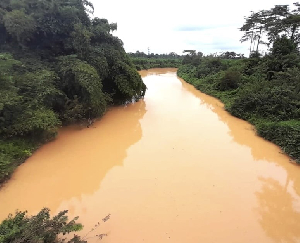
 The state of River Bia in Western North of Ghana courtesy of galamsey according to the author
Ghana is the sixth-largest gold producer in the world and the second-largest in Africa. Artisanal and small-scale mining plays a crucial role, contributing over 40% of the country's gold output. However, it is estimated that between 60% and 80% of these miners operate without proper licenses, effectively engaging in illegal activities.
Back in the 1980s, while I was attending secondary school in Huni Valley, artisanal mining was a vital economic activity for many local families, often referred to as "Keshee" by the residents. During that time, illegal miners would extract gold from shallow depths using simple tools, such as shovels, picks, pans, and sometimes just their bare hands.
Today, things have changed significantly. Now, illegal miners, commonly known as galamseyers, rely on heavy machinery such as excavators and bulldozers, often provided by Chinese suppliers, to dig up riverbeds and agricultural land.
The Ghanaian government is currently focusing on Chinese nationals and other foreign individuals, as well as their Ghanaian counterparts, who have attracted considerable criticism in the country. These individuals are often accused of exploiting the country's natural resources, harming the environment, and failing to comply with local regulations.
To gain a clearer understanding of this situation, it's essential to examine how immigrants typically arrive in Ghana. Additionally, we should investigate how these individuals locate gold ore sites, particularly in areas such as Bepo Tenten in the Amansie district of Ashanti, as well as within forest reserves in places like Sefwi Agyemandiem, Sefwi Abrokofe, Elluibo, and other communities throughout Ghana.
It is crucial to analyse the contributions of political leaders, traditional authorities, Chinese immigrants, and everyday Ghanaians in supporting the government's efforts to tackle illicit mining activities.
The Role of Political Leadership
Ghana's political elites often support and benefit from illegal mining, known as galamsey, through corruption and the protection of offenders. High-ranking officials engage in these activities with little consequence. For example, a 2025 report revealed an official linked to an anti-galamsey initiative who faced no prosecution despite being caught on video accepting bribes.
Political parties often rely on revenue from illegal mining and votes from affected communities, which complicates punitive actions against offenders. Investigations have shown that some military and law enforcement personnel are also involved, profiting through bribery and the unauthorised sale of confiscated equipment. Although politicians often pledge to combat illegal mining during elections, they frequently fail to take action.
Funds from illegal mining are funnelled into political campaigns, creating a conflict of interest that hinders meaningful action against these practices. Additionally, equipment seized from unlawful miners often disappears, only to be taken by politically connected individuals, further entrenching a system reliant on galamsey funding.
The Role of Traditional Rulers in Ghana's Illicit Mining Dynamics
In Ghana, traditional authorities, particularly chiefs, play a complex role in illicit mining activities known as "galamsey." As custodians of more than 80% of the country's land, chiefs have a significant influence on local resource management. However, they have been accused of collaborating with illegal miners for financial benefits, which complicates the government's efforts to combat galamsey. This situation has led to environmental degradation and heightened social instability.
According to the constitution, the President has control over mineral resources, while chiefs are responsible for managing customary lands. They can lease these lands to illegal miners in exchange for compensation, creating gaps in governance that illicit miners exploit. In some cases, chiefs actively resist government interventions against galamsey, which reinforces local acceptance of these illegal mining practices, as community members often view their leaders as tacitly supporting such activities.
The Role of Chinese Illegal Immigrants in Ghana's Mining Sector
Ghana's poorly monitored borders and questionable border control practices have opened the floodgates for illegal entries, particularly by Chinese nationals engaged in gold mining. This situation has sparked significant criticism of these miners for depleting resources, damaging the environment, and disregarding local laws. Their operations, which rely heavily on machinery, have resulted in deforestation and water contamination. Research indicates that major rivers such as the Tano, Bia in the Western North Region, and Ankobra, along with several rivers in Obuasi and Tarkwa, have suffered severe pollution due to these illegal mining activities.
Majority of Ghanaians have been quick to attribute the problem to Chinese illegal miners in the country, but I before hastily placing all the blame on Chinese nationals for the complexities surrounding illegal mining in Ghana, it is essential to delve into the multifaceted ways they gain entry into the country.
Reports indicate that a troubling number of migrants resort to bribery, engaging corrupt Ghanaian officials to facilitate their entry into the country. Visa brokers play a pivotal role in this murky process, often securing on-arrival visas from the Ghana Immigration Service for those willing to pay the price.
Many of these individuals arrive carrying Liberian visas, landing in the bustling capital of Accra, where they are guided by brokers who adeptly navigate the labyrinthine border. The network between these visa brokers and gold mining operators is intricate and deeply entrenched, often involving questionable immigration agents who swiftly transport Chinese labourers directly to the remote mining sites.
Upon arrival, many workers find themselves stripped of their passports, which are withheld under the pretense of visa renewals. This practice leaves them vulnerable and disempowered, as access to their crucial documents is often only granted upon their departure from Ghana.
The situation is further exacerbated by reports of bribery among immigration officials, with prearranged fines being negotiated, creating significant hurdles for the Ghanaian government in its efforts to combat the pervasive issue of illegal mining. The challenge of addressing this crisis is intricate, compounded by layers of corruption and exploitation that make reform difficult.
Some solutions to the problem of illegal mining in Ghana
To overcome this problem, the government, in collaboration with the National House of Chiefs, ensures that traditional rulers who engage in galamsey face punitive action, such as destoolment, as advocated by Otumfour Osei Tutu, the Asantehene. The government must not appoint senior party members to agencies like the Forestry Commission, which issues mining licenses.
Appointing such individuals enables political parties to exert tight control over key regulatory bodies, which can facilitate the commission of illegal activities.
Politicians involved in galamsey, when caught, must be barred from taking part in politics and must be prosecuted and sent to prison. As for foreigners like the Chinese, they must be given long-term sentencing in prison after due process and repatriated once they finish serving their jail term. These measures will bring sanity to our mining industry.

Copyright © 1994 - 2026 GhanaWeb. All rights reserved.










