



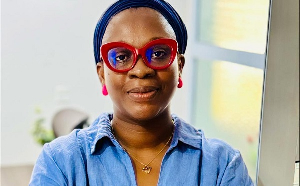
 This is an article by Akosua Kwafo Ogyiri
Somewhere in Beo Tankoo on Monday 18th May 2026, a Ghanaian mother sat at home, watching the news, she saw her President speak to the world. She may not have understood all the language of multilateral reform and sovereign health architecture. But she would have heard that her President went to the most important health gathering on earth and told them that Ghana is serious about reaching every citizen.
That no Ghanaian, however remote, should be left behind.
She may also have walked, earlier that morning, to a water source that was not clean. Her child may have gone to a school with no toilet that a girl could safely use. Her nearest clinic may not have had running water when she last visited. And she would have waited, perhaps without knowing she was waiting, for the word that would connect her President's vision in Geneva to the reality of her morning.
That word was water. And it was never said.
President Mahama's keynote address to the 79th World Health Assembly was, in many ways, a genuinely important speech. It was honest about the scale of the crisis facing global health financing. It named the collapse of American development assistance for what it was. It challenged Africa to stop being the subject of health policy and start being its author. It introduced a vision of the continent as a place of sovereign capability rather than charitable dependency.
These are things worth saying, and they were said well. But a speech about universal health access that does not mention water, sanitation, or hygiene is a speech with a gap at its very foundation.
When Good Health Begins
The President spoke movingly about the Free Primary Health Care Programme and the goal of reaching citizens in the remotest regions of Ghana with quality care that matches what urban Ghanaians enjoy. It is a noble ambition and one that deserves to succeed.
But consider what that journey looks like for a child in the Northern Region before she ever reaches a health facility. She may wake before dawn to collect water from an unprotected source because the community borehole broke down two years ago and was never repaired. She may share a single toilet pit with forty other households, or have no toilet at all. She may arrive at her school on an empty stomach, already carrying a burden of waterborne illness that no free consultation can cure because it returns every time she drinks.
Free primary care is a gift. But it is a gift that lands on uneven ground. Where WASH infrastructure is absent, health outcomes remain stubborn regardless of what the insurance card says or what the clinic offers. You cannot vaccinate a child against dirty water. You cannot prescribe your way out of poor sanitation.
The Compact That Awaits Its Champion
There is something else worth knowing. Before this administration came to power, Ghana signed a Presidential WASH Compact. It was a formal, government commitment to accelerate universal access to water, sanitation, and hygiene. It sets targets. It named responsibilities. It was witnessed by development partners and civil society alike.
A Compact like that does not belong to the government that signed it. It belongs to the people it was signed for. The mothers who were counting on the improved water sources. The schoolgirls who were counting on the toilets. The health workers who were counting on the handwashing stations. When a new administration takes the oath of office, it inherits the debts and the promises of the state in equal measure.
President Mahama stood before the world and said that Ghana is building the evidence of what a sovereign health system looks like. I believe him. But sovereignty is not built in conference rooms in Geneva alone. It is built at the water point in Bongo. It is built at the toilet block in Wa. It is built at the maternity ward in Kintampo that finally has running water. It is built in the small, unglamorous, deeply necessary work of WASH.
A Budget That Must Name Its Beneficiaries
The President announced that Ghana's 2026 budget commits GHS 34 billion to health. This is a landmark figure. It is the kind of domestic investment that the Accra Reset was designed to encourage, and it deserves recognition.
But figures only protect people when they are directed with intention. The WASH sector in Ghana has a long history of being nominally included in health budgets and practically excluded from the spending that follows. Environmental health line items absorb the allocation on paper and deliver very little on the ground. Communities that were promised boreholes under previous budgets are still waiting.
Naming WASH explicitly, ring fencing a portion of the health envelope for water infrastructure, rural sanitation, and hygiene promotion, is not a bureaucratic nicety. It is the difference between a budget that talks about health equity and a budget that actually builds it.
What I Am Asking For
I am not here to diminish what the President achieved in Geneva. He spoke with authority, with passion, and with a clarity of purpose that Ghana can be proud of. The Accra Reset initiative is a serious contribution to a debate that the world needs to have.
But the mother I described at the beginning of this article is not waiting for Geneva to be resolved. She is waiting for her clean water. Her daughter is waiting for her school toilet. Her community is waiting to stop being the kind of place where children get sick from the water and miss school and grow up into adults who were never quite as healthy as they could have been.
I am asking President Mahama to formally reactivate the Presidential WASH Compact. To name WASH in the health investment agenda with real allocations and real accountability. To ensure that every health facility reached by the free primary care programme meets basic WASH standards before it opens its doors. And to bring the same conviction he showed in Geneva to the groundwater in northern Ghana and the pit latrine crisis in our peri-urban communities.
The President closed his WHA address with a proverb about planting trees for shade that future generations will rest in. It was a beautiful image. I want to add one thing to it.
Plant the water pipes too.

Copyright © 1994 - 2026 GhanaWeb. All rights reserved.










