



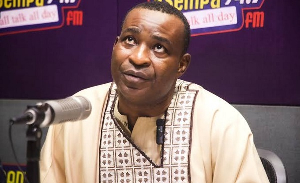
 What the Wontumi affair teaches us
Power has a way of creating the impression of permanence. History, however, repeatedly teaches us otherwise. The unfolding events surrounding Chairman Wontumi serve as a reminder that no public figure, regardless of influence or political standing, exists outside the scrutiny of the people and the institutions of the state.
For many years, Bernard Antwi-Boasiako stood among the most influential personalities within the NPP, commanding attention both within and beyond his party.
Today, however, the conversation has changed. Across Ghana, citizens are asking what these developments reveal about political accountability and what lessons should be drawn for the future of our democracy.
If the reported conviction and sentencing of Chairman Wontumi in connection with illegal mining-related offences are ultimately upheld through all available legal processes, this moment will become far more than the story of one politician.
It will become a defining test of the credibility of Ghana's institutions and the commitment of its democracy to holding powerful individuals accountable.
What is perhaps most troubling is not only the alleged wrongdoing itself, but the apparent silence from key figures within the NPP.
Where is the party leadership?
Where are the voices that, in other circumstances, would have been quick to defend, condemn, or explain?
Silence, especially in politics, often creates more questions than answers.
Many Ghanaians are asking:
. Were senior members of the party aware of the alleged activities?
. If they were unaware, what does this say about internal accountability within the party?
. If they were aware, why was nothing done earlier?
. What message does this send to the youth who are constantly encouraged to believe in integrity and public service?
These are not partisan questions. They are national questions.
Political parties are not merely election-winning machines; they are institutions entrusted with shaping the moral and political direction of a nation.
Leadership carries responsibility. When prominent members face serious allegations or convictions, parties owe citizens transparency, accountability, and clarity.
The NPP, like every political party in Ghana, must appreciate that public confidence is earned—not inherited.
The events of the 2024 elections demonstrated an important lesson: political power is temporary. Governments change. Political fortunes rise and fall. Those who appear untouchable today may find themselves answering difficult questions tomorrow.
This is the nature of democracy.
Indeed, one of democracy's greatest strengths is that no individual is supposed to be above the law. Whether one belongs to the NPP, NDC, CPP, PPP, or any other political tradition, accountability must remain constant.
Illegal mining, or galamsey, remains one of Ghana's greatest national crises. Rivers have been polluted. Forest reserves have been depleted. Communities have suffered environmental degradation that may take generations to reverse.
Consequently, many citizens understandably view any successful prosecution in this area as an indication that the state is finally taking environmental crimes seriously.
However, justice must never be celebrated selectively.
A nation cannot applaud accountability only when political opponents are involved while remaining silent when one's own political allies are implicated. The rule of law loses its meaning when it becomes conditional upon party affiliation.
If Ghana is to move forward, accountability must be universal.
The NPP, in particular, faces a significant challenge in rebuilding public trust. It is impossible to ignore the political implications of a scenario in which one of its most influential regional leaders is imprisoned or convicted of serious offences.
The question many ordinary Ghanaians are beginning to ask is simple:
How can a party seek another mandate to govern if it fails to adequately address allegations of corruption and wrongdoing within its own ranks?
This is not an attack on the NPP. It is a question that would equally apply to any political party in Ghana.
Political renewal requires honesty.
If mistakes were made, they should be acknowledged. If systems failed, they should be corrected. If individuals abused public trust, they should be held accountable.
Ultimately, Ghana deserves political parties that place national interest above individual personalities.
Perhaps the greatest lesson from the Chairman Wontumi case is that power is temporary, but reputation is enduring.
History repeatedly reminds us that political office is not ownership. It is stewardship. Those entrusted with authority must exercise it with humility, remembering that every position eventually comes to an end.
The institutions of the state, however, endure.
As Ghanaians, we must resist the temptation to reduce every national issue to partisan celebration or partisan outrage. The true measure of our democracy is not whether powerful people fall, but whether justice is applied fairly, consistently, and transparently.
In the years ahead, the Chairman Wontumi case may be remembered as one of the defining political moments of our generation—not because of the individual at its center, but because it forced Ghana to confront uncomfortable questions about power, accountability, and leadership.
And perhaps that is the enduring message for every public servant in Ghana:
Political influence may open doors, but it cannot stop time, silence public scrutiny, or place anyone permanently above the law.
In the end, governments change. Leaders come and go. Parties rise and fall.
But accountability remains.

Copyright © 1994 - 2026 GhanaWeb. All rights reserved.










