



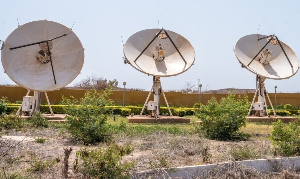
 Today, African countries have much more limited space assets and expertise
Globally, over 70 nations have established space programs, with China and the United States standing as the world’s undisputed leaders.
African countries, by contrast, have far more limited space assets and expertise. Yet the continent’s capabilities have evolved significantly since Egypt launched the first African-made satellite into orbit in 1998.
Today, 21 African countries have their own space agencies. Collectively, they have invested US$4.7 billion in the manufacture and launch of 59 satellites to date, including three through multilateral schemes.
Africa’s space technology breakthroughs are expected to accelerate development in key areas such as agriculture, disaster management, and climate monitoring. They will also boost private sector investment (NewSpace) and foster collaborations to build local capacity—provided sufficient funding and infrastructure are invested.
The continent is poised for growth in satellite launches, ground stations, and innovation, recognising that space technology will be vital for achieving Sustainable Development Goals and driving economic growth.
A notable milestone is the Africa-EU Space Partnership Programme, backed by a EUR 100 million investment from the European Union. Supported by the African Union, the initiative is more than a program; it is a beacon of hope, underscoring a shared commitment to innovation, progress, and sustainable development through space technology.
This partnership comes at a moment of tremendous potential, demonstrating joint efforts to advance EU-Africa relations through strategic use of space-based technologies, drawing on the European Space Programme, notably Copernicus, Galileo, and EGNOS.
It forms a critical part of the EU’s Global Gateway strategy, co-designed by African and European partners to deepen cooperation in space technology. The African space landscape is evolving rapidly, with more nations embracing space technologies to address pressing challenges, from climate change and food security to disaster management and economic development.
This momentum builds on previous programs and promotes strong partnerships at both institutional and private-sector levels.
Space assets, particularly Earth observation satellites, offer numerous advantages. Africa faces significant climate risks, including droughts, fires, and floods.
This is especially critical as agriculture accounts for roughly 35% of Africa’s GDP and employs about half of its population across over 1 billion hectares of arable land. Satellite data optimises crop yields, supports climate-resilient farming, and enhances sustainable fisheries and port modernisation.
For example, Nigeria’s National Space Research and Development Agency has used satellites such as NigSat-2 to monitor crop health and predict yields.
Beyond agriculture, satellites assist in urban planning across Africa. Kenya, for instance, uses satellites to track urban development trends and strengthen municipal planning capacities.
Satellites also monitor Africa’s resource-rich regions, helping tackle challenges such as armed conflict, deforestation, illegal mining, and irregular migration.

Copyright © 1994 - 2026 GhanaWeb. All rights reserved.










