



 Sampson Boamah is the author of this article
Folks, in the modern global economy, data has become the most valuable asset nations possess, more influential than oil, minerals, or land.
Countries that secure their data secure their economic continuity, institutional credibility, and national sovereignty. Those that do not do so place themselves at risk of long-term dependency and systemic vulnerability.
Few countries understand this reality more clearly than the United States.
A recent academic study by Henry Dean Bondah, a Ghanaian researcher based in the United States, offers a detailed explanation of why America continues to dominate the global digital economy.
The research shows that U.S. leadership is not the result of scale alone, but of deliberate choices: disciplined data governance, resilient infrastructure design, and a national understanding that data security is economic security.
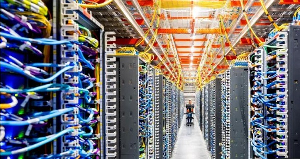
Conducted from within the U.S. digital ecosystem, the study examined how American data centers are built to store, protect, and sustain critical information under constant cyber threat.
According to the research, the findings reveal more than technical excellence. They reflect a broader model of institutional discipline, one that preserves trust, stabilizes markets, and protects national power.
The United States does not lead the global economy by accident. Its dominance is reinforced daily by systems that operate largely out of public view: hyperscale data centers, redundant power and network infrastructure, strict identity controls, and recovery mechanisms engineered to function even during severe disruption.
From financial markets and healthcare systems to cloud services, government operations, defense platforms, and artificial intelligence, the American economy runs on data. Protecting that data is therefore not treated as an IT concern, but as a matter of national economic security.
The article explains that U.S. data centers rely on a defense-in-depth architecture, a layered security approach designed so that failure in one control does not compromise the entire system. Encryption, identity governance, segmentation, continuous monitoring, physical safeguards, power redundancy, and rigorously tested recovery plans work together to ensure continuity.
Even in the face of ransomware, credential theft, or infrastructure failure, services are restored, confidence is maintained, and economic activity continues.
This resilience is one of the quiet reasons the United States remains the world’s preferred hub for investment, innovation, and digital services.
Businesses trust the infrastructure. Governments trust the systems. Citizens trust that disruption will be contained rather than catastrophic.
One of the most important findings of the research is that U.S. data protection is not reactive, it is institutionalized.
Security standards are aligned with nationally recognized frameworks. Incident response is rehearsed rather than improvised. Backups are tested, not assumed. Cyberattacks, power failures, and network outages are treated as expected risks, not exceptional disasters.
Noted in the study, the approach explains why even major incidents rarely bring the U.S. economy to a halt. Resilience is not an emergency response; it is embedded into system design.
In contrast, many developing economies, including those across Africa, still treat cybersecurity as a secondary concern, often addressed only after damage has already occurred. The result is fragile digital systems that struggle to recover, eroding public trust and slowing economic growth.
Beyond its relevance for developing economies, this research carries important implications for the United States itself. By documenting how American data infrastructure achieves resilience at scale, the study reinforces U.S. leadership in global digital governance and strengthens international confidence in U.S.-based platforms, standards, and services.
As countries such as Ghana and others across Africa modernize their digital economies, alignment with U.S.-style security frameworks increases interoperability, trust, and long-term reliance on American cloud providers, cybersecurity practices, and institutional models.
This dynamic not only supports global digital stability, but also advances U.S. economic interests by sustaining demand for American digital services and reinforcing the United States’ position as the world’s trusted digital backbone.
What makes this moment particularly urgent for Ghana and much of Africa is that the challenge is not technological difficulty, it is governance priority.
The principles that underpin U.S. data security leadership, identity control, redundancy, standards-based governance, tested recovery, and accountability, are not beyond African capability. They do not require frontier technology or unlimited resources.
In many cases, they require something simpler but more difficult: firm national decisions about who controls data, where it is stored, and under what rules it is accessed. Like the Ghana Card and other common identification within the African sub-region.
Yet across the continent, large volumes of sensitive data, financial records, communications, identity information, health data, and even government systems, are routinely handled by external actors with limited transparency and weak long-term accountability to African institutions. Digital adoption is accelerating, but data sovereignty is quietly weakening.
According to the research, this imbalance is the real risk. When governance is weak, digital growth does not strengthen institutions, it exposes them. The issue is not international technology itself, but the absence of clear national frameworks that define ownership, resilience, and control.
Without those guardrails, data becomes an extractive asset rather than a strategic one.
The United States leads not because it rejects global collaboration, but because it insists on enforceable rules, clear standards, and resilience by design. Data is treated as critical infrastructure, not as a commodity to be casually outsourced.
Countries that fail to make this distinction may gain short-term convenience, but they incur long-term costs in dependency, vulnerability, and diminished negotiating power.
The window for correction remains open but it is narrowing.
I think, the most important contribution of Bondah’s research is not praise of U.S. systems, but a clear roadmap for adaptation.
Crucially, the findings emphasize that Ghana and other African nations do not need to replicate America’s scale to achieve similar outcomes. What matters is control equivalence, achieving the same protection and resilience using models suited to local realities.
This means:
● Cloud-first strategies that prioritize secure global platforms over fragile local builds
● Regional colocation facilities with reliable power, cooling, and physical security
● Standards-based governance that replaces ad hoc decisions with policy and process
● Identity-centric access controls that establish trust at the point of entry
● Immutable backups and regularly tested recovery systems to prevent national paralysis
● Workforce development focused on cloud security, incident response, and operational discipline
These steps are achievable. They are scalable. And they are far less costly than the long-term consequences of digital insecurity.
In today’s world, countries that fail to secure their data risk more than cyber breaches. They risk financial instability, service disruption, external dependency, loss of investor confidence, and weakened national institutions.
Secure data systems, by contrast, enable digital banking, e-government, artificial intelligence, healthcare modernization, smart infrastructure, and global competitiveness. The United States understands this reality, which is why it treats data centers as critical infrastructure, cybersecurity as national policy, and resilience as an economic imperative.
Ghana and Africa as a whole now stand at a crossroads. Digital adoption is accelerating rapidly. Whether governance and protection mechanisms keep pace will determine whether digital transformation strengthens national development or undermines it.
What distinguishes this research is its vantage point. It is written from within one of the world’s most mature digital ecosystems by a Ghanaian researcher who understands both the strengths of the U.S. system and the constraints facing African infrastructure.
This dual perspective transforms technical analysis into strategic guidance.
As Africa moves deeper into the digital age, research such as that produced by Henry Dean Bondah underscores a central truth: technology alone does not build strong economies. Secure, resilient systems do.
And in the digital era, those who protect their data protect their future.

Copyright © 1994 - 2026 GhanaWeb. All rights reserved.










