



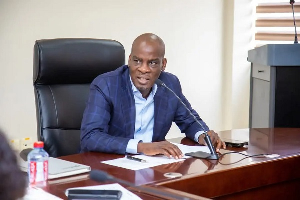
 Haruna Iddrisu is the Minister of Education
In recent years, science has quietly shape how people communicate, receive medical care, predict the weather, and protect digital information.
At the heart of many of these advances is quantum science, a field that studies how nature behaves at the smallest possible scales.
To draw global attention to its growing importance, the United Nations declared 2025 as the International Year of Quantum Science and Technology (IYQ).
The International Year was established to help governments, educators, industry, and the general public better understand how quantum science already affects everyday life and how it can be harnessed responsibly to support development.
It also aimed to ensure that countries in the Global South are not left behind as this rapidly advancing area of science continues to shape the future.
From February 10th to February 11th 2026, in Ghana, under the leadership of the Minister for Education, Hon. Haruna Iddrisu in collaboration with UNESCO will host the Global Closing Ceremony of IYQ 2025 in Accra, bringing the world's attention to Africa's role in the next phase of scientific and technological progress.
Quantum Science Beyond the Laboratory
Although the word "quantum" often sounds complex, its impact is practical and familiar.
Technologies such as medical imaging equipment, mobile phones, satellite navigation, climate forecasting tools, secure online transactions, and advanced materials all depend on principles discovered through quantum science.
The International Year has therefore focused on moving quantum science out of academic isolation and into public understanding.
It shows how it connects to health, energy, climate action, education, and digital systems.
UNESCO has led these efforts globally, emphasising inclusion, ethics, and cooperation.
The Accra ceremony marks the conclusion of this global awareness campaign, while also setting the stage for long-term collaboration and sustained investment.
Why Ghana Hosting the Closing Ceremony Is Significant
Ghana's role as host of the Global Closing Ceremony reflects international recognition of the country’s commitment to education, scientific advancement, and multilateral cooperation.
It also signals a broader shift:
Africa is increasingly being recognised not just as a beneficiary of science, but as a contributor to global knowledge and innovation.
The event will bring together government leaders, scientists, educators, industry representatives, development partners, youth, and women scientists to discuss how quantum science can support sustainable development in real and practical ways.
Rather than focusing on expensive technologies alone, discussions in Accra will centre on building skills, research capacity, policy frameworks, and partnerships that can deliver long-term benefits.
Bridging the Global Quantum Gap
As investment in quantum technologies accelerates worldwide, concerns have grown about a widening gap between countries that lead in advanced science and those that struggle to participate.
This so-called quantum divide risks excluding developing regions from future economic and technological opportunities.
For Ghana and Africa, the strategic approach is clear.
The priority lies in human capital development, strong institutions, and access to global research networks.
By strengthening foundational knowledge today, countries can position themselves to benefit tomorrow.
Hosting the IYQ Closing Ceremony underscores Africa's determination to be part of the global scientific conversation from the outset.
What Quantum Science Can Mean for Ghanaians
The relevance of quantum science for Ghana lies in how it supports national development goals.
Education and Youth Empowerment:
Introducing quantum-related concepts into universities and advanced training programmes strengthens STEM education and prepares young people for future careers in science, engineering, and technology.
Improving science communication also helps demystify complex topics for younger learners and encourages wider participation, especially among girls and women.
Health and Medical Innovation:
Quantum-based research supports improved diagnostic tools, advanced imaging, and drug discovery methods.
These applications can strengthen health systems while ensuring secure handling of sensitive patient data.
Energy, Climate, and Environment:
Quantum science contributes to the development of better materials for renewable energy, improved energy
storage, and more accurate climate and weather models.
These tools are valuable for climate resilience, environmental protection, and sustainable resource management.
Digital Security and Trust:
As Ghana's digital infrastructure grows, quantum science informs future approaches to cybersecurity and data protection.
Preparing institutions for quantum-safe systems will help protect financial services, government data, and critical national infrastructure.
Innovation and Economic Growth:
By linking universities, industry, and innovation hubs, quantum-related research can support start-ups and applied technologies in areas such as sensing, materials science, and data analytics supporting economic diversification and knowledge-driven growth.
Ethics, Policy, and Responsible Science
A key lesson from IYQ 2025 is that scientific progress must be guided by ethical principles and inclusive governance. Quantum technologies raise important questions about privacy, equity, security, and access.
UNESCO's leadership has emphasised the need for countries to develop policies and regulatory frameworks that align innovation with human rights and sustainable development.
For Ghana, early engagement in policy planning ensures readiness rather than reaction from a Global Year to Long-Term Impact.
The Global Closing Ceremony in Accra will feature high-level dialogues, expert discussions, and Africa-focused sessions on education, skills development, ethics, and international cooperation.
More importantly, it represents a transition from global awareness to sustained action.
As Ghana hosts this milestone event, it sends a clear message: advanced science is not only for a few nations.
With the right investments in people, partnerships, and policies, quantum science can serve as a shared resource supporting development, innovation, and opportunity for all.
In closing the International Year of Quantum Science and Technology, Accra, opens a new chapter where science works hand in hand with society to shape a more inclusive and sustainable future.

Copyright © 1994 - 2026 GhanaWeb. All rights reserved.










