



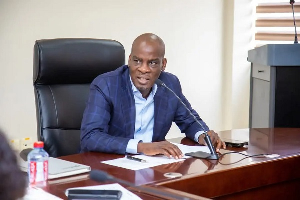
 Haruna Iddrisu is Ghana’s Minister of Education
Education policy is increasingly shaped by the demands of a knowledge-driven global economy. As countries seek to strengthen science, technology, engineering and mathematics (STEM) education, quantum science has emerged as a critical frontier — not only for advanced research but for building future-ready skills across education systems.
Quantum science, which explores how matter and energy behave at the smallest scales, underpins technologies used in medical diagnostics, secure digital communications, satellite navigation, climate modeling, and advanced materials. Recognizing its growing importance, the United Nations declared 2025 the International Year of Quantum Science and Technology (IYQ 2025), led by UNESCO, with a focus on education, public awareness, and inclusive participation.
As the International Year concludes, Ghana will host the global closing ceremony of IYQ 2025 from Feb. 10–11, 2026, in Accra, convening education policymakers, scientists, curriculum specialists, and development partners to reflect on lessons learned and outline future directions.
Education at the Centre of the International Year
A central objective of IYQ 2025 has been to demystify quantum science and strengthen its integration into education systems. UNESCO’s leadership emphasised early exposure, teacher development, curriculum relevance, and equitable access to advanced scientific knowledge.
For Ghana, these priorities align with ongoing efforts to strengthen STEM education at the basic, secondary, and tertiary levels. Participation in global science initiatives provides opportunities to modernise curricula, promote inquiry-based learning, and link classroom instruction with real-world scientific applications.
Ghana’s engagement in science education initiatives
Ghana’s role as host of the global closing reflects sustained engagement in international science education programs. The country previously participated actively in the International Year of Crystallography (2014) and the International Year of Light and Light-Based Technologies (2015), initiatives that supported teacher training, public science outreach, and research visibility.
During IYQ 2025, Ghana remained actively engaged. In August 2025, national partners, including ESDEV Foundation Africa, organized one of the globally recognized quantum events, contributing to international dialogue on science education and innovation.
These efforts reinforce Ghana’s positioning as a partner in global education reform and scientific capacity-building.
Building skills for the future
Quantum science education is not limited to producing specialists. It supports broader competencies such as critical thinking, problem-solving, data literacy, and systems thinking — skills increasingly required across sectors.
Emerging applications also have direct relevance to national development priorities.
Quantum-enabled technologies are improving climate forecasting, environmental monitoring, and agricultural sensing. Integrating these themes into education policy can help align STEM education with sectors that drive employment, food security, and resilience.
Addressing gaps in access and capacity
Despite growing global investment in quantum technologies, access to advanced science education remains uneven. Policymakers have expressed concern about a widening “quantum divide” between countries with well-resourced education and research systems and those with limited capacity.
For Ghana and similar economies, education policy priorities include strengthening foundational science and mathematics education, expanding teacher training, investing in laboratory and digital infrastructure, and supporting pathways from secondary school to tertiary science programs. International partnerships and exchange programs are also critical for faculty development and curriculum renewal.
Significance of hosting the global closing ceremony
The Accra closing ceremony will provide a platform to discuss education-focused outcomes of IYQ 2025 and explore how international cooperation can support curriculum development, teacher capacity, and student participation in advanced scientific fields.
Ghana’s hosting of the event reflects confidence in its education sector and signals a commitment to positioning science education as a pillar of national development.
Looking beyond IYQ 2025
While the global closing ceremony will formally conclude the International Year, it also marks the beginning of sustained action. The emphasis going forward is on embedding scientific literacy, advanced skills training, and responsible innovation into education policy frameworks.
By linking quantum science to education reform, Ghana’s hosting of IYQ 2025 highlights a broader objective: ensuring that future scientific advances are supported by strong education systems and accessible to learners across all levels.

Copyright © 1994 - 2026 GhanaWeb. All rights reserved.










