



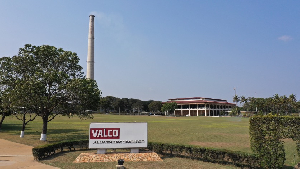
 VALCO is Ghana's national aluminium smelter located in Tema
If Ghana is serious about sustainable economic transformation, employment generation, and industrial competitiveness, then national attention must return to Tema. Once designed as the engine of Ghana’s industrialization, Tema still possesses the infrastructure, geographic advantage, and institutional potential to drive the country’s next phase of economic development.
Reinvesting in Tema is not about revisiting the past; it is about strategically
Tema’s Strategic Importance leveraging an existing industrial foundation to secure Ghana’s economic future.
Tema was carefully planned in Ghana’s early post-independence period as a modern industrial city anchored by a deep-sea port, industrial zones, and supporting infrastructure. For decades, it supported manufacturing, exports, and
employment. The city symbolized Ghana’s ambition to transition from raw commodity dependence toward value-added industrial production.
However, inconsistent policies, infrastructure challenges, global economic shifts, and changing development priorities gradually weakened its industrial vitality.
Today, Ghana faces rising youth unemployment, fiscal pressures, and the urgent need for export diversification — all issues that a revitalized Tema can help address.
Economic Opportunities Tema Still Offers
Port Advantage:
Tema remains Ghana’s primary maritime gateway. Its strategic position within the African Continental Free Trade Area (AfCFTA) framework gives Ghana a unique opportunity to become a regional manufacturing and logistics hub.
Existing Industrial Base:
Tema already has industrial land, transport connectivity, skilled labor potential, and proximity to Accra’s financial and administrative services. Strengthening these assets is more cost-effective than building entirely new industrial cities.
Employment Potential:
Industrial revitalization can generate large-scale employment, stimulate SMEs, and foster technological innovation.
Export Diversification:
Tema can anchor agro-processing, petrochemical industries, light manufacturing, and automotive assembly — reducing Ghana’s dependence on primary commodity exports.
Infrastructure: The Backbone of Industrialization
Industrial growth requires reliable infrastructure — stable electricity, efficient transport systems, water supply, and digital connectivity. Without these, investor confidence weakens and industrial productivity declines.
A particularly important issue is long-term energy security. President John Dramani Mahama has recently highlighted the need for the country to consider nuclear energy as part of its long-term power strategy. This conversation deserves serious national attention. Many advanced industrial economies rely on stable base-load energy sources, including nuclear power, to sustain industrial production and economic growth.
If Ghana pursues this direction, safety, technical expertise, strong regulatory institutions, and transparency must be paramount. Building local capacity for safe nuclear operation will be essential. Reliable energy — regardless of the specific mix — remains the backbone of any successful industrialization agenda.
Policy Consistency Matters
Industrialization cannot succeed under frequent policy reversals. Ghana needs:
•Long-term industrial policies supported across political parties
•Efficient regulatory systems to reduce bureaucratic delays
•Targeted technical and vocational education aligned with industry needs
•Institutional continuity beyond electoral cycles
Development must be treated as a national priority rather than a partisan agenda.
The Mindset Dimension
Industrial transformation is not purely infrastructural; it also requires a national mindset shift:
•Commitment to maintenance culture
•Productivity-focused work ethic
•Innovation-driven entrepreneurship
•Collective national vision beyond political divisions
Without these cultural and institutional foundations, infrastructure alone cannot deliver sustainable development.
Conclusion
Tema remains one of Ghana’s strongest economic assets. With renewed policy focus, infrastructure investment, energy security planning, and institutional commitment, it can once again become the engine of Ghana’s industrial growth.
Ghana does not need to reinvent its industrial base — it needs to modernize and strengthen what already exists. Refocusing on Tema could accelerate job creation, export growth, and long-term economic resilience.

Copyright © 1994 - 2026 GhanaWeb. All rights reserved.










