



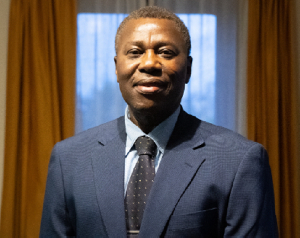
 Isaac Yaw Asiedu PhD is the author
In moments of historic importance, silence is never neutral—it is a statement.
Ghana once stood tall as the moral compass of Africa, leading the charge for justice, dignity, and Pan-African unity. From the bold vision of Dr. Kwame Nkrumah to Ghana’s continued role in global African discourse, the country has earned its place as a voice of conscience on the world stage.
Today, that legacy is being tested.
As calls for reparatory justice gain renewed global attention, Ghana has once again found itself at the center of a moral and political question: will it stand firmly with Africa and the diaspora, or will it hesitate when its voice matters most?
Recent developments surrounding President John Mahama’s position on reparations have reignited this debate. His stance reflects a growing continental demand—one that recognizes reparations not as a symbolic gesture, but as a necessary step toward addressing centuries of historical injustice, economic distortion, and systemic inequality.
Yet, at a time when Ghana’s voice should be united on such a defining national and continental issue, the absence of any clear and publicly visible support from former presidents raises serious questions about leadership and national cohesion.
Leadership does not end with tenure. Statesmanship is measured not only by actions in office, but by the ability to rise above partisan divides in defense of national interest. On issues such as reparatory justice, Ghana must speak with one voice.
If there has indeed been no message of acknowledgment or support, then this silence risks being interpreted not merely as political restraint, but as disengagement from a defining moral issue of our time.
Reparations are not about politics—they are about justice.
They are about acknowledging the enduring consequences of slavery, colonial exploitation, and the structural imbalances that continue to shape Africa’s place in the global economy. They are about restoring dignity, correcting historical wrongs, and laying a foundation for a more equitable future.
For Ghana—a nation whose very identity is rooted in the struggle for freedom and self-determination—to appear divided on such a matter sends the wrong signal, both to its citizens and to the international community.
This is not a moment for political hesitation.
It is a moment for unity.
It is a moment for former and current leaders alike to reaffirm Ghana’s unwavering commitment to justice—not selectively, but consistently.
The question is not whether one administration or another should take credit for advocating reparations.
The question is whether Ghana, as a nation, will stand firmly on the side of history.
Anything less diminishes the legacy we inherited and weakens the voice we must project.
Ghana cannot afford silence where justice demands clarity.

Copyright © 1994 - 2026 GhanaWeb. All rights reserved.










