



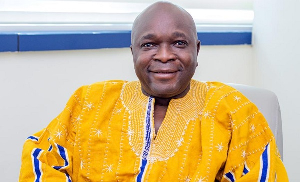
 Seidu Agongo is a businessman and philanthropist
It is now widely accepted that African countries, like those in the West, the Gulf and Asia, cannot solve their developmental challenges without strong collaboration with a robust and resilient private sector.
Globally, entrepreneurs create jobs, finance infrastructure through taxes and fees, and deliver practical solutions to local problems. Yet in many African countries, private sector development has benefited mostly privileged foreign firms, who are often backed by their home governments, while local entrepreneurs struggle with limited support, unfair competition and regulatory hostility.
In some cases, governments turn openly against their own businesspeople in a sad spectacle that was almost being normalized across our country.
More heartbreaking is the basis for those hostilities. They are often rooted in suspicions of political differences and ties to adversaries, resulting in years of sweat and budding ideas being grounded or destroyed using the state’s mighty power. In every practical sense, I have, sadly, lived this experience in recent years.
For those who know me, it is clear I did not begin my business journey in cozy offices. For brevity, it is fair to say I began in the bustling Nima Market in Accra, trading rice, sugar and cooking oil, during which I played every role there is to help sustain the business. I offloaded rice, helped manual trucks cart them to market women traders, some of whom still remember it and jokingly describe me in those hustles, and also acted as accountant, driver and CEO all put together.
Back in those days, I was just an ordinary person trading ordinary goods for ordinary people. Those early years shaped my outlook, which, as you will see later, became handy when adversity came roaring about nine or so years ago.
From opportunity to ambition
Trade teaches discipline in a way life and classrooms can sometimes fail to. It teaches money movement, trust and resilience. From the Nima Market, the opportunities had grown into ambition, strengthening my belief that indigenous resources, if properly governed, could build institutions that would outlast individuals.
With support from fellow committed partners, the belief and ambition started translating into investments across media, finance, education, manufacturing and services.
Every business created increased the number of jobs available to our compatriots, taking more families out of a scorching unemployment market and giving them hope. Of course, taxes were paid and expansion plans were drawn.
Burning my dreams
By 2015–2017, growth felt natural, if not inevitable. Like many Ghanaians with the country at heart, I believed that operating within the law, strengthening governance, and committing capital locally were enough to guarantee protection and continuity.
But time soon showed me that I was totally wrong.
From 2017 through 2024, my businesses entered a prolonged period of contraction. Growth was grounded, and existing operations weakened, and we were forced to switch from momentum to survival.
Over time, the monetary losses turned into watching my years of disciplined effort, sweat and dreams break under forces that were sudden but overwhelming.
One moment captured the cruelty of that period. Class FM, part of a media platform that hosted our multiple stations and sustained dozens of livelihoods, was destroyed by fire.
Reflecting on that incident, I now feel it was more than a building that burned. It was an attempt to incinerate a voice and its trust, and ultimately erase the moments and dreams of a humble boy from the dusty patches of the rocky Upper East Region.
Separately, I was subjected to prolonged prosecution and persecution. For almost eight years, my life was reduced to the courtroom. From Monday to Friday, I reported to court from 8 a.m. until sunset, under constant threat of warrants if I faltered. My entrepreneurship dream, which requires presence and guidance, was replaced by legal survival, ultimately crumbling my businesses.
Heritage Bank’s takedown
There was also the collapse of Heritage Bank Limited, perhaps the most significant one to many readers.
Heritage was a licensed, operating bank with staff, depositors, assets and obligations, with astute people heading it. The venerable Prof. Kwesi Botchwey served as Chairman, using his years of experience as finance minister, among others, to steer affairs.
The bank was solvent and resilient, as Bank of Ghana reports confirmed, and a plan to make it a tech-driven, consumer-centered bank was in full swing. Then the Bank of Ghana pulled the plug, shocking us and all fair-minded people. Meanwhile, other indigenous banks in distress were supported to finally stand alone or guided to merge.
Obnoxious ‘not fit and proper’ tag
In revoking Heritage’s licence, the BoG designated me as “not fit and proper,” in their search for a basis to back the rather targeted action.
That label had sweeping consequences for me. Banks immediately closed my personal and corporate accounts, effectively locking me out of the formal financial system—the very structure I was aiming to help improve. With one regulatory stroke, I was rendered financially untouchable. I was unable to transact, operate and function as a normal businessperson.
The obnoxious tag quickly spread beyond banking, as company registrations were blocked on grounds of alleged non-compliance. Opening new bank accounts became impossible. In official circles, I was increasingly portrayed not as an entrepreneur in distress, but as a risk, and branded a danger to the very financial sector I had spent years helping to build.
Inequality in business
Heritage’s assets were later auctioned, and properties, including branches acquired, refurbished and equipped with millions of cedis, were abandoned. Some of those buildings remain vacant and deteriorating to this day, serving as silent monuments to how politics destroys value rather than preserving it.
From where I stood, the treatment felt unequal. And as I have said before, when inequality enters regulation, confidence exits the system.
What is often missing in conversations about business failure is the human cost. Businesses are not abstractions but institutions filled with humans—workers whose dreams and hopes depend on the survival of the business. When they collapse, lives are shattered, and those affected will have to hope a miracle comes.
Lessons and picking up the pieces
For seven years, I watched people who trusted my leadership struggle with uncertainty they did not create. That weight stays and can sometimes be haunting.
But it teaches lessons. I learned that optimism does not replace sustenance, and that legality and compliance alone do not guarantee protection in our society. For indigenous businesses, rules may exist, but their application can be selective. I also learned that resilience is not about quick recovery, but about enduring without surrendering your values and life goals.
To young entrepreneurs, I advise you to build with resilience, not bravado. Document everything and prepare emotionally for reversals, because in our environment, shocks often arrive without warning. To the political class, business has no party colours. When companies collapse, families face the high possibility of life without a decent meal, lifesaving drugs and relevant education for kids—the future of Ghana.
But I do not regret building. I regret only the innocence with which I assumed that good faith was permanent and reciprocal.
And so I write this not in anger. I write it in memory of the system that was created to suppress ideas, not support them, as is the primary objective of governments.
Like air, life roles fizzle out, but the consequences of our actions remain and endure. Power must be exercised with discretion and absolute commitment to the true interest of the state.
And if there is a message for policymakers from my experience, it is that business confidence is fragile. Indigenous enterprise should not become collateral damage in the exercise of authority.
For when one business is weakened unfairly, many youngsters question why they should stay and potentially become the next victims.
Fortunately, I am still standing, believing in Ghana and hoping to pick up the pieces.

Copyright © 1994 - 2026 GhanaWeb. All rights reserved.










