



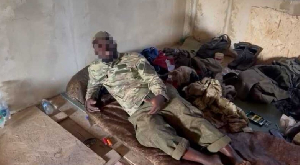
 The network highlights how easily perceptions can be shaped
In an era where information travels faster than ever, the battle for influence is no longer fought only with armies or diplomacy—but with narratives.
A recent investigation by a coalition of global media organisations has pulled back the curtain on one such operation: a sprawling network known as Africa Politology. What emerges is a portrait of a sophisticated system designed to shape political realities across Africa, often from behind the scenes.
The investigation, drawing on more than 1,400 pages of leaked internal documents, reveals a network deeply embedded in political, media, and even military spheres across 34 countries. At its centre is Russia’s Foreign Intelligence Service (SVR), which is said to have taken control of the operation after the death of Wagner Group founder Yevgeny Prigozhin in 2023.
Since then, Africa Politology has reportedly intensified its activities, investing millions of dollars into influence campaigns across the continent. But unlike traditional diplomacy, its methods are subtle, layered, and often invisible.
The goal, according to internal documents, is ambitious: to reshape Africa’s political landscape by building alliances with governments and actors aligned with Russian interests. The plan, dubbed the “Confederation of Independence,” envisions a network of friendly regimes stretching across the Sahel and beyond.
To achieve this, the organisation employs a mix of tactics—some familiar, others more covert. In Namibia, for instance, operatives are said to have created a fake letter alleging foreign interference in local elections. The story spread rapidly online, reaching millions and influencing public perception at a critical political moment.
Elsewhere, the documents point to efforts to influence military dynamics. In Senegal, one scenario reportedly involved building ties with the army and exploring the possibility of a coup. In Libya, the objective was more direct: to create instability in the country’s western region.
But perhaps the most powerful tool in this arsenal is digital media. Through networks of fake accounts and paid influencers, Africa Politology amplifies narratives that resonate with local audiences while subtly advancing geopolitical goals.
At the operational level, the network is run by a cadre of strategists, analysts, and media specialists. They monitor political developments, craft messaging strategies, and deploy resources with precision. In total, nearly 100 “counteragents” are believed to be embedded within various institutions across Africa.
Despite these revelations, the response from African governments has been muted. South Africa has publicly dismissed the findings, while other countries and the African Union have yet to issue formal reactions.
For observers, the silence is telling.
As Africa’s global importance grows—driven by its resources, markets, and strategic location—it is increasingly becoming a focal point for international competition. In this environment, influence is not just about presence, but perception.
The Africa Politology network highlights how easily those perceptions can be shaped—and how difficult they can be to trace.
Ultimately, the story is not just about one country’s strategy, but about the evolving nature of power in a connected world. In Africa, where political systems are still consolidating and digital spaces are rapidly expanding, the line between information and manipulation is becoming harder to define.
And in that grey zone, influence thrives.

Copyright © 1994 - 2026 GhanaWeb. All rights reserved.










