



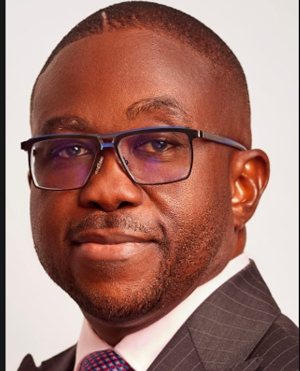
 Charles Benoni Okine is a former Greater Accra Regional Chairman, GJA
A few days ago, the Ga Mantse, King Tackie Teiko Tsuru II, toured some flood-prone communities in Accra. One of the areas he visited was Weija, where the spillage of the Weija Dam by the Ghana Water Company Limited (GWCL) has once again left many homes submerged and roads impassable.
Standing amid the devastation, the Ga Mantse did not mince words. "Enforce the bylaws. The Regional Ministry and the assemblies must enforce the bylaws. Nobody should be allowed to build in waterways," he declared.
The frustration in his voice was unmistakable. It was the frustration of a revered leader witnessing a crisis that should never have reached this point.
As someone who has spent over two decades reporting on urban development, flooding, and environmental issues, once as a journalist at Graphic, the comments of the Ga King struck a familiar chord. Over the years, I have covered countless stories of floods across Accra and other parts of the country.
I have listened to ministers, municipal officials, engineers, planners, and traditional authorities condemn the construction of buildings in waterways. I have reported numerous calls for the demolition of illegal structures. Equally, I have witnessed appeals for a "human face" to be applied whenever authorities attempt to enforce the law.
Unfortunately, it is precisely this culture of excessive leniency that has contributed to the problem.
When individuals deliberately violate planning regulations and face little or no consequences, others are encouraged to do the same. The message becomes clear: break the law today, and tomorrow someone will plead your case on humanitarian grounds. The result is the chaos we see today.
Over the years, the issue has also become heavily politicised. Enforcement actions are often viewed through partisan lenses rather than as necessary interventions to protect lives and property. Consequently, authorities hesitate, illegal developments continue, and the problem worsens.
Ordinarily, one would sympathise with residents whose homes and belongings have been destroyed by floods. Human suffering deserves compassion. However, we must also confront an uncomfortable truth: many of these disasters are self-inflicted.
Take the Weija Dam area, for example. It is difficult to understand why any reasonable person would invest substantial resources in constructing a house within a known watercourse. Every year, residents are reminded that the dam may spill. Every year, warnings are issued. Yet, despite the obvious risks, new buildings continue to emerge in these vulnerable locations.
What explanation can there be?
Those who knowingly build in waterways understand the risks involved. If they choose to gamble with nature, they must also accept responsibility for the consequences. The state cannot continue to subsidise recklessness through repeated emergency interventions and costly drainage projects.
Even more troubling is the role of city authorities. Illegal structures do not appear overnight. They begin with a foundation, progress to walls, and eventually become completed buildings.
At every stage, planning authorities have opportunities to intervene. Why then do many assemblies sit by and watch these developments take shape, only to express concern after disaster strikes? This is where accountability must begin. The red ink that was used to write “STOP WORK. PRODUCE PERMIT” must not be a mere painting.
The Ga Mantse was right when he suggested that chiefs, family heads, and others who knowingly sell lands within waterways should be held accountable. Their actions contribute directly to the problem. However, accountability must not end there. Officials who issue permits improperly or deliberately ignore illegal developments must also face sanctions.
Without addressing the root causes, we will continue treating symptoms while the disease spreads.
Another dimension
There is another dimension often overlooked. That is, when people build illegally in waterways, they not only endanger themselves. They endanger their neighbours as well. Floodwaters that would naturally follow designated channels are redirected into communities where residents may have complied fully with planning regulations.
Ironically, many victims of flooding are not the offenders but law-abiding citizens whose properties become collateral damage due to the actions of others.
That is why this issue goes beyond individual choice. It is a matter of public safety and collective responsibility.
Much as I feel their pain, the time has come for Ghana to make a difficult but necessary decision.
We must stop treating illegal construction in waterways as a minor offence. We must stop romanticising indiscipline. We must stop allowing emotions to override common sense.
This should form a critical component of the government's RESET Agenda, not to punish citizens unnecessarily, but to restore order, protect lives, and safeguard public resources.
Every year, billions of cedis are spent on drainage improvements, desilting exercises, and emergency flood interventions. While these projects are necessary, many of the costs arise from preventable acts of indiscipline.
Resources that could be directed toward schools, hospitals, roads, and job creation are instead used to address problems that should never have existed in the first place.
For this reason, I commend the Minister for Works, Housing and Water Resources, as well as the various assemblies that have signalled a renewed commitment to enforcing planning regulations. The process may be painful, but the long-term benefits far outweigh the short-term discomfort.
The era of handling chronic lawbreakers with kid gloves must end. Those who have respected the rules should not continue suffering because others choose to ignore them.
Role of media
The media also has a role to play. Rather than focusing solely on emotional narratives after floods occur, we must consistently highlight the dangers of illegal construction and support lawful enforcement efforts. Public education must go hand in hand with decisive action.
The Ga Mantse, on whose land we sit, has spoken. His message was clear, timely, and very unambiguous. The question now is whether we will listen.
If Accra is to become a resilient and liveable city, the cure must begin now. Not tomorrow. Not after the next flood. Not after the next tragedy. Now!
The writer is a former Greater Accra Regional Chairman, GJA.

Copyright © 1994 - 2026 GhanaWeb. All rights reserved.










