



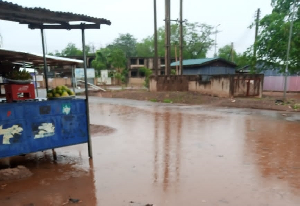
 Flooding has become major issue of concern in Ghana
Every rainy season, a familiar tragedy unfolds across Ghana. Streets become rivers, homes disappear under muddy water, and families are forced onto rooftops clutching whatever they could salvage. In Accra, Kumasi, Tamale, and dozens of other communities, flooding is no longer an occasional disaster — it is an annual ritual.
Yet despite decades of destruction, the nation continues to treat floods as surprises rather than predictable consequences of deep, unresolved failures. This article examines what causes Ghana’s floods, the devastating effects they leave behind, who bears responsibility, and what genuine solutions look like.
https://www.ghanaweb.com/GhanaHomePage/NewsArchive/12-Dead-150-Rescued-GNFS-gives-breakdown-of-June-29-flood-tragedy-2041119
1. The Causes: A Crisis of Many Layers
Ghana’s flooding crisis is not simply a matter of heavy rainfall. West Africa’s climate produces intense seasonal rains, but the same rains fall on neighbouring countries without producing the same catastrophic results. The causes of Ghana’s floods are systemic, layered, and largely man-made.
The most visible cause is the wholesale destruction of natural drainage systems. Wetlands, which once absorbed and slowly released excess rainwater, have been drained and built over in the rush for urban land. In Greater Accra alone, the Odaw River basin and the Sakumono Ramsar wetlands have been progressively encroached upon by housing developments, markets, and industrial facilities. Without these natural buffers, rainwater has nowhere to go except through streets, homes, and businesses.
Urban sprawl driven by rapid and poorly managed population growth has compounded the problem. Accra’s population has grown dramatically over recent decades, but city infrastructure — drainage channels, roads, and sewage systems — has not kept pace. Communities spring up informally on floodplains and riverbanks, the very land that exists precisely because water regularly occupies it. When the rains arrive, nature simply reclaims what was always hers.
Solid waste mismanagement is another critical driver. Ghana generates enormous volumes of plastic and solid waste, much of which ends up in drainage channels, gutters, and waterways. Choked drains cannot channel water away during heavy rainfall, turning entire neighbourhoods into holding pools. This is not a natural phenomenon — it is the direct result of inadequate waste collection infrastructure and deeply entrenched littering habits.
Finally, climate change is intensifying all of these vulnerabilities. Rainfall patterns have become more erratic and intense, with shorter, more violent downpours overwhelming systems that were already inadequate. Rising temperatures increase evaporation and atmospheric moisture, making extreme rain events both more frequent and more severe.
2. The Effects: More Than Water Damage
The human cost of Ghana’s floods is immense and consistently underestimated. The most immediate effect is loss of life. Drownings, electrocutions from submerged power lines, and building collapses claim lives every rainy season. The June 2015 floods and fire disaster in Accra, which killed over 150 people at a petrol station, stands as the most deadly recent example, but deadly flooding events occur in some form virtually every year.
Beyond the fatalities, hundreds of thousands of Ghanaians are displaced from their homes annually. Temporary shelters become overcrowded. Displacement disrupts schooling, livelihoods, and family cohesion. Children miss critical months of education.
Traders lose stock. Farmers watch crops drown in the fields. The economic losses run into hundreds of millions of cedis each year, disproportionately borne by the poor who have the least capacity to recover.
Public health consequences are severe and lasting. Floodwater mixes with sewage and solid waste, creating breeding grounds for cholera, typhoid, malaria, and other waterborne and vector-borne diseases. Ghana has experienced repeated cholera outbreaks following major flood events, stretching healthcare resources in communities already underserved. Children and the elderly are most vulnerable to the disease burden that floods leave behind.
Infrastructure suffers enormously as well. Roads are eroded and destroyed, bridges undermined, and public facilities damaged. The cost of rebuilding and repairing infrastructure after each flood season consumes public resources that could have been invested in development — creating a cruel cycle where floods drain the very funds needed to prevent future floods.
3. The Blame: Shared, But Not Equally
When floods come, blame follows swiftly — and it tends to scatter in all directions at once. Opposition politicians blame the sitting government. The government blames previous administrations. Officials point at residents who build on waterways and dump refuse in drains. Citizens point back at government for failing to provide alternatives. Everyone has a partial point. But a clear-eyed assessment shows that responsibility is not equal.
Government, at all levels, bears the heaviest share of blame. The persistent failure to enforce land use planning regulations, building codes, and environmental protection laws has allowed floodplain encroachment to continue unchecked for decades. Permit systems are compromised by corruption. Political elites and well-connected developers have been allowed to build on restricted land, setting a precedent that ordinary citizens then follow. The state has simultaneously failed to invest adequately in drainage infrastructure, waste management systems, and flood early-warning mechanisms.
Metropolitan, Municipal, and District Assemblies (MMDAs) have failed in their mandate to manage urban development sustainably. Gutters go uncleaned, drains go unmaintained, and waste collection remains woefully inadequate in poor communities. Yet these same assemblies are responsible for issuing building permits and enforcing spatial planning guidelines.
The private sector — developers, real estate companies, and landlords — shares responsibility for building on restricted land and failing to incorporate adequate drainage in their developments. Too often, profit calculations exclude the externalities their construction imposes on surrounding communities.
Citizens, too, have a role to play honestly. The widespread practice of dumping refuse in drains, gutters, and waterways is a direct contributor to flooding, even if it is partly a consequence of inadequate waste collection. Individual behaviour cannot be separated from collective outcomes.
But it must be said clearly: blaming the poor for living on floodplains misses a critical truth. They live there because they have no other affordable option. The failure to provide adequate housing, enforce planned development, and create economic opportunities outside congested urban centres is a government failure, not a personal moral failure of flood victims.
4. The Solutions: Long-Overdue, But Not Impossible
Ghana does not lack knowledge of what needs to be done. Numerous studies, reports, and expert recommendations have been produced. What has been lacking is the political will, institutional capacity, and sustained funding to act. Genuine solutions require action on multiple fronts simultaneously.
First, urban planning must be treated as a non-negotiable public good. Land use regulations must be rigorously enforced, and corruption in the permit system must be prosecuted and punished. Floodplains, wetlands, and green buffer zones must be protected by law and in practice. Where communities are already settled in high-risk areas, phased and compensated relocation programmes — not forced evictions — must be planned and executed with dignity.
Second, Ghana must invest massively in drainage infrastructure. The Accra Drainage Master Plan and similar frameworks for other cities must move from paper to construction. This requires dedicated, multi-year budget allocations rather than ad-hoc emergency spending after each disaster. Regional and city governments must have both the resources and the accountability to maintain drainage systems year-round, not just clear them reactively during the rainy season.
Third, solid waste management must be fundamentally transformed. Universal waste collection services, especially in low-income urban communities, are essential. Public education campaigns on the link between littering and flooding must be sustained and culturally sensitive. Fines for dumping waste in drains must be enforced, not as revenue generation, but as genuine deterrence.
Fourth, early warning systems and disaster preparedness must be strengthened. The Ghana Meteorological Agency has capacity that needs further investment and public communication infrastructure. Flood-risk maps should be publicly accessible and used to guide planning decisions. Community-level disaster response plans, with trained local volunteers, should be standard practice in all flood-prone areas.
Fifth, climate adaptation must be integrated into all planning decisions. Green infrastructure — permeable pavements, urban forests, restored wetlands, and green roofs — can reduce flood risk while improving urban quality of life. Ghana’s climate financing commitments under international frameworks must be translated into domestic programmes, particularly for vulnerable communities.
Conclusion: The Water Will Return
Ghana’s floods are not acts of God. They are the accumulated consequences of poor planning, institutional failure, inadequate investment, and short-term thinking. The water will return with the next rainy season, and the season after that. Whether it finds a city better prepared to manage it, or the same vulnerable communities once again paying with their lives and livelihoods, is entirely a matter of political choice.
The solutions are known. The resources — domestic and international — are available. What is required is leadership that treats flooding not as a seasonal emergency to be managed but as a structural crisis to be solved. Ghana deserves dry floors, safe streets, and the simple dignity of a home that does not wash away.
Massive traffic gridlock forces commuters to trek along Old Barrier-Kasoa highway after flood

Copyright © 1994 - 2026 GhanaWeb. All rights reserved.










