



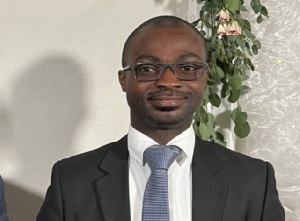
 Scott Edward Agyeman is the author of this article
The dream of a united Africa, which was championed by Dr Kwame Nkrumah more than six decades ago, is once again being tested by a wave of political instability across the continent of Africa.
Military coups, constitutional amendments that extend presidential terms as well as growing public dissatisfaction with democratic governance have reignited debate over whether Africa is moving toward a stronger democracy or slipping into greater instability.
As the continent continues to pursue ambitious goals such as the African Continental Free Trade Area (AfCFTA), political stability remains becomes the foundation through which sustainable economic growth and continental integration depend.
West and Central Africa have witnessed an alarming rate in the resurgence of military coups in recent years. Mali experienced coups in 2020 and 2021 which was followed by military takeovers in Guinea in 2021, Burkina Faso in 2022, Niger in 2023 and Gabon in 2023.
While many Africans condemn military intervention as unconstitutional, some citizens have welcomed these coups and have argued that elected governments always fail to tackle corruption, insecurity, unemployment and poor governance in general.
This growing frustration highlights a deeper crisis where democracy cannot be judged solely by regular elections but by its ability to improve the lives of ordinary people.
Equally concerning is the increasing use of constitutional amendments to extend presidential terms.
In countries such as Rwanda, Uganda and the Republic of the Congo, constitutional changes have enabled incumbent leaders to remain in office far beyond the original limits envisioned by democratic constitutions. Supporters argue that experienced leaders provide continuity, political stability and long-term development planning.
However, critics have the opinion that prolonged rule weakens democratic institutions, limits political competition further increases the risk of authoritarianism and civil unrest. The controversy demonstrates that constitutional reforms must serve the interests of citizens rather than individual leaders.
Again, regional and continental institutions have attempted to respond to these challenges with mixed success.
The African Union has consistently condemned unconstitutional changes of government and suspended several coup-led states from its activities.
The Economic Community of West African States imposed sanctions on Mali, Burkina Faso, and Niger and even considered military intervention following the coup in Niger. Meanwhile, the Southern African Development Community has promoted regional peace initiatives, particularly in Mozambique, while the East African Community has engaged in mediation efforts in eastern Democratic Republic of Congo.
Despite these efforts, critics argue that regional organizations have often been inconsistent as they appear decisive in some crises while remaining silent when elected leaders manipulate constitutions or suppress opposition.
In all these undesirable circumstances, Africa can draw valuable lessons from other regions without abandoning its unique political and cultural realities.
The European Union demonstrates how countries with different histories and languages can strengthen peace through shared institutions, respect for democratic norms, and economic cooperation. Similarly, the Association of Southeast Asian Nations has shown that sustained regional dialogue and economic integration can help reduce tensions among member states.
However, Africa should not simply replicate foreign models. Solutions must be tailored to local realities that include diverse governance systems, security challenges and youthful populations as well as varying levels of economic development.
There are both advantages and disadvantages to the current political landscape. On the positive side, Africa has witnessed greater civic awareness, stronger youth activism, expanding digital participation, and increasing demands for accountability.
Citizens are becoming more willing to challenge poor leadership and demand better governance.
On the negative side, persistent insecurity, weak institutions, electoral disputes, corruption, and unconstitutional transfers of power continue to undermine investor confidence, discourage long-term investment and slow regional integration.
Political instability also diverts scarce public resources from education, healthcare, infrastructure as well as job creation toward security and emergency responses.
The way forward requires stronger democratic institutions rather than stronger personalities. Independent electoral commissions, impartial judiciaries, professional security forces, and vibrant civil society organizations are essential for building public trust.
Regional bodies could enforce democratic principles consistently, regardless of whether violations come from military juntas or civilian governments seeking to entrench themselves in power. Greater investment in youth employment, education, anti-corruption measures and inclusive economic opportunities would also reduce the conditions that often fuel political unrest.
Dr Kwame Nkrumah's vision of "Africa Must Unite" remains as relevant today as it was in the 1960s. Pan-Africanism cannot flourish where democratic values are weakened and political instability becomes normalized.
Yet the continent's future is not predetermined. By strengthening democratic governance, respecting constitutional order, learning from successful regional partnerships around the world, and placing the interests of African citizens above political ambition, Africa can build a more stable, prosperous, and united continent.
The survival of Pan-Africanism will ultimately depend not only on governments and regional institutions but also on the collective commitment of Africans to uphold democracy, accountability, peace, and the shared vision of one united Africa.
Everyone has a role to play in making Africa united and vibrant.

Copyright © 1994 - 2026 GhanaWeb. All rights reserved.










