



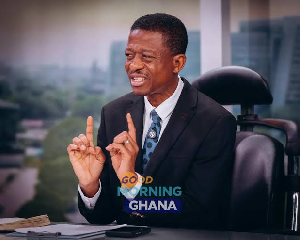
 Dr Stephen Issaka Kpanti
For more than ten years, Ghana’s political debate has, in my view, been systematically influenced by a group of commentators who operate under the banner of civil society while advancing positions that appear deeply partisan.
At the forefront of this trend, I argue, is Kofi Bentil, Senior Vice President of IMANI Africa.
Bentil has presented himself as an independent voice in Ghana’s democratic discourse. However, I contend that his public commentary reveals a consistent bias against the National Democratic Congress (NDC), while often aligning with positions favourable to the New Patriotic Party (NPP).
The evidence, in my view, can be found in a series of comments and interventions he has made on major national issues.
Genuine intellectualism requires consistency, empirical rigour and a commitment to truth. I argue that Bentil’s comments on several important national issues raise questions about whether he applies these standards consistently.
1. The AFRC-era executions and the EOCO controversy
On September 24, 2026, Kofi Bentil posted a message on Good Evening Ghana in which he referred to the abduction and killing of three judges during the AFRC era. He stated that the judges did not resist when they were invited and were subsequently murdered.
I consider this comparison inappropriate and politically charged.
Bentil, who has publicly expressed views supportive of the NPP and its presidential candidate, Dr Mahamudu Bawumia, has, in my view, repeatedly invoked some of the darkest periods in Ghana’s history when commenting on issues involving the NDC.
At the same time, I argue that he has not applied the same level of scrutiny to instances in which state security or law-enforcement agencies have been accused of using heavy-handed methods against members of the NDC or civil society activists.
The June 1982 killing of three High Court judges — Justices Kwadwo Adjei Agyepong, Cecilia Koranteng-Addow and Poku Sarkodie — and retired army officer Major Sam Acquah was a serious historical tragedy.
In my opinion, comparing that episode with a contemporary dispute involving the Economic and Organised Crime Office (EOCO), parliamentary immunity and an investigative notice creates a false equivalence.
Although the conduct of EOCO officials at the court premises attracted criticism from the public and the Ghana Bar Association, there has been no established evidence that the officers intended to carry out an execution or threaten anyone’s life.
I therefore consider the comparison unnecessarily inflammatory and capable of creating public fear around what is, fundamentally, a dispute over investigative and constitutional procedures.
2. The Laboma Beach demolition comments
On September 19, 2026, while commenting on JoyNews’ Newsfile about the state-organised demolition of buildings near Laboma Beach, Bentil stated:
“The NDC's political tradition is one that, in our history, has been known for destroying people's businesses.”
I consider this statement an overly broad characterisation of a complex political and historical tradition.
Reducing a complicated history to such a general statement, in my view, does little to advance a serious discussion about property rights, demolition exercises or the legal basis for government action.
3. The judicial debate
In September 2025, during the controversy surrounding the judiciary under the Mahama administration, Bentil described the actions against the then Chief Justice as a premeditated “witch-hunt”.
I argue that this position raises questions about consistency in his approach to institutional and judicial controversies.
I also question whether he applied the same level of scrutiny to judicial appointments and other institutional decisions under the previous NPP administration.
The same question arises in relation to the removal of former Electoral Commission Chairperson Charlotte Osei.
4. The 2020 election dispute
Following the highly contested 2020 presidential election, Bentil criticised the NDC’s challenge to the election results, referring to the party’s position as a “narrative charade”.
He also warned the NDC against attempting to influence public opinion without concrete evidence, saying:
“Don't make it seem as though the election had been totally stolen.”
I consider this an example of what I regard as his tendency to dismiss concerns raised by the NDC while demanding a particularly high evidentiary threshold from the party.
5. The debate over the voters’ register
In February 2020, during the parliamentary disagreement over the introduction of a new voters’ register, the NDC Minority staged a walkout in protest.
Bentil criticised the use of terms such as “tyranny” and “despotism” and argued that an elected government had a legitimate prerogative to exercise its authority.
I consider this position problematic because, in my view, democratic legitimacy does not remove the need for scrutiny of how political power is exercised.
6. The 24-hour economy
In July 2025, Bentil strongly criticised President John Dramani Mahama’s 24-hour economy policy.
He stated:
“I wish it could work, but I know it won't!”
He also argued:
“Campaign is poetry, governance is prose, which means that you can sweeten things up and imagine wonderful outcomes when campaigning, but in government you have to face reality!”
I consider his opposition to the policy another example of what I regard as a consistently negative assessment of major NDC initiatives.
The bureaucracy argument
Bentil criticised the proposed implementation framework, arguing that establishing a “24-Hour Economy Authority” could create an unnecessary parallel bureaucracy.
My position is that such an authority could instead provide coordination for the different components of the policy, including power supply, security and policy implementation.
The infrastructure argument
Bentil also argued that the policy would be an “expensive fantasy” unless major investments were first made in addressing water and energy shortages, particularly in the Accra-Tema area.
I disagree with this assessment. In my view, expanding economic activity around the clock could itself contribute to the revenues and productivity required to finance infrastructure development.
The alleged contradiction
Bentil has also described the 24-hour economy as a rebranding of existing initiatives.
However, on January 14, 2026, he publicly called for road contractors to work on a three-shift basis.
I consider this position difficult to reconcile with his criticism of the 24-hour economy concept.
The NDC’s proposed 1,3,3 system, in my view, is intended to increase productivity through extended working hours, supported by measures such as lower borrowing costs, improved roads, reliable electricity, tax incentives and security.
Fact-checking the economic claims
I also question several economic claims that Bentil has made in his public commentary.
Gold reserves
In March 2026, during an appearance on TV3’s The Key Points, Bentil was reported to have claimed that the previous NDC administration had depleted half of Ghana’s gold reserves within two years.
According to figures cited in this debate, Ghana’s gross international reserves stood at about US$6.2 billion at the end of December 2016, equivalent to roughly 3.5 months of import cover.
I argue that this claim requires a distinction between Ghana’s gross international reserves and the Bank of Ghana’s gold holdings.
I also point to subsequent scrutiny of the Bank of Ghana’s gold transactions, including reported sales of gold reserves, and argue that these issues should be subjected to the same level of public scrutiny.
Cedi performance
Bentil has frequently criticised the economic record of the Mahama administration.
My contention is that the performance of the cedi should be examined using comparable data and periods rather than broad political characterisations.
The cedi depreciated during the Mahama administration, but the scale and circumstances of that depreciation should be compared with the currency’s performance under the subsequent NPP administration.
Public debt
The Mahama administration inherited public debt of about GH¢122 billion, equivalent to approximately 56% of GDP, according to figures cited in this debate.
The administration subsequently undertook major infrastructure projects, including the Greater Accra Regional Hospital, the University of Ghana Medical Centre and Terminal 3 at Kotoka International Airport.
Under the subsequent NPP administration, public debt rose significantly, eventually contributing to Ghana’s debt restructuring programme and sovereign default.
The recent strengthening of the cedi has also contributed to a reduction in the cedi value of public debt.
Bentil and Dr Bawumia
The question of Bentil’s political independence becomes particularly relevant, in my view, when considering his public comments about Dr Mahamudu Bawumia.
On February 3, 2024, Bentil appealed to Ghanaians to give Bawumia a “fair hearing”.
On June 20, 2025, he stated that:
“none of the plans put forward by other political figures come close”
to Bawumia’s vision.
He also called on Ghanaians to give Bawumia a “break”, arguing that the then Vice President was essentially an adviser and did not have direct control over government decisions.
I consider these positions relevant to the debate over Bentil’s claim to political independence.
On JoyNews’ Newsfile, Bentil stated:
“I am not neutral, I have never been... but I am independent.”
This distinction between neutrality and independence is important. A person may openly hold political views while still claiming to assess issues independently.
However, my argument is that Bentil’s public record warrants scrutiny as to whether his analysis consistently meets that standard.
A call for civic accountability
The central issue, in my view, is not whether Kofi Bentil is entitled to hold political opinions. He is.
The question is whether commentators who operate within civil society and public-policy spaces apply consistent standards when assessing political actors, governments and institutions.
I therefore believe Bentil’s public interventions should be examined critically, particularly where his comments concern the NDC, the NPP and their respective policies.
Rather than accepting claims of neutrality at face value, the Ghanaian public should assess the arguments, evidence and consistency behind the commentary of all prominent political and civil-society voices.
The credibility of public discourse depends on applying the same standards to political actors regardless of party affiliation.

Copyright © 1994 - 2026 GhanaWeb. All rights reserved.










