



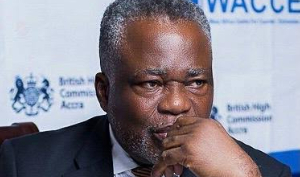
 U A R Colonel Festus Aboagye (Retired)
Executive Summary
Ghana’s decision to seek BRICS membership is a significant foreign-policy initiative. Public discussion has tended to fall into two camps. One sees BRICS as an escape from excessive dependence on Western institutions and markets. The other sees a step towards alignment with China, Russia and other emerging powers. Both could be oversimplifications.
The more important question is whether participation would strengthen Ghana’s strategic agency: its ability to choose, scrutinise, alter and, where necessary, exit external partnerships in pursuit of national interests. This brief argues that the application is best understood as a test of agency rather than alignment.
• An announcement, not yet an application. On 6 October 2026, Ghana announced a Cabinet decision to apply. On the available evidence, no formal application had been submitted by 10 October 2026.
• A forum, not an alliance or a common market. BRICS confers no automatic trade preferences, finance or security guarantees. Most gains would depend on agreements with individual members and institutions.
• The benefits lie in diversification, not replacement. Membership could broaden Ghana’s partners, strengthen its bargaining position, and provide a platform to push for global governance reform.
• The risks are real but conditional. They include new dependency, fiscal exposure, technology lock- in, diplomatic pressure, and reactions from Western partners, including a United States tariff threat.
• Outcomes, not symbolism. Membership should be judged by whether it broadens options, strengthens leverage and preserves accountability.
Suggested citation: Aboagye, F. B. (2026). A test of agency: Ghana’s BRICS application and the future of strategic diversification (UAR Policy Brief No. 2/2026). Ulinzi Africa Resources. The views expressed in this brief are the author’s own.

Copyright © 1994 - 2026 GhanaWeb. All rights reserved.










