



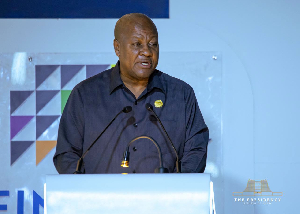
 President John Dramani Mahama
Mr President, It Is Time to End the Recurring Controversies That Threaten Ghana’s International Reputation
Your Excellency,
I write with respect for your office and genuine concern for the reputation of our beloved country, Ghana. I believe Ghana deserves better, and that the promise of a reset must mean more than a change of government. It must also represent a fundamental change in how we protect our national reputation, uphold public accountability and manage the responsibilities entrusted to our public institutions.
Mr President, this is not the first time I have written to you about matters that threaten Ghana’s image internationally. In my earlier open letter, A Call to Extend the Reset: The Drug Trafficking Crisis and the Legacy You Promised, I raised concerns about drug trafficking and the damage it can cause to our country’s reputation. I appealed to you to look beyond those at the bottom of the chain and ensure that anyone who organises, finances or facilitates such activities is held accountable wherever the evidence establishes wrongdoing.
I write again because these concerns are connected by one fundamental issue: Ghana’s image, credibility and standing in the international community.
As someone trained in International Relations and Diplomacy and a fellow of the Emerging Leaders of Australia and African Union Diplomats (ELAAD) programme, I pay particular attention to how Ghana is perceived beyond our borders. My concern is not merely academic. Our international reputation influences how our citizens are received, how our institutions are trusted and how seriously our national commitments are taken.
It is for this reason that I continue to draw your attention to these matters. I do so respectfully, as a concerned citizen who wants Ghana to be respected wherever our people go.
A Troubling Pattern That Demands Attention
Mr President, I wish to draw your attention to a series of controversies spanning several years involving individuals travelling abroad under the names of sporting associations or in connection with public institutions. These incidents raise serious questions about the verification of credentials, the use of official documents, the authorisation of international travel and the responsibility of our institutions to safeguard Ghana’s credibility.
My intention is not to pronounce anyone guilty before the facts are established. Rather, I seek to understand why controversies of a similar nature keep recurring and whether sufficient measures have been taken to prevent them.
In July 2009, Ghana faced an embarrassing controversy in Australia involving a sporting event for deaf footballers. Contemporary reports indicated that hearing persons travelled to participate in an event intended for deaf players, while the deaf participants who were expected to represent Ghana reportedly remained behind.
The incident prompted serious concerns about the alleged substitution of participants and the possible exploitation of an opportunity intended for persons with disabilities. Reports also indicated that the Australian organisers demanded US$14,789 to cover expenses associated with hosting the Ghanaian contingent.
The controversy had further consequences. Sports official James Armah appeared before an Accra Circuit Court in August 2009, charged with false reports injuring the reputation of the state. He pleaded not guilty. The existence of that charge must be distinguished from any final determination of guilt.
Nevertheless, the incident raised troubling questions about the selection of participants, the handling of travel arrangements and allegations that money had been collected from people seeking the opportunity to travel.
Mr President, this was more than a sporting disagreement. It raised questions about the integrity of the arrangements through which Ghana was represented internationally and the possible exploitation of persons with disabilities. One would have expected the incident to prompt lasting improvements in the verification of participants, the authorisation of official travel and the accountability of those entrusted with managing such arrangements.
Yet, in April 2018, another controversy emerged during the Commonwealth Games on Australia’s Gold Coast. The incident involved allegations concerning people presenting themselves as journalists covering the Games, alongside wider concerns about the credibility of travel arrangements and credentials associated with the Ghanaian contingent.
The controversy led to the suspension of then Deputy Minister for Youth and Sports Pius Enam Hadzide and other officials. However, in July 2018, the Presidency announced that an inquiry report submitted on 6 July contained no adverse findings against Hadzide and Kwadwo Baah Agyemang, allowing them to resume their duties.
I acknowledge that reported outcome and do not seek to revive allegations against individuals who were cleared by the inquiry. My concern is institutional rather than personal: what lessons were drawn from the controversy, what safeguards were strengthened, and how can we prevent similar situations from recurring?
In April 2024, another troubling incident arose when 11 people reportedly travelled to Norway as purported para-athletes and officials but did not register to participate in the intended competition. The National Paralympic Committee of Ghana publicly denied that the group represented its official team.
On 21 July 2024, the Ghana News Agency reported that the committee had suspended two individuals over alleged document falsification, including the alleged unauthorised use of the committee’s letterhead and the president’s signature and stamp in visa-related approaches to embassies.
Once again, Ghana’s name became associated with an international controversy involving the representation of our country, the credibility of official documents and the circumstances under which individuals travelled abroad.
These incidents were not necessarily connected, and their circumstances differed. However, their recurrence raises an important question: have we done enough to strengthen the systems that protect Ghana’s name and prevent the misuse of institutional authority?
The 2026 World Cup Visa Controversy
Mr President, in 2026, a new controversy has emerged over alleged visa-facilitation arrangements linked to the FIFA World Cup hosted by the United States, Canada and Mexico.
Media reports and public statements have raised questions about arrangements involving the National Sports Authority (NSA), the Ghana Tourism Authority (GTA), the Ministry of Sports and Recreation and a private entity, TRIBE Culture Fest.
Among the allegations are concerns about the preparation and submission of travel-related lists, the verification of applicants’ identities and institutional positions, and the circumstances under which assistance with visa applications and travel arrangements was allegedly offered.
The financial allegations are particularly serious. Reports have referred to approximately US$623,000 allegedly received from prospective travellers seeking assistance with visa and travel arrangements connected to the tournament. Other reporting has referred to applicants allegedly being charged as much as US$8,000 each.
These figures and allegations must be investigated rather than treated as established facts. Nevertheless, their seriousness warrants a thorough, independent and credible examination of the documentary evidence, the financial transactions and the roles played by the individuals and institutions involved.
On 1 October 2026, your administration suspended Yaw Ampofo Ankrah as Director-General of the National Sports Authority pending an investigation by the Criminal Investigation Department of the Ghana Police Service.
I acknowledge this action. It is an important development, but suspension alone cannot resolve the questions that have arisen.
The investigation must establish whether money was collected, who collected or received it, who authorised the arrangements, what services were promised, and whether any official names, documents, endorsements or correspondence were improperly used.
It must also establish whether the lists and credentials submitted to foreign diplomatic missions were accurate, genuine and properly authorised, and whether any individual or institution breached the law or applicable administrative procedures.
Equally important, the investigation must distinguish between individuals who may have acted improperly and those who may have performed legitimate administrative duties without knowledge of any wrongdoing.
The Ministry of Sports and Recreation has publicly disputed allegations concerning its involvement and has called for the investigation to establish the facts. That position, too, must be considered fairly alongside the allegations raised by others.
Mr President, this is precisely why a credible investigation is essential. It must neither protect the powerful nor condemn the innocent. Where wrongdoing is established, the law must take its course. Where individuals are cleared, that conclusion must be communicated clearly and supported by the findings.
Ghana needs the truth, not speculation, political protection or selective accountability.
Why These Recurring Controversies Matter
What troubles me most, Mr President, is not simply the existence of any single controversy. It is the recurrence, over the years, of situations that raise questions about the credibility of people travelling abroad under the names of sporting bodies or public institutions.
From the 2009 incident in Australia, through the 2018 Commonwealth Games controversy and the 2024 Norway incident, to the allegations surrounding the 2026 World Cup, Ghana has repeatedly faced questions about the verification of credentials, the legitimacy of travel arrangements and the proper use of institutional authority.
We must be careful not to assume that these incidents involved the same individuals, the same motives or the same methods. That would be unfair and unsupported without evidence. However, their recurrence justifies a serious examination of our systems for accreditation, participant verification, financial management and institutional oversight.
When questionable credentials or misleading official representations reach foreign diplomatic missions, the consequences can extend far beyond the individuals directly involved.
Genuine applicants may face greater scrutiny. Legitimate journalists may find their professional credibility questioned. Deserving athletes, including persons with disabilities, may suffer reputational consequences because of actions in which they had no part. Organisations that have worked hard to establish credibility may find their names associated with controversies they did not authorise.
Ordinary Ghanaians may also bear the burden of suspicion when seeking legitimate opportunities abroad.
These consequences are not inevitable in every case, but they illustrate why credible documentation and institutional integrity matter.
Ghana’s international reputation is a national asset. It takes years to build, yet the actions of a few individuals, combined with failures in oversight, can put it at risk.
The Reset Must Deliver Institutional Reform
Your Excellency, this is where the reset you promised must make a meaningful difference.
Many Ghanaians understood your promise of a reset to mean a determination to do things differently, confront wrongdoing and restore public confidence in our institutions. The public will judge that promise not only by what your government says, but also by how it responds when serious allegations arise, particularly when they concern public officials and institutions.
A reset cannot be complete if controversies are addressed only through suspensions, press statements and temporary administrative measures while the underlying weaknesses remain unresolved.
At the same time, accountability must never become a pretext for political persecution. Investigations must be guided by evidence, due process and the rule of law. The same standards must apply regardless of political affiliation, personal connections or position in government.
I therefore respectfully appeal to you to ensure that the current investigation proceeds thoroughly, impartially and without political interference. I also urge your administration to consider a lawful review of the earlier incidents, where relevant records remain available, to determine what went wrong and whether the necessary recommendations were implemented.
The relevant ministries, sporting authorities and associations must strengthen their verification and authorisation procedures.
Official endorsements, accreditation and travel-related documentation should be issued through transparent, traceable and properly authorised processes. The identities and institutional positions of prospective participants should be independently verified before official endorsements are granted. Financial arrangements involving public institutions must be documented, auditable and subject to appropriate oversight.
Clear rules should also govern partnerships between public institutions and private entities, including the selection of partners, the collection of payments, the services offered and the responsibilities of each party.
No individual should be able to exploit access to public office, institutional connections or official documentation for private advantage.
These safeguards should not be introduced merely to respond to the current controversy. They should become permanent features of responsible public administration.
Accountability Must Be Above Party Politics
Mr President, please do not allow this matter to become another contest between the governing party and the opposition.
The allegations deserve to be examined on their merits, regardless of who raised them or whom they concern. Political criticism should not automatically be dismissed as an attempt to score points, just as an accusation made by a political opponent should not automatically be accepted as true.
If wrongdoing is established against a member of your administration, that person must be held accountable in accordance with the law. The same standard must apply to anyone from the opposition or any other part of public life.
Public accountability loses its meaning when it depends on who is involved.
Your response to these matters also presents an opportunity to shape your legacy. A President is remembered not only for projects completed, policies introduced or political victories achieved, but also for the institutions strengthened under his leadership and the standards established for public service.
You have an opportunity to demonstrate that the reset is not merely a political slogan, but a commitment to building institutions in which public office is treated as a responsibility to the people rather than an opportunity for private gain.
Such a legacy would be meaningful not only to you and your party, but also to future generations, including your family. A lasting legacy is one that can be defended with a clear conscience because it rests on fairness, integrity and institutions that serve the public interest.
It is a legacy that people can remember with respect long after a government has left office.
If the current investigation establishes the truth, makes its findings known through appropriate channels and leads to necessary reforms, your administration will have taken a meaningful step towards restoring public confidence and protecting Ghana’s international reputation.
But if serious allegations fade without a credible account of what happened, Ghanaians may reasonably question whether the reset has reached the institutions where it is most needed.
Ghana Deserves Better
I make this appeal because I believe in Ghana.
We have honest and capable public servants, talented athletes, hardworking journalists and citizens who want to represent their country with dignity. They should not have to carry the burden of suspicion created by the actions of others.
Your Excellency, I am not asking you to condemn anyone before the evidence is established. I am asking you to ensure that the evidence is pursued, that investigators can do their work without interference, and that their findings lead to appropriate action and lasting institutional reform.
The Ghanaian people deserve to know what happened, who was responsible where wrongdoing is established, and what measures will be introduced to prevent similar controversies in the future.
Mr President, the reset must mean a decisive break from any culture of impunity. Its success will be measured not simply by what your government promises, but by the standards it upholds, the institutions it strengthens and the example it sets.
Let the investigations be thorough, the findings credible and the law take its course. Let innocent people be cleared, and let those found culpable face the appropriate consequences. Above all, let these incidents lead to reforms that protect Ghana’s name long after the current controversies have passed.
My earlier letter on the drug-trafficking crisis and this letter arise from the same concern: Ghana must not allow avoidable failures, institutional weaknesses or proven wrongdoing to undermine its standing in the international community.
Please, Mr President, do not allow these matters to become controversies that capture public attention for a few days before disappearing without a clear account of what happened. Let them become opportunities to establish the truth, strengthen our institutions and give the reset a meaning that Ghanaians can see, experience and remember.
Ghana deserves better, and I believe we can do better.
Respectfully submitted,
Gershon Modzaka ELAAD Fellow A Concerned Ghanaian Citizen

Copyright © 1994 - 2026 GhanaWeb. All rights reserved.










