


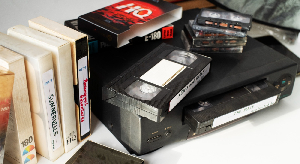
 The world on every October 27 celebrates World Day for Audiovisual Heritage
October 27 is a day marked to celebrate our preserved culture and traditions in moving images.
“The World Day for Audiovisual Heritage (WDAH) is a commemoration of the adoption, in 1980 by the 21st General Conference, of the Recommendation for the Safeguarding and Preservation of Moving Images.” A day to educate the public on why audiovisual heritage is essential in our everyday life.
In line with this global celebration, the J. H. Kwabena Nketia Archives have been observing this day by creating awareness through seminar series, film screenings, and other related activities.
Prof. Kwabena Nketia, in 1952, started collecting African music from the field and was deliberate in his actions by collecting traditional music from every region in Ghana.
The materials are well preserved, digitized, making it easy accessible through a controlled approach. This year, 2026, the rare collections of this heritage were inscribed in the UNESCO Memory of the World Register.
Audiovisuals are powerful within the multimedia format space of archives not just because of the empirical evidence but the emotion it captures which photo, paper or audio alone cannot capture.
Documenting and preserving one’s audiovisual means keeping memories alive in an audio and visual form. Caring about it means keeping your history intact with no or little distortion. One problem we may face is equipment, but if you watch our heritage videos.
The early archivists, collectors, cinematographers, and other related professionals used equipment that was available to them, which would be considered outmoded to use today.
The truth is, the content stays; the capturer is remembered as the equipment fades. If that equipment is given to you today, you may not use it. Let’s use what we have and make use of what is available.
We still recall most of our childhood memories, and it brings smiles. You pick your childhood picture, and it gives you goosebumps. What if you had an audiovisual of it? Those born in the 80s and early 90s in Ghana will fondly remember the good old days' favourite TV shows: By the Fireside, Akan Drama, Cantata, Kwasasa, etc.
I bet if the TV stations show it again, you will rush to watch it again. The games we played: counters ball (crown cork football players), piilolo (Ghanaian hide-and-seek game), keekoo (say the game’s name while sitting), maa te (all to sweep sand, but make the single object doesn’t fall), etc.
Imagine if the series of those games as you played were recorded and now shown to your children or siblings? What makes most European footballers most enjoyable is watching their games from childhood. We must be deliberate.
Most of our histories are lost either through natural disaster or deliberate actions, but the unawareness of safeguarding is the most dangerous part.
You didn’t know it has to be documented? What about if I show you an audiovisual of the Former President Nkrumah in his active childhood days in Nkroful? What about having the first five Ghanaian-produced films in your catalogue? Because of inaction, we are flooded with other countries' traditions by telecasting these telenovelas on our stations. We are getting lost day by day. Ghana’s past 69 years should have been telecast to learn and appreciate our past.
As many of us have witnessed, “The Eyes of Ghana”, the film produced by Ex-President Barack and Michelle Obama, highlights the importance of safeguarding. It is important to note that Rev. Hesse, in his deliberate action, led to this documentary of him and Dr. Kwame Nkrumah.
He captured and preserved, and now many of us can take inspiration and start doing the same in our work, home, or social events. Give it a year or a decade. Sometimes we have no idea of what we are documenting, but I say preserving is like wine. Give it some years, and it will taste much better.
We must be deliberate with our actions. Our laws protecting our audiovisual materials must be carefully strengthened to safeguard them.
Priority must be given to the materials, for this holds the future. Tete wo bi ka, tete wo bi kyerɛ (The past has something to say, the past something to teach)

Copyright © 1994 - 2026 GhanaWeb. All rights reserved.










