


 PowerDMARC’s newly published Ghana DMARC & MTA-STS Adoption Report 2026
Ghana’s enterprise ecosystem and public institutions face substantial email exposure risks, according to findings from PowerDMARC’s newly published Ghana DMARC & MTA-STS Adoption Report 2026. The nationwide domain analysis highlights critical vulnerabilities across top sectors, characterized by widespread lack of basic authentication records and near-total absence of in-transit cryptographic protection.
Key findings at a glance
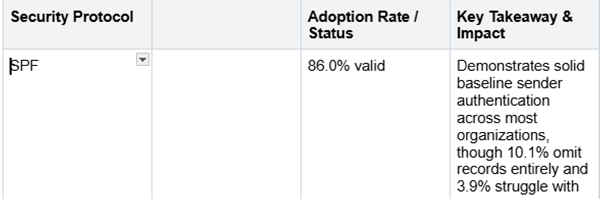
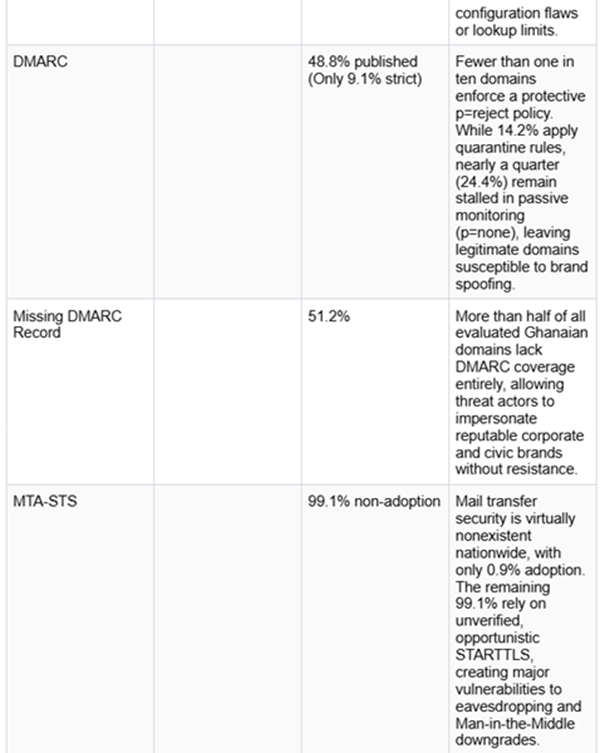
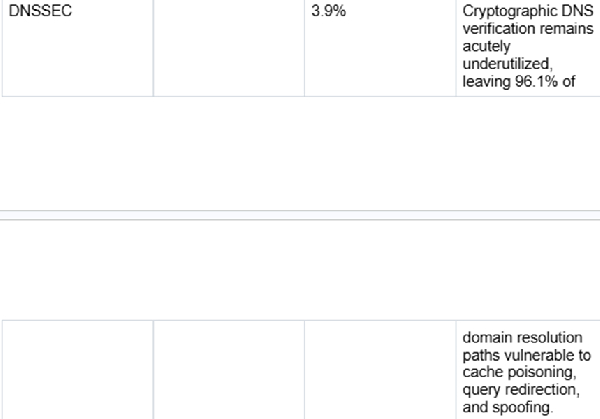
What Is At Stake?
Ghana’s growing role as West Africa’s digital innovation and financial services hub has attracted heightened interest from sophisticated cybercrime syndicates. Threat actors routinely target domestic organizations with deceptive mobile money schemes, executive impersonation, and high-stakes Business Email Compromise (BEC).
The Cyber Security Authority (CSA), enforcing the Critical Information Infrastructure Directive under the Cybersecurity Act, 2020 (Act 1038), alongside the Bank of Ghana (BoG) Cyber and Information Security Directive (CISD), has mandated rigorous technical controls to protect institutional data flows.
Concurrently, major global mailbox providers now enforce stringent verification thresholds, meaning unauthenticated outbound messages risk immediate routing to junk folders or outright rejection at receiving mail transfer agents.
The Strategic Path Forward
Closing Ghana’s email security divide requires domestic organizations to pivot from unmanaged communication channels toward active, automated enforcement. Merely deploying monitoring records or relying on baseline SPF cannot protect brand integrity or prevent spoofed correspondence.
Achieving meaningful cyber resilience requires a layered defensive posture: transitioning existing records to strict p=reject, automating MTA-STS to guarantee server-to-server TLS encryption, implementing continuous DMARC monitoring, and eliminating DNS lookup errors through dynamic SPF optimization.
How PowerDMARC Supports Ghanaian Organizations
PowerDMARC offers an enterprise-grade email authentication suite engineered to help Ghanaian public agencies and commercial enterprises achieve comprehensive domain security without disruption:
Structured, risk-free progression from unconfigured domains to full enforcement (p=reject)
Automated deployment and lifecycle management for SPF, DKIM, DMARC, MTA-STS, and TLS-RPT
Comprehensive DNSSEC validation and continuous record health diagnostics
Advanced AI-powered threat telemetry with real-time aggregate (RUA) and failure (RUF) intelligence
Hosted BIMI implementation and management to show authenticated corporate logos within recipient inboxes, along with VMC/CMC installation support.
PowerDMARC bridges this implementation gap, enabling Ghanaian institutions to automate strict policy enforcement and encrypt email channels smoothly while preserving full mail deliverability.
Ghanaian organizations can contact PowerDMARC to assess their current domain posture and implement robust, enterprise-grade email authentication.
About PowerDMARC
PowerDMARC is a leading platform in email authentication and domain protection, providing DMARC, SPF, DKIM, BIMI, MTA-STS, and TLS-RPT solutions along with hosted reporting powered by AI-driven threat analysis. The platform protects over 10,000 organizations across more than 130 countries, including Fortune 100 companies, governments, and major enterprises.

Copyright © 1994 - 2026 GhanaWeb. All rights reserved.










