



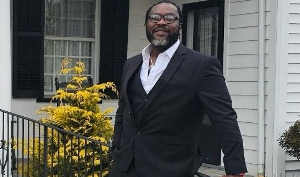
 Dr Frank Senanu Ashiadey, Founder of Temple of Destiny International and Restoration Centre
The Founder of Temple of Destiny International and Restoration Centre, Dr Frank Senanu Ashiadey (Torgbi Ashiadey Agbenorxevi, Papa Destiny), has called for a more inclusive approach to national prayer and spiritual observances in Ghana, arguing that the country's religious diversity must be fully recognised in state programmes.
According to him, Ghana does not belong to Christians alone, and national spiritual activities should reflect the country's multi-faith composition, including traditional and other religious beliefs.
“Ghana doesn't belong to only Christians. That must be corrected,” he said, adding that many of the country's challenges are linked to the neglect of its cultural and spiritual diversity.
He stressed the importance of remembering Ghana's historical and cultural foundations, noting that traditional and indigenous spiritual systems should not be excluded from national discourse.
“We must remember our history as Ghanaians and our foundation as a people rooted in tradition and culture,” he stated.
Dr Ashiadey further argued that national programmes involving prayer or spiritual observances should be inclusive of all faiths.
He proposed that events such as national prayer gatherings be restructured into interfaith observances to allow participation from Christians, Muslims, traditionalists, and adherents of other religions.
“It must be called an interfaith prayer day. It must not be only for Christian believers,” he said.
He maintained that excluding other religious groups could deepen divisions within society.
“There are so many religions in Ghana. Why should others be discriminated against? This country belongs to all of us, and we must respect each other's beliefs,” he added.
Dr Ashiadey also urged political and state leaders to adopt what he described as a more spiritual and inclusive leadership approach rather than a narrowly religious one.
“Our leaders must stop being religious leaders alone; we must have spiritual leaders who reflect all traditions,” he said.
He further referenced Ghana's history since independence, arguing that various spiritual traditions have always played a role in the country's leadership and national life.
Dr. Ashiadey also called on the government to dedicate or create a special public holiday for traditional believers, similar to those observed by Christians and Muslims.
According to him, followers of traditional religions and other faiths deserve equal recognition and respect within Ghana's national calendar and public life.
“Just as Christians and Muslims have recognised holidays and celebrations, traditional believers should also be accorded the same recognition. Other religions and faith groups must not be discriminated against in Ghana or elsewhere in Africa,” he said.
The remarks add to ongoing public conversations about religious representation, national identity, and the role of faith in state ceremonies and governance.

Copyright © 1994 - 2026 GhanaWeb. All rights reserved.










