



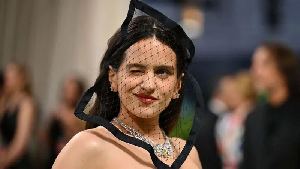
 WNO boss Adele Thomas says pop star Rosalía is helping opera to be more culturally relevant
Timothée Chalamet might have called opera an art form that no one cares about, but the bosses of the Welsh National Opera (WNO) say the art form has never been "more culturally relevant".
Eighty years since the WNO's first performance as a bunch of amateurs who rehearsed above a garage, it credits the record-breaking chart success of Spanish star Rosalía and the rise of so-called "opera aesthetics" on social media for a "surge of passionate support".
"At the moment we live in a time where opera, strangely, has been more culturally relevant than maybe it has been for a long time," said the WNO's co-director Adele Thomas.
She said opera did not feel "like an art form from a different era", adding: "I think that's where people get put off, thinking this is an historic re-enactment rather than a work of art."
The classically-trained Rosalía topped many end-of-year polls for her opera-influenced album Lux, with an inevitable flurry of TikTok videos using her music.
And her performance of the lead single Berghain, with Bjork, a full orchestra and a youth choir, on stage at the Brit Awards in February brought her to a wider audience.
Classical experts have also cited the influence of composers such as Vivaldi, merged with hip hop and pop.
Pinterest said "opera aesthetics", a trend, which it said encapsulated "dramatic, opulent and theatrical styles", was one of its fastest-growing trends, with a 55% increase in interest in opera-themed dresses on its app over the past year.
"Opera has the potential to be a valid, living, contemporary art form which draws upon so many other different types of art, design, action, other types of music, different types of performance," said Thomas.
The now-Wetherspoons that launched an opera company
All of this is a long way away from the WNO's first ever performance, on 15 April 1946 at the Prince of Wales theatre in the centre of Cardiff.
The Prince of Wales, now a popular watering hole of choice for thousands of thirsty Six Nations supporters, was previously a theatre and even an adult cinema.
The WNO formed during the Second World War, with 60 amateur singers from across South Wales, including miners, teachers, railway workers and even a butcher coming together.
For their first performance, the principals wore their own costumes, and a "scratch" orchestra was formed of local musicians. Singers were sewing costumes and painting sets right up to opening night.
But the last few years have not been happy ones for the WNO.
Funding cuts, which amounted to a quarter of the company's budget according to campaigners, led management to cut back on touring and to stop filling vacant posts.
At one point, there was even talk of making the orchestra part-time before an agreement was reached.
Appointed as co-director of the WNO with Thomas last year, Sarah Crabtree said that "in a strange way the crisis has made people think, this actually is a meaningful cultural organisation that's at the heart of Welsh culture".
"It's been a period of reflection but also rebuilding, we had a job to do to get the company on a sustainable footing," she added.
"The company feels much more settled than a year ago and it's a battle not just for WNO but for opera as a whole and the arts and cultural sector in Wales, the UK and well beyond."
Despite the huge changes and professionalism that have taken place over the decades, Thomas said: "the fact that it was born 80 years ago from a group of amateur singers, that permeates everything in this company and the country as a whole".
She said the WNO felt "very owned by the nation, in a way that opera doesn't, and feels much more remote, in England".

Copyright © 1994 - 2026 GhanaWeb. All rights reserved.










