



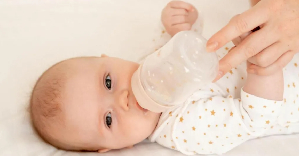
 A baby is seen being fed
Thirty-six infants in the UK have had suspected food poisoning from contaminated baby formula.
It comes after specific batches made by Nestlé and Danone were recalled because of contamination with the toxin, cereulide.
The UK Health Security Agency (UKHSA) says it has received clinical notifications of young children developing symptoms, including vomiting and diarrhoea, consistent with cereulide poisoning.
None of the infants, all around or under one, are reported to be gravely ill, the BBC understands.
Gauri Godbole, from UKHSA, said it was not unexpected, given "the widespread availability" of the affected products before the recall and "subsequent testing".
Godbole said there did not seem to be any signs that huge numbers of children had been affected so far.
"Current surveillance indicators do not show unusual increases in reports of vomiting in children under the age of one for this time of year," she added.
But the agency said it would continue monitoring the situation and providing updates.
Cramps
The UKHSA has not been able to confirm categorically that the infants had been poisoned, but it has been confirmedthat they consumed the specific brands of infant formula affected.
The Danone batch affected is the 800g pack coded EXP 31-10-2026.
Meanwhile, for Nestlé ,it relates to several products, including SMA infant formula and follow-on formula. The batches affected are listed on the company's website. The UK is not the only country affected.
Cereulide is a toxin that is unlikely to be destroyed by cooking or when making infant milk.
If it is consumed, it can lead to symptoms like nausea, vomiting, and abdominal cramps developing quickly.
The Food Standards Agency (FSA) has said the toxin was present in a specific ingredient identified as arachidonic acid oil. The oil is added to infant formula to give it some of the important growth properties contained in breast milk.
The FSA has urged parents who have any of the affected products left to stop using them and switch to an alternative formula.
If you have fed it to your baby and are concerned, contact your GP or NHS 111 for advice, it added.
The FSA is working with manufacturers to trace all products that may have used the affected ingredient and ensure all affected products are removed from sale.
FSA director of policy Rebecca Sudworth said: "Along with international partners as part of this global recall, we are investigating the supply chain.
"We need to know from manufacturers what went wrong and get assurances from the companies involved that it won't happen again.
"The FSA will not hesitate to take further action if required."
The FSA is working with manufacturers to trace all products that may have used the affected ingredient and ensure all affected products are removed from sale.
FSA director of policy Rebecca Sudworth said: "Along with international partners as part of this global recall, we are investigating the supply chain.
"We need to know from manufacturers what went wrong and get assurances from the companies involved that it won't happen again.
"The FSA will not hesitate to take further action if required."



Copyright © 1994 - 2026 GhanaWeb. All rights reserved.










