
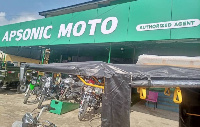
Lashibi, Community 16, along the Nungua-Ashaiman main road, near the FM bus stop and close to the Sakumono junction., GREATER ACCRA REGION
Apsonic Ghana Limited (often styled “APSONIC GHANA”) is a prominent company in Ghana’s automotive sector. Primarily, the firm is involved in importing, distributing, selling, and servicing motorcycles, tricycles, spare parts, and related accessories. It operates under the larger umbrella of Sincerity International Group. The company has built a reputation for offering relatively affordable, durable transportation products tailored to Ghana’s roads and terrain.
---
History & Background
Establishment: Apsonic Ghana has been active since about 2009 (as “Apsonic moto & auto ltd.”) headquartered in Tamale, with branches and authorized dealerships and distributors throughout Ghana.
Affiliation: It is part of Sincerity International Group. This group is involved in importation and distribution across West Africa (including Ghana, Ivory Coast, Togo, Benin, Burkina Faso, Mali, Guinea) and beyond.
Growth: Over time, it has expanded its sales network to cover more than 4,500 terminal outlets in West Africa. These “terminal outlets” are retail points/distributors where Apsonic products are sold.
---
Location & Structure
Main Offices / Headquarters:
The main supplying head office is in Tamale, in the Northern Region of Ghana, located at House Number 212, Kukuo Avenue, near Kukuo Market.
Another significant office, supplying head office, is in Lashibi, Greater Accra.
Branches / Distribution: Apsonic has a network of branches and authorized dealers/distributors across Ghana. It also serves customers through nationwide delivery. Legal / Registration Details:
Registration code in Accra is noted as 0367, VAT registration number 092838.
The company uses several identifiers and is registered as an importer and retailer of motorcycles and parts.
---
Products & Services
Apsonic Ghana Limited offers a wide variety of products and services:
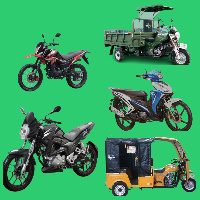
Motorcycles: Different models suited for urban commuting, rural roads, cross-terrain use. (e.g., AP125, Jaguar 110, etc.) Unassembled (brand-new) units are available.
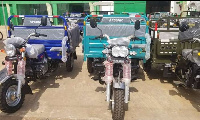
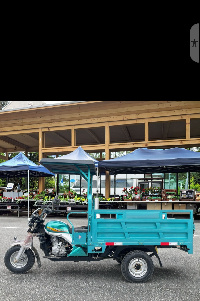
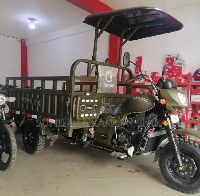
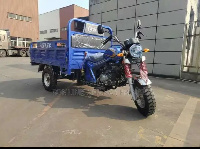
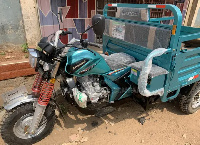
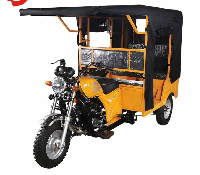
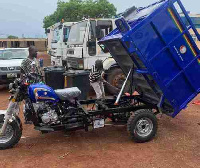
Tricycles: For cargo, commercial use (transporting goods / informal cargo transport). These are popular in many urban and peri-urban settings.
Spare Parts & Accessories: They supply spare parts (for motorcycles / tricycles) and related accessories. Headlights, tail lights, engine parts, rubbers, etc.
Delivery & Nationwide Coverage: Apsonic offers delivery services across Ghana. If customers are outside major centers, the company arranges delivery.
After-sales / Support: Though details are less abundant, customer reviews and listings suggest that after-sales support, warranty or service/repair, is part of their offering. Spare part availability is emphasized.
---
Market Presence & Strategy
West Africa Focus: While Ghana is its main operating base (especially Tamale and Accra), Apsonic serves or distributes to multiple West African countries. The network of 4,500 terminal outlets suggests significant reach.
Positioning: Apsonic positions itself as a provider of “good quality, affordable transportation” — balancing cost, durability, and maintainability. Their products are pitched at customers who need reliable, low-to-mid cost motorcycles/tricycles for daily use, transport, or business.
Product Differentiation:
They emphasize “brand new in box” units, sometimes unassembled units for cheaper shipping or cost savings.
They also try to ensure spare part availability, which is a key factor in customer satisfaction.
Local servicing, delivery etc., reduce friction for customers outside major cities.
Licensing / Compliance: The company is VAT registered, with registration codes, and uses multiple legal registrations (importer, distributer).
---
Strengths & Competitive Advantages
From what is gathered, Apsonic has several strengths:
1. Wide Outlet Network — over 4,500 outlets in West Africa, allowing reach into rural and semi-urban areas.
2. Affordable Pricing with Reasonable Quality — many customers note the “good-quality good life” tagline, and feedback suggests solid value for money.
3. Comprehensive Product Range — motorcycles, tricycles, spare parts, accessories. This allows them to serve multiple segments (personal, commercial, transport business).
4. After-Sales Support & Spare Parts — essential for mechanical products; good availability of parts improves reputation and trust.
5. Delivery / Nationwide Service — customers in outlying regions can still access products and services.
6. Corporate Social Responsibility (CSR) — the company engages in activities beyond business: e.g. donation of motorbikes to the Ghana Police Service in the Northern Region, along with helmets, jackets, etc. This builds goodwill.
---
Weaknesses / Challenges
While Apsonic has many strengths, there are likely challenges / potential areas of improving, based both on available info and typical industry realities:
1. After-sales consistency: Ensuring high quality maintenance and repair in remote areas can be tough. Spare part logistics, skilled technicians, etc.
2. Quality perception: Being affordable often raises questions among customers about durability; ensuring perception of reliability is consistent is important.
3. Competition: Other motorcycle / tricycle brands (local and international) also compete on price, quality, availability of service. Import duties, tariffs, currency fluctuations also affect costs.
4. Regulatory / importation costs: Importing units and parts involves costs (shipping, customs, duties); any changes in government policy or taxes can affect margins.
5. Infrastructure / road conditions: Ghana's varied road conditions (especially in rural / remote areas) put stress on vehicles. Customers expect durability. Any limitations here reflect on brand.
---
Role in Ghana’s Economy & Social Impact
Apsonic plays several roles of significance in Ghana:
Transportation Access: Motorcycles & tricycles are essential transport modes in Ghana, especially outside Accra & Kumasi. Apsonic helps provide access to affordable transport for commuting, informal business, delivery, etc.
Employment / Dealer Network: Through its network of dealers and sales outlets, and through its offices, workshops, spare-part shops, etc., the company supports jobs in sales, servicing, distribution, etc.
Rural & Regional Penetration: Because they have outlets and delivery service across regions, they help bring mobility to less-served areas. This improves connectivity, enables trade, helps reduce isolation.
CSR / Community Engagement: As noted, they have donated motorbikes and equipment to public service entities (like the police) to aid community safety or services. These acts build social capital.
Affordability & Economic Opportunity: Affordable transport allows individuals to start small transport businesses, delivery services, or to commute to work/school more reliably. This has multiplier effects.
---
Recent Activities / Initiatives
Donations: For example in July 2021, Apsonic donated two motorbikes (Model 200 GY-3), with helmets, jackets, and other equipment to the Northern Regional Police Command. This is part of their corporate social responsibility efforts.
Expansion of product line: There are references to newer models (for example, “AP250 of the Apsonic Pro series”) which indicate ongoing efforts to update their offerings.
---
Vision, Philosophy, and Brand Identity
Their slogans/tags (implicit or explicit) emphasize “good quality, good life” or similar phrases, which suggest their philosophy is that good transportation improves life, work, and mobility.
The business philosophy includes delivering quality products and services.
There is a sense of wanting to balance quality and affordability, making transport accessible to many, not just high-income groups.
---
Financials, Size, & Organizational Capacity
Detailed financial data (revenues, profits, margins) are not publicly available (based on what I found). However some indicators give a sense of size:
In Accra (Lashibi), the head office has 16-25 employees.
The large number of retail outlets implies substantial supply and distribution operations.
The company manages import logistics, inventory, warehouse(s), likely deals with foreign suppliers.
---
SWOT Summary (internal/external factors)
Strengths Weaknesses
Extensive outlet network; good reach across Ghana & West Africa Maintaining consistent quality and service across outlets; logistics / spare parts supply can be challenging
Affordable pricing; good value for cost-sensitive customers Possible perception issues re durability vs premium brands; competition from imports or other brands
Strong product range (motorcycles, tricycles, parts) Dependence on import policies, exchange rates; operating costs for maintenance and service infrastructure
CSR and positive public image in communities Potential for delays or stock shortages if importation is delayed; scaling after-sales service
Opportunities Threats
Growing demand for low-cost transport; expanding into more rural or underserved regions Tariff or regulatory changes; competition from local manufacturers or other brands; rising fuel costs or parts price inflation
Introduction of newer / higher capacity / more efficient models; possibly more fuel-efficient or eco-friendly options Economic downturns; currency depreciation which raises import costs; infrastructure problems reducing product life
Partnerships with government or NGOs for transport solutions Poor road network; maintenance asset wear; environmental regulations; safety and emissions standards tightening.
Business

Copyright © 1994 - 2026 GhanaWeb. All rights reserved.










