
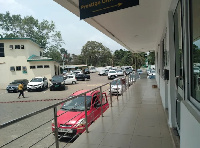
1 Jawaharlal Nehru Road Cantonment, Accra , GREATER ACCRA REGION
1. What is the DVLA?
The Driver and Vehicle Licensing Authority (DVLA) is a public-sector body in Ghana under the Ministry of Transport.
It was established by Act 569 of Parliament (the Driver and Vehicle Licensing Authority Act, 1999).
Before DVLA, there was the Vehicle Examination & Licensing Division (VELD). DVLA replaced VELD.
---
2. Mandate, Vision & Mission
Mandate / Object:
To promote good driving standards in Ghana; ensure only road-worthy vehicles are in use on roads and in public places.
Vision:
To be a reputable organisation with internationally accepted standards for driver and vehicle licensing.
Mission:
To ensure best practices for licensing drivers and vehicles to promote road safety and environmental sustainability, while pursuing integrity, excellence, professionalism and reliability in service delivery.
---
3. Legal & Administrative Setup
Governed by Act 569, 1999 which defines its establishment, functions, structure, etc.
DVLA is semi-autonomous: though under the Ministry of Transport, it has some independence in operations.
It has various offices: regional and district offices throughout Ghana to serve citizens.
---
4. Key Functions
According to Act 569 and other official sources, DVLA’s functions include:
1. Establishing standards and methods for training and testing of driving instructors and drivers (both of motor vehicles and motorcycles).
2. Establishing standards/methods for testing vehicle examiners.
3. Providing syllabi for driver training, and for training of driving instructors.
4. Issuing driving licences.
5. Registering and licensing driving schools; licensing driving instructors.
6. Inspecting, testing and registering motor vehicles; issuing vehicle registration certificates.
7. Issuing vehicle examination certificates; regulating private garages for vehicle testing.
8. Maintaining registers (records) of licensed motor vehicles, driving instructors, drivers, and driving schools.
9. Advising the Minister (Transport) on policies, strategies, regulations concerning driver & vehicle licensing.
10. Ensuring compliance with the DVLA Act and regulations under it.
---
5. Some Additional Operations & Innovations
DVLA tends to bring services closer to people via community outreach programmes.
Adoption of technology: there are ultra-modern regional offices to improve service delivery.
Premium licensing and vehicle registration services at a new Ultra Centre in Accra (in collaboration with private partners like VFS Global) have been initiated to ease the application process.
---
6. Key Legal Provisions from the Act
The Act gives DVLA corporate status, ability to acquire property, enter into contracts, etc.
There are provisions for oversight (board of directors), financial accountability (audits, budgets) under the Act.






Business

Copyright © 1994 - 2026 GhanaWeb. All rights reserved.










