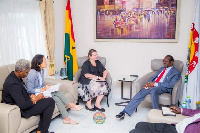
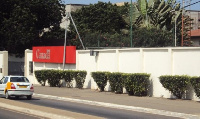
High Commission of Canada 42 Independence Avenue, Accra, Ghana (North Ridge, near the Ako Adjei Interchange) , GREATER ACCRA REGION
The High Commission of Canada in Ghana serves as Canada’s principal diplomatic mission in Ghana. It is located at 42 Independence Avenue, Accra.
As a “High Commission” (the term used between Commonwealth countries, instead of “embassy”) it represents the Government of Canada’s interests in Ghana — including political, economic, consular, cultural, and development cooperation functions.
Beyond servicing Ghana alone, the mission in Accra also covers certain responsibilities for Canadians in two neighbouring countries: Togo and Sierra Leone.
Put simply: the High Commission is a bridge between Canada and Ghana (and its neighboring states under its mandate), a gateway for relations, cooperation, support, and mutual interest — both for governments and for citizens.
---
Historical and Diplomatic Context — Canada–Ghana Relations
Formal diplomatic relations between Canada and Ghana began in 1957 — the year Ghana gained independence. Since then, Canada has been represented in Ghana through this High Commission.
Over the decades, the relationship has developed into a strong, long-standing partnership rooted in shared membership in the Commonwealth, overlapping commitments to international peace and security, development cooperation, and people-to-people ties.
Through this diplomatic presence, Canada has supported Ghana in key areas: development programs, technical and vocational training, humanitarian aid, trade and investment, education, and governance-related support.
Thus the High Commission does not merely administer visas and passports; it is the institutional backbone of a multi-decade partnership that continues to evolve.
---
Core Functions and Roles
The High Commission performs a variety of critical roles, organized roughly into the following major categories:
1. Diplomatic & Political Relations
As Canada’s official diplomatic office in Accra, the High Commission engages with Ghanaian governmental institutions, civil society, regional bodies, and other diplomatic partners. It helps shape and manage bilateral cooperation — in areas like governance, peace & security, development cooperation, foreign policy coordination, human rights, and Commonwealth collaboration.
It also supports Canada’s strategic interests in Ghana and the region — acting as liaison, policy-formulator, and diplomat for Canadian engagements in Ghana, Togo, and Sierra Leone (in its regional role).
2. Consular Services
For Canadians living, travelling, or working in Ghana (and the above-mentioned neighboring countries), the High Commission provides essential consular support. This includes:
Passport services (renewals, replacements)
Registration of Canadians abroad for safety and communication in emergencies (natural disaster, civil unrest, medical emergencies, evacuation)
Notarial, legalization, and civil-registration services (e.g. birth, marriage, death registration assistance, where applicable)
Assistance with legal or medical emergencies: helping Canadians in distress to access local resources, connecting them with legal counsel or medical care, liaison with local authorities when required.
This function is crucial for safeguarding Canadian citizens abroad and sustaining Canada’s international obligations towards its nationals.
3. Trade, Investment & Economic Cooperation
The High Commission’s Trade Commissioner Service (TCS) office in Accra drives economic diplomacy: encouraging trade, investment, and business linkages between Canada and Ghana (and regionally when relevant).
Through this route, Canadian businesses can explore opportunities in Ghana — spanning infrastructure, renewable energy, agriculture, ICT, clean technologies, and other sectors. Ghana, in turn, stands to benefit from foreign direct investment, technology transfer, and job creation.
Recent diplomatic initiatives emphasize sustainable development, economic cooperation, and inclusive growth — areas where the High Commission acts as facilitator, connector, and promoter.
4. Development Cooperation & Aid Delivery
Canada has long supported Ghana’s socio-economic development. Through the High Commission, various development assistance programs have been channelled — focusing on food security, climate-smart agriculture, sanitation, water, education, health, gender equality, and empowerment of women and vulnerable populations.
These programs — often implemented in partnership with local agencies, NGOs, and Ghana’s government — target sustainable long-term impact: improved livelihoods, community resilience, and inclusive development. The High Commission plays a central role in coordinating, monitoring, and supporting these initiatives.
5. Support for Peace and Security & Regional Cooperation
Canada and Ghana cooperate in areas of peacekeeping, security training, and international peace operations. For instance, Canada supports training and cooperation programs for the Ghana Armed Forces under broader peace-support operations cooperation frameworks.
Through the High Commission, Canada aids Ghana’s capacity to contribute to international peace and security — leveraging shared commitments to human rights, democratic governance, and global stability.
6. Cultural, Educational and People-to-People Engagement
An important but sometimes less visible role: the High Commission fosters educational exchange, scholarships, cultural diplomacy, and people-to-people ties. Canadians and Ghanaians — including students, professionals, diaspora members — benefit from exchange programs, educational opportunities, and cultural cooperation.
This helps deepen mutual understanding, promote cross-cultural links, and strengthen long-term bonds between the countries. It also supports diaspora engagement: many Ghanaians living in Canada or Canadians living in Ghana rely on the mission for consular, legal or civic services.
---
Institutional Structure & Facilities
To execute the wide scope of its mission, the High Commission is organized into several departments and functional units. Physically, it comprises administrative offices, consular sections, trade & development desks, and outreach & program units. Some of the key components and how they function:
Chancery / Administrative Offices
These house the core leadership — the High Commissioner (head of mission), senior diplomats, administrative officers, and general support staff responsible for mission management, policy coordination, inter-agency liaison, diplomacy, protocol, and leadership decisions.
Consular Section
A dedicated unit handling passport issuance and renewals, notarial services, civil registrations, emergency assistance, and legal/citizen support. It also handles consular outreach to Canadians in Ghana, Togo, and Sierra Leone. Operating hours follow set schedules, and most services are by appointment.
Trade Commissioner / Economic & Investment Division
This unit coordinates trade promotion, investment facilitation, business matchmaking, and economic diplomacy. It works to attract Canadian investors, support Ghanaian businesses seeking Canadian partnerships, and align economic cooperation with the broader bilateral agenda.
Development & Aid Cooperation Office
Manages Canada’s development assistance programs, liaises with local partners (government agencies, NGOs, communities), plans and oversees projects in agriculture, sanitation, water, gender equality, education, and health.
Public Diplomacy, Cultural & Educational Engagement Unit
Oversees cultural diplomacy, educational exchanges, scholarships, diaspora engagement, public communications, media relations, and community outreach initiatives.
Security, Peace & Defence Cooperation Desk
Responsible for cooperation with Ghana’s security and defence agencies, coordinating training programs, peacekeeping cooperation, and liaising with relevant international partners.
Support Services / Administration (HR, Finance, IT, Logistics)
As with any large mission, significant support staff handle internal operations — human resources, finance, logistics, IT infrastructure, communications, facility management, and internal security.
This multifaceted organizational structure ensures the High Commission can operate effectively across all its mandates — diplomatic representation, consular services, economic cooperation, development work, and more.
---
Key Impact Areas & Activities
Over the years, the High Commission has had a tangible impact in many domains. Some of the noteworthy areas include:
• Development Assistance & Community Impact
Canada has provided substantial development support to Ghana: through funding, technical assistance, capacity building, and community-level interventions. Areas like climate-smart agriculture, water and sanitation, food security, women’s empowerment, health, and education have seen interventions supported or coordinated by the High Commission.
Such efforts have contributed to improving livelihoods, promoting sustainable development, safeguarding vulnerable populations, and strengthening Ghana’s social infrastructure.
• Trade & Investment Growth, Private Sector Engagement
Under various trade and economic diplomacy frameworks, the High Commission works to attract Canadian investment into Ghana. This benefits Ghana’s private sector: infrastructure, clean energy, ICT, agribusiness, service industries, and more.
Additionally, Canadian companies wanting to operate in Ghana — or Ghanaian firms seeking Canadian partnerships — rely on the Trade Commissioner Service as a gateway for business linkages, technical cooperation, and financing opportunities.
• Peace, Security & Defence Cooperation
Through cooperation programs, training, and support for peace operations, Canada and Ghana collaborate to strengthen regional security, peacekeeping capacity, and defense cooperation. The High Commission is central in coordinating such collaborations.
This support helps Ghana contribute effectively to UN peacekeeping missions and promotes regional stability — a benefit to both Ghana and Canada (and the wider international community).
• Support for Canadians & Diaspora Engagement
For Canadians living or traveling in Ghana (or in the High Commission’s jurisdiction), the mission is a lifeline: offering consular services, emergency support, legal and medical assistance, and serving as a communication link to home.
At the same time, many Ghanaians have ties to Canada — via diaspora, education, work, family, or business. The High Commission plays a role in facilitating visa services, immigration processes, and maintaining bilateral people-to-people connections.
• Educational & Cultural Exchange, Human Capital Development
Canadian support (through the High Commission) for education and capacity-building in Ghana — notably via technical institutions, training centers, scholarship programs — has fostered human capital development. For instance: the establishment of the Accra Technical Training Centre (ATTC) in the 1960s was a major early Canadian-supported initiative.
Ongoing collaboration continues to support knowledge exchange, skills training, and professional development across many sectors.
• Advocacy for Gender Equality, Social Inclusion & Development Values
The High Commission affirms Canada’s commitment to gender equality, women’s empowerment, inclusive development, and human rights — often integrating these principles into its development programs, aid work, and cooperation with Ghanaian partners.
In this way, the High Commission not only represents Canadian interests but also advances values of equity, social justice, and sustainable development through its works.
---
Challenges, Responsibilities & Strategic Importance
Operating a mission with such wide scope carries significant responsibility. The High Commission must:
Ensure strong diplomatic representation while respecting Ghana’s sovereignty and local context.
Manage consular demand for Canadians and dual-citizens, including emergencies, legal issues, lost passports — often under unpredictable conditions.
Monitor and support development programs with transparency, accountability, impact measurement, and coordination with local partners.
Navigate economic diplomacy — identifying sectors of cooperation, aligning business interests, fostering investment, while ensuring positive outcomes for both sides.
Promote peace and security cooperation in a complex regional environment.
Uphold Canadian values globally — particularly human rights, gender equality, inclusion — in a manner respectful of Ghana’s culture and legal framework.
Facilitate people-to-people linkages, diaspora engagement, and cross-cultural exchanges in a responsible, meaningful way.
Maintain internal mission capacity: staff development, resource management, security, contingency planning, and effective communication with global Canadian foreign-service infrastructure.
Because Ghana occupies a strategic position in West Africa (politically, economically, socially), and because of its stable democracy, the High Commission’s presence here carries outsized importance — for Canada’s Africa strategy generally, and for deeper bilateral cooperation specifically.
---
Notable Areas of Contemporary Focus
In recent years, under evolving global and regional dynamics, the High Commission’s work has adapted accordingly. Some of the contemporary focus areas include:
Inclusive economic growth and investment: Encouraging Canadian investment in sustainable sectors: clean energy, agribusiness, infrastructure, ICT. This resonates with Ghana’s development goals and Canada’s commitment to Africa’s growth.
Gender equality and women’s empowerment: Under Canada’s feminist-oriented foreign-policy approach, collaboration with Ghana targets inclusion, support for women farmers, gender-responsive development, and promotion of women in peace operations.
Peace, security, and regional stability: Supporting Ghana’s role in UN peacekeeping and regional peace efforts; training programs for military cooperation; enhancing defense collaboration under shared values of international peace and security.
Sustainable development and climate-smart initiatives: Given global climate concerns, emphasis on sustainable agriculture, environmental protection, water and sanitation, community resilience, and supporting vulnerable communities in Ghana.
Youth, education, human capital development: Supporting technical/vocational training (historically and ongoing), capacity building, educational exchange, and knowledge transfer — for a young, dynamic Ghanaian population.
These focus areas show that the High Commission’s role is evolving: from traditional diplomacy to inclusive, value-driven partnership that responds to contemporary challenges and opportunities.
---
Why the High Commission Matters — For Ghana, For Canada, For People
For Ghana, the High Commission is a channel for foreign direct investment, development support, technical cooperation, job creation, and fostering economic growth. Through programs supported by Canada, many communities and sectors benefit in agriculture, sanitation, health, education, and infrastructure.
For Canada, Ghana is a stable, democratic, and strategically important partner in West Africa — the High Commission enables Canada to advance its foreign-policy goals, support development, expand trade, and build influence grounded in values of peace, democracy, and human rights.
For individuals — Canadians abroad, Ghanaian diaspora, business people, students — the High Commission provides consular services, visa/passport processing, legal support, mobility opportunities, exchange programs, and facilitation of cross-cultural engagement.
For broader global cooperation — both countries often work together in international forums (UN, Commonwealth, regional bodies), collaborating on peacekeeping, climate change, sustainable development, and global governance. The High Commission acts as the liaison, coordination node, and representative body.
In short, the High Commission is not just a building or a diplomatic office; it is a dynamic institution with real influence on lives, societies, economies, and international relations.
---
Structure, Operation & Services — What Happens Inside
At the day-to-day operational level, the High Commission offers a range of services and undertakes many activities. A depiction of typical functions:
Consular Services Workflow
Appointment-based service delivery: passport renewals, visas (depending on policy), notarial acts, emergency assistance.
Emergency support: for Canadians in distress (medical emergencies, accidents, natural disasters, security incidents) — guidance, referrals, evacuation support if needed.
Registration and communication: encouraging Canadians to register their stay/travel in Ghana to receive advisories, alerts, and updates for safety and security.
Trade & Economic Cooperation Activities
Identifying business opportunities in Ghana and West Africa for Canadian companies (renewable energy, agriculture, construction, ICT, etc.)
Facilitating connections between Ghanaian entrepreneurs and Canadian investors or firms
Providing market information, regulatory guidance, and support for trade missions
Offering support for joint ventures, investment proposals, and business development plans
Development & Program Implementation
Planning and managing aid and development programs: community water/sanitation projects, agriculture support, education initiatives, women empowerment programs, health and social welfare.
Working with Ghanaian government agencies, civil society, NGOs, and local communities to implement and monitor projects.
Reporting, evaluation, and accountability to ensure impact and transparency.
Diplomacy & Government-to-Government Engagement
High-level meetings between Canadian and Ghanaian officials
Policy dialogue on trade, security, human rights, environment, and multilateral cooperation
Coordination on regional and international initiatives (peacekeeping, climate change, international development)
Cultural, Educational & People-to-People Engagement
Supporting scholarships, educational exchange, training programs
Promoting cultural diplomacy — events, outreach, partnerships with Ghanaian institutions
Engaging with diaspora communities in Ghana, Togo, Sierra Leone to support their welfare and connections to Canada
Internal Administration & Mission Maintenance
Human resource management: training, staff welfare, security
Logistics: managing property, vehicles, external relations
Communications: public relations, media outreach, updating Canadians and local communities about services, advisories, and initiatives
Risk management: crisis response planning, contingency for emergencies, coordination with other missions or local authorities
---
Challenges & Opportunities
Like any major diplomatic mission, the High Commission faces challenges — but also significant opportunities.
Challenges
Consular demand: with many Canadians traveling or living in Ghana, the pressure on passport, citizenship, and consular services can be high. Timely service delivery and responsiveness are essential.
Complex environment: Ghana (and region) presents social, economic, logistical, and sometimes security challenges; the mission must navigate these while protecting Canadian interests and aiding citizens.
Sustainability of development projects: ensuring long-term impact, accountability, community ownership, and alignment with local priorities requires consistent engagement and resources.
Balancing trade/investment interest with ethical commitments: promoting business while respecting human rights, environmental sustainability, and social responsibility.
Coordination among many stakeholders: government agencies, local partners, NGOs, diaspora, international institutions — managing these relationships demands diplomacy and strategic coordination.
Opportunities
Expanding trade and investment: Ghana’s growing economy, strategic location, and stable democracy create opportunities for Canadian companies, especially in renewable energy, agribusiness, infrastructure, ICT.
Human capital and skills development: via educational exchanges, technical training, capacity building — the High Commission can support Ghana’s youth and workforce development, contributing to long-term development.
Development cooperation for inclusive growth: focusing on climate, gender, social inclusion, health — Canada’s resources and experience can support Ghana’s sustainable development goals.
Strengthening multilateral cooperation: through peacekeeping, regional security, environmental initiatives — enhanced partnership with Ghana can serve broader African and global objectives.
Diaspora and cultural diplomacy: leveraging Ghanaian diaspora in Canada and vice versa to deepen ties, promote cultural exchange, investment, and social development.
---
The High Commission’s Broader Significance
In a world of increasing interconnectedness — global trade, migration, climate change, international security — institutions like the High Commission of Canada in Ghana matter a great deal. They are nodes that link continents, ideas, people, and economies.
They enable responsible global partnership: through cooperation rather than exploitation, investment instead of aid dependency, skills transfer rather than one-way assistance.
They provide citizen protection: Canadians traveling or living abroad, or Ghanaians traveling to Canada, rely on consular services and fair, orderly processes.
They foster mutual understanding: cultural exchanges, educational cooperation, people-to-people ties build bridges beyond politics and commerce — supporting peace, tolerance, and shared global citizenship.
They offer pathways for sustainable development: with partnerships grounded in ethical standards, human rights, social inclusion, and environmental responsibility, the mission helps shape a future aligned with global sustainability goals.
In short: the High Commission is not a passive office — it is an active instrument of diplomacy, development, and positive global engagement.

Business

Copyright © 1994 - 2026 GhanaWeb. All rights reserved.










