


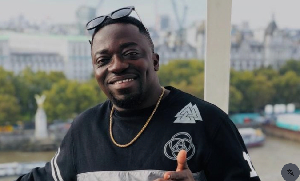
 Dada Hafco challenges government to Invest in Ghana’s Music Industry
Ghanaian highlife musician Dada Hafco has challenged the government to invest more deliberately in the country’s music industry, arguing that artistes are generating massive public interest and economic opportunities but continue to shoulder much of the financial burden themselves.
In a Facebook post, the musician, known privately as Terry Asare Boamah, called for stronger government support, accessible financing, effective royalty collection and tougher enforcement of existing regulations to help transform Ghanaian music into a sustainable industry.
He argued that music has become one of the country’s most powerful tools for bringing people together, questioning why an industry capable of attracting thousands of people to concerts is not receiving the institutional support needed to expand its economic potential.
“Apart from political gatherings and campaigns, football used to be one of the few things capable of bringing large numbers of people together. Today, however, nothing seems to assemble massive crowds and generate collective excitement quite like music,” he wrote.
“So the question is: What is the government doing to support an industry that has demonstrated this level of influence and potential?”
Dada Hafco maintained that government investment in the creative arts should no longer be treated as optional, insisting that Ghanaian music has reached a stage where deliberate policies and financial support are necessary for its long-term growth.
He contended that the industry relies heavily on independent artistes who finance their own careers, organise their own promotions and take significant financial risks to build their brands.
“About 90% of Ghanaian artistes, if not more, operate independently. There is a strong DIY mentality within our industry,” he stated.
According to him, the numbers, excitement and large concert audiences associated with Ghanaian artistes are largely the result of individual effort and personal investment rather than the backing of established institutions.
He contrasted the situation in Ghana with markets where musicians can rely on record labels, structured financing, accessible credit facilities and stronger royalty collection systems to develop their careers into sustainable businesses.
“Here in Ghana, many artistes are left to figure it all out on their own,” he said.
Dada Hafco raises concerns over royalties
The musician also drew attention to longstanding concerns about royalty collection and distribution, pointing to the challenges artistes face in receiving income from the use of their work.
He questioned the effectiveness of the Ghana Music Rights Organisation (GHAMRO) and raised concerns about alleged non-payment of royalties by some media houses.
Dada Hafco further argued that Ghana needs a more effective broadcasting regulatory framework to ensure that the obligations of relevant industry players are enforced.
His comments place renewed attention on the financial structures supporting Ghanaian musicians, particularly the systems through which creators are compensated when their music is broadcast, performed or otherwise used commercially.
For artistes who operate independently, weaknesses in these systems can compound the costs of recording, marketing, promotion and staging live performances.
‘Music is not just about the artiste on stage’
Beyond the challenges facing performers, Dada Hafco argued that Ghana’s music industry supports a wider network of professionals whose livelihoods depend on the production and commercialisation of music.
“Music is not just about the artiste on stage. It is an entire ecosystem that creates jobs for sound engineers, instrumentalists, producers, songwriters, dancers, event organisers, lighting technicians, security personnel, vendors, marketers, media professionals and many others,” he wrote.
He said the ability of an artiste to independently mobilise tens of thousands of people for a concert should be viewed as evidence of the industry's potential to generate employment, attract visitors and promote Ghanaian culture.
“When an artiste independently assembles tens of thousands of people at a concert, that is more than entertainment. It is evidence of an economic opportunity, a capacity to mobilise people and a platform for job creation, tourism and national cultural promotion,” he added.
Dada Hafco believes a more deliberate approach to developing the sector could allow the country to benefit from the commercial opportunities created by music, while providing artistes and other industry professionals with a more reliable path to earning a living.
Calls for government action
The highlife musician urged the government and relevant institutions to move beyond celebrating the popularity of Ghanaian music and address the structural challenges that continue to affect those working in the sector.
Among the measures he proposed were policies that deliver practical results, a functional royalty collection and distribution system, accessible financing for credible creative projects, stronger enforcement of existing laws and deliberate investment in Ghanaian music.
He argued that the country cannot continue to benefit from the crowds and excitement generated by artistes while leaving them to bear almost all the associated financial risks.
“We cannot continue to celebrate the crowds, the numbers and the excitement while leaving the people who create them to carry almost the entire financial burden themselves,” he stated.
He concluded by challenging the government and public institutions to demonstrate whether they are prepared to turn the industry's potential into sustainable economic opportunities.
“Ghanaian music has demonstrated its potential. The question now is whether our institutions and government are prepared to invest in that potential.”
Who is Dada Hafco?
Dada Hafco, born Terry Asare Boamah, is a Ghanaian highlife musician known for his contributions to the genre.
His song Yebewu Nti received a nomination for Highlife Song of the Year at the 2018 Vodafone Ghana Music Awards. He was also nominated for Highlife Artiste of the Year at the awards for two consecutive years.
His latest comments add to the broader conversation about the commercial sustainability of Ghanaian music, the protection of musicians’ rights and the role of public policy in supporting the creative economy.
Read Dada Hafco’s full Facebook post below
“Apart from political gatherings and campaigns, football used to be one of the few things capable of bringing large numbers of people together. Today, however, nothing seems to assemble massive crowds and generate collective excitement quite like music.
So the question is: What is the government doing to support an industry that has demonstrated this level of influence and potential?
Ghanaian music has grown to a point where government support is no longer a luxury; it is a necessity.
About 90% of Ghanaian artistes, if not more, operate independently. There is a strong DIY mentality within our industry. The numbers, the buzz, the excitement, the concerts that attract thousands of patrons, and the movements we see around our artistes are largely built through their individual efforts, personal investments and financial risks.
Elsewhere, artistes benefit from established record labels, structured financing, accessible credit facilities, stronger royalty collection systems and institutional support that allows them to scale their businesses. These structures provide financial flexibility and create an environment where talent can grow into a sustainable enterprise.
Here in Ghana, many artistes are left to figure it all out on their own. Royalties remain a major challenge, with concerns about the effectiveness of GHAMRO and the non-payment of royalties by some media houses. We are also yet to establish a fully effective broadcasting regulatory framework that ensures the necessary obligations are enforced.
Imagine what Ghanaian music could achieve if the state supported it with the same seriousness and strategic thinking that it brings to football and other sectors.
Music is not just about the artiste on stage. It is an entire ecosystem that creates jobs for sound engineers, instrumentalists, producers, songwriters, dancers, event organisers, lighting technicians, security personnel, vendors, marketers, media professionals and many others.
When an artiste independently assembles tens of thousands of people at a concert, that is more than entertainment. It is evidence of an economic opportunity, a capacity to mobilise people and a platform for job creation, tourism and national cultural promotion.
If we are serious about building a thriving society, creating employment and developing sustainable industries, then the government must pause and take a closer look at the creative arts sector.
We need policies that work, a functional royalty collection and distribution system, accessible financing for credible creative projects, stronger enforcement of existing laws and deliberate investment in Ghanaian music.
We cannot continue to celebrate the crowds, the numbers and the excitement while leaving the people who create them to carry almost the entire financial burden themselves.
Ghanaian music has demonstrated its potential. The question now is whether our institutions and government are prepared to invest in that potential.”
#GhanaMusic #GhanaMusicBusiness #GhanaMusicEconomy
EA

Copyright © 1994 - 2026 GhanaWeb. All rights reserved.










