


 Dr Cassiel Ato Forson, Minister of Finance and President John Mahama
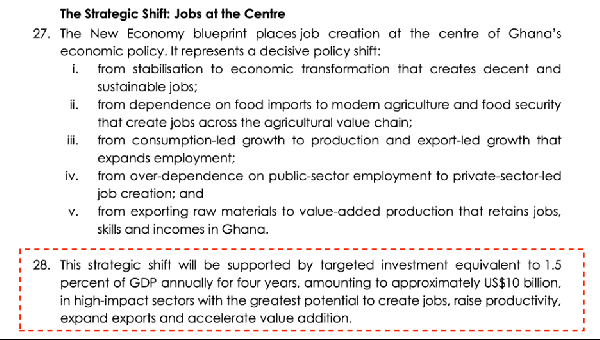
Government is planning to invest about US$10 billion over four years in a new economic programme aimed at growing agriculture, manufacturing and creating jobs.
The programme, known as the “New Economy”, is expected to run from 2027 to 2030. It is intended to increase local production, reduce Ghana’s reliance on imported goods and create more jobs.
A Finance Ministry document outlining the plan offers an early idea of what to expect when Finance Minister Dr Cassiel Ato Forson presents the 2027 Budget to Parliament on November 12, 2026.
Here are seven key things to know about the proposed programme.
1. Government plans to invest US$10 billion
Government intends to invest 1.5 percent of Gross Domestic Product (GDP) every year from 2027 to 2030. This is expected to amount to about US$10 billion over the four years.
The money will be used to support key sectors, increase local production and create jobs.
2. The programme will focus on seven areas
The New Economy plan identifies seven main areas:
- Macroeconomic stability: Maintaining economic stability to create room for investment and job creation.
- Agriculture and agribusiness: Increasing food production and reducing the need to import food.
- Energy: Improving the energy sector and attracting more investment.
- Critical minerals and value addition: Processing more of Ghana’s minerals locally instead of exporting mainly raw materials.
- Cotton, textiles and garments: Supporting local production of clothing and textile products.
- Tourism, culture and creative arts: Growing these sectors to attract investment and create jobs.
- Pharmaceutical manufacturing: Developing Ghana’s ability to produce more medicines locally.
3. Government plans to change its spending targets
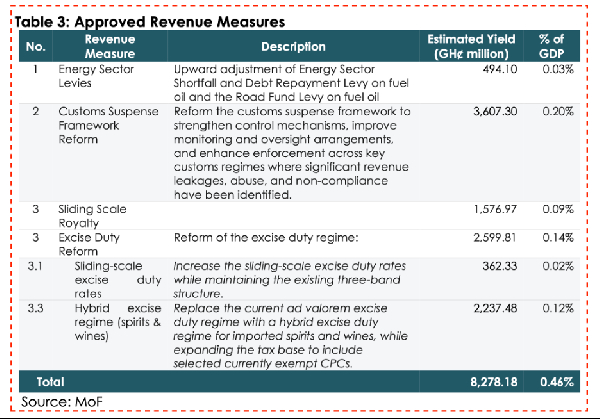
Government plans to create more money for the programme through additional revenue and changes to its fiscal targets.
It intends to commit 1.5 percent of GDP annually, while another 0.5 percent is expected to come from revenue measures.
Government also plans to reduce its primary surplus target from 1.5 percent to 0.5 percent of GDP. This would allow it to spend more on productive sectors while still keeping a surplus before interest payments on debt.
4. The plan shares some ideas with the 24-Hour Economy
Several areas under the New Economy are also part of the NDC’s 24-Hour Economy policy.
The party’s 2024 manifesto proposed encouraging businesses and public institutions to operate in three eight-hour shifts to increase production and create jobs.
The policy also promised cheaper electricity, tax incentives, financial support and improved security for businesses.
Agriculture, manufacturing, pharmaceuticals and the extractive industries were among the sectors identified.
5. The 24-Hour Economy has already taken some steps
The 24-Hour Economy blueprint, launched in July 2025, included plans for industrial parks, irrigation, energy and transport infrastructure, beyond encouraging businesses to operate for longer hours.
The 24-Hour Economy Authority Bill was signed into law in February 2026, while a pilot programme in the downstream petroleum sector was announced in May.
However, government is yet to provide a full account of the results, including how many businesses have introduced additional shifts and how many jobs have been created.
6. The 2027 Budget must explain how the plan will work
Although the Finance Ministry document identifies the sectors government wants to support, it does not explain which specific projects will receive funding or how much each sector will get.
The November 12 Budget presentation is expected to provide more details on the projects, how they will be carried out, when they will begin and the number of jobs they are expected to create.
Government will also need to explain how the New Economy will work alongside existing programmes, including the 24-Hour Economy, and what lessons it has learnt from previous initiatives.
MA

Copyright © 1994 - 2026 GhanaWeb. All rights reserved.










