



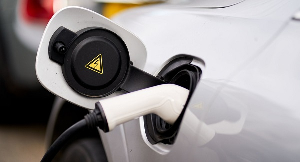
 This marks the first time Ghana has regulated electricity pricing for commercial EV charging
Ghana’s Public Utilities Regulatory Commission (PURC) has introduced a commercial electric vehicle (EV) charging tariff as part of new utility pricing adjustments announced on Friday, March 13, 2026.
This marks the first time Ghana has regulated electricity pricing for commercial EV charging.
The new tariff sets EV charging at 201.6 Ghana pesewas (GH¢2.016) per kilowatt-hour, with a monthly service charge of GH¢500.
Electricity, water bills to drop from April 1
The EV charging tariff is part of broader utility price adjustments that also include an average 4.81% reduction in electricity tariffs and a 3.06% cut in water tariffs.
The new rates will take effect on April 1, 2026, following PURC’s routine quarterly tariff review.
Under the revised electricity pricing structure, residential consumers will see reductions ranging from 1.66% for lifeline users to 3.63% for higher-consumption households. Medium- and high-voltage commercial and industrial consumers will benefit from larger reductions of up to 15.43%.
“The quarterly review ensures that tariffs remain fair for consumers while supporting the operational needs of service providers,” the PURC said.
Water tariffs have also been lowered across several categories. Lifeline residential users consuming 0-5 cubic meters will see tariffs drop from GH¢612.25 to GH¢593.49 per cubic meter, with similar reductions applied to commercial, industrial, and bottled water rates.
According to PURC, the adjustments reflect changes in key economic indicators, including movements in the Ghana cedi-US dollar exchange rate, domestic inflation, natural gas prices, and the electricity generation mix.
The Commission concluded that the quarterly tariff review ensures that tariffs remain responsive to economic conditions while maintaining the financial sustainability of utility providers.
MA

Copyright © 1994 - 2026 GhanaWeb. All rights reserved.










