



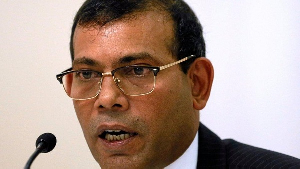
 Secretary-General of the Climate Vulnerable Forum (CVF), Mohamed Nasheed
Former President of the Maldives and Secretary-General of the Climate Vulnerable Forum (CVF), H.E. Mohamed Nasheed, has called for urgent reforms to the global financial system to protect the world’s most climate-vulnerable countries.
The CVF is a global coalition of countries most affected by climate change, working to address its severe social, economic, and environmental impacts.
Speaking at a media engagement in Accra on Thursday, August 21, 2025, Nasheed introduced the CVF and its finance arm, the Vulnerable Twenty (V20), while highlighting Ghana’s role as a former chair and host of the forum.
“The Climate Vulnerable Forum is a group of 74 countries, including Ghana, that are highly vulnerable to a warming planet,” Mohamed Nasheed said.
Climate minister proposes use of carbon credits to ease climate financing
“None of our member countries have done anything to cause global warming. But we are all suffering the effects of climate change, from stronger storms and droughts to heatwaves, wildfires and rising sea levels,” he added.
Nasheed commended Ghana for “demonstrating strong political leadership during its recent tenure as Chair of the CVF/V20 and offering to host us here in Accra, literally in the center of the Earth.”
He outlined three priority areas of the CVF/V20: Climate Prosperity Plans (CPPs) which include, advocacy for debt solutions, and systemic reforms to the global financial system.
Touching on Climate Prosperity Plans, he explained that they are “multi-phased, country-led investment and financing strategies to help our members transition from climate vulnerability to climate resilience.”
CPPs focus on green infrastructure, energy transition and climate-smart agriculture. Ghana, Sri Lanka and Bangladesh have already begun implementation.
How Ghana can shape Africa's green energy agenda
Addressing debt concerns, Nasheed stressed that many CVF members are “up to their eyeballs in debt” while also grappling with climate disasters that destroy critical infrastructure.
“Countries borrow money to build roads or hospitals, but extreme weather destroys them, yet the debt still remains. This is so unfair,” he explained.
He therefore called for practical debt solutions, including extending repayment terms to 40 years, lowering interest rates, and automatic standstills on debt repayments during crises.
On systemic reform, Nasheed said the CVF and V20 are mobilising heads of state, finance ministers, central banks and parliaments to press for a global financial system that “better supports and stops penalising our countries.”
“Ultimately, the success of climate action depends on bold and equitable solutions for the world’s most climate-vulnerable countries,” he concluded.
MA

Copyright © 1994 - 2026 GhanaWeb. All rights reserved.










