



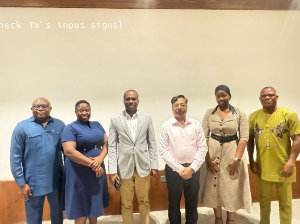
 The new framework is designed to formalise the sector through licencing
Government, through the Ghana Integrated Iron and Steel Development Corporation (GIISDEC), is moving to bring the largely informal scrap metal trade under regulation, a shift that authorities say is necessary to curb theft, improve data collection and secure supplies for domestic steel producers which rely heavily on recycled metal.
The policy, developed by GIISDEC, has received ministerial approval and is entering the implementation phase following months of consultations with industry players, traders and state agencies.
The trade has operated for years with little oversight, despite its central role in feeding local smelters.
“It’s a very big industry, but nobody was really taking care of it,” said Williams Okofu-Dateh, Chief Executive Officer-GIISDEC, in an interview after meetings with scrap dealers and steel firms. “Anybody can come in and start doing scrap business. Even the smelters will buy from anyone at all. Where the material comes from, nobody cares.”
Officials say that lack of oversight has had visible consequences. Theft of public infrastructure such as drain-covers and household metals has been linked to scrap trading, raising safety concerns and prompting calls for state intervention.
According to Okofu-Dateh, the new framework is designed to formalise the sector through licencing, traceability and inter-agency enforcement involving Customs, the police and Ghana Revenue Authority.
“This policy is very broad,” he said. “It covers every aspect of the scrap business – imports, exports, domestic trading – and we will be working with trade authorities, Customs, the police and smelters themselves. The aim is to regulate and formalise the whole industry.”
Scrap metal is critical to Ghana’s steel value chain. About 80 percent of the iron rods used domestically are produced locally and that output is largely derived from scrap, according to GIISDEC estimates.
Only about 20 percent of inputs are imported. Despite this dependence, authorities admit there is little reliable data on volumes, sources or trade flows.
“Because it is unregulated, everything is more like an assumption,” Okofu-Dateh said. “Once we formalise it, we will know who is doing the business, at what volumes and where the scrap is going. Data collection and traceability are key reasons for this policy.”
Implementation will be phased, with regulators still working out licencing requirements, eligibility criteria and fee structures.
GIISDEC says it is seeking buy-in from larger industry players to ensure the rules are workable before a full rollout.
As part of that process, the corporation has engaged major steel producers including B5 Plus, one of the country’s largest users of scrap.
Okofu-Dateh said discussions with firms are aimed at aligning enforcement with industry practices and securing cooperation across the supply chain.
Beyond scrap the talks have reopened broader questions about development for Ghana’s steel industry, which remains constrained by high power costs, weak transport infrastructure and land access issues.
GIISDEC plans to convene an industry forum later this year to discuss those challenges and outline a longer-term strategy.
“Every industrialised country did it on the back of iron and steel,” Okofu-Dateh said. “If we don’t develop this industry, there is no way the country can industrialise.”
For now, the focus is on tightening oversight of a trade that quietly underpins much of Ghana’s construction boom and bringing order to a market which has long operated in the shadows.
DVLA set to go global with licensing services in USA, Germany, other countries
DVLA boss hits back at VEMAG over cancellation of alleged contract

Copyright © 1994 - 2026 GhanaWeb. All rights reserved.










