



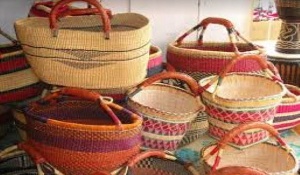
 File photo of weaved baskets
The sharp and over-strengthening of the Ghanaian cedi over the past year is threatening the livelihoods of straw basket weavers and related actors as well as exporters in the Upper East Region.
According to them, the sudden appreciation of the cedi by about 40 percent within the last year had made Ghanaian baskets expensive on the international market, squeezing exporters and putting the entire industry at risk.
Nicholas Apokerah, the Executive Director of TradeAid Integrated, a basket-exporting non-governmental organisation, explained that prices negotiated with foreign buyers when the dollar was trading between GH¢14 and GH¢15 had become unsustainable following the sharp appreciation of the cedi to around GH¢10.00
"Our products have become very expensive in the international market. Some of the prices we negotiated with buyers are now inadequate to even pay the weavers, let alone cover other operational expenses," he said.
Apokerah warned that in the Bolgatanga Municipality alone, more than 100,000 people involved in the straw basket-weaving value chain were at risk of losing their livelihood, and the entire industry could collapse if the trend continued.
"If things do not change, the entire basket industry will collapse. That would be disastrous for this municipality and the region, which is already grappling with climate change challenges and conflicts," he said.
He noted that basket weaving remained one of the most important Non-Traditional Exports (NTE) of Ghana and a major source of foreign exchange, especially before the expansion of gold exports.
For instance, in 2023, the Ghana Export Promotion Authority (GEPA) revealed that the industrial arts and crafts sub-sector, which includes the baskets and related handicrafts, generated US$95.74 million in foreign earnings, accounting for 2.30 percent of the NTE earnings.
Basketry is the number one known craft of Ghana internationally. It brings in a lot of foreign exchange. Just our small office has done over 100,000 dollars' worth of baskets this year," he said.
However, he indicated that the strong cedi had significantly reduced the cedi value of export earnings, making it difficult for exporters to meet production costs and pay workers.
He said in one instance, although a foreign customer paid 75 percent upfront for a 100,000-dollar order, the amount received in cedis was insufficient to complete production due to the exchange rate changes.
"We have not been able to pay ourselves. Our focus now is to make sure we supply the customers and maintain trust, but this is not sustainable," he added.
Apokerah stressed that while exporters were absorbing the losses to maintain prices for rural women weavers, the long-term effect could reduce patronage and job losses.
He explained that during the dry season, many rural women depended solely on basket weaving to support their families.
He called on the government to consider targeted interventions, including soft loans through the Ghana Exim Bank and structured dialogue with exporters, to cushion the industry during periods of sharp currency fluctuations.
"We are not saying the cedi should not be strengthened, but the strengthening should be gradual to allow exporters to renegotiate prices. If you collapse your exports, where will you get the foreign exchange to stabilise the cedi?" he asked.
Apokerah said major markets for Bolgatanga baskets included the United States, Germany, and the Netherlands, and cautioned that Ghana risked losing market share to competing countries if exporters failed to meet orders.
"Once you lose customers, other countries will fill the gap and it will be difficult to return," he warned.
He urged policymakers to recognise the strategic importance of the basket industry to the regional economy and national export earnings and to take urgent steps to safeguard the livelihoods of the thousands of people who depend on it.

Copyright © 1994 - 2026 GhanaWeb. All rights reserved.










