



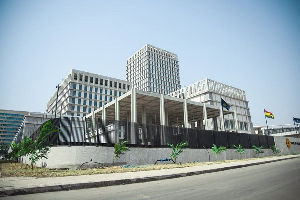
 Bank of Ghana headquarters
Policy think tank Africa Policy Lens (APL) has formally requested detailed disclosures from the Bank of Ghana (BoG) regarding the divestment of a portion of the nation’s gold reserves in the last quarter of 2025.
In a letter addressed to the Governor of the central bank and submitted under the Right to Information Act, 2019 (Act 989), Dr Hayford Mensah Ayerakwa, Director of Research, Administration and Partnerships at APL, is seeking clarity on what the organisation describes as a matter of “significant national interest,” given gold’s central role in Ghana’s monetary stability and external reserves management.
Dr Ayerakwa argues that during a period marked by rising global gold prices and increased central bank accumulation worldwide, any large-scale divestment requires full public transparency.
The letter calls on the Bank of Ghana to provide a comprehensive breakdown of the transactions executed during the period in question.
APL is requesting the central bank to release 20 categories of information, including:
Confirmation of the total quantity of gold divested, including the precise weight in tonnes and ounces during the third and fourth quarters of 2025.
The exact dates on which each divestment transaction was executed.
The London Bullion Market Association (LBMA) reference price or other pricing benchmarks used in valuing the divested gold.
The average realised sale price per ounce for the gold sold.
Full disclosure of the identities of counterparties or purchasing entities involved in the transactions, including their beneficial ownership structures.
Clarification on whether any local partners were involved in the transactions and, if so, their identities and ownership structures.
A description of the transaction structure, indicating whether the gold was sold outright, swapped, leased, transferred under a structured financial arrangement, or subject to any buy-back clause.
Details of the mode of transfer or delivery, including the custodial chain and whether the divested gold was shipped out of the country, with dates of shipment if applicable.
The total proceeds realised from the sales, including the currencies in which the proceeds were received.
Information on the accounts or financial instruments into which the proceeds were credited and how the funds were utilised, whether for reserve management, debt servicing, investment activities, or other purposes.
Disclosure of any financial advisers, consultants, bullion banks, brokers, or transaction advisers engaged in facilitating the transactions.
Details of commissions, fees, or other compensation paid in relation to the transactions, including recipients and amounts.
The policy rationale or strategic justification for undertaking the divestment at the time it occurred.
Clarification on the market indicators, analyses, or projections that informed the decision to sell the gold, including whether the Bank of Ghana conducted market-timing analyses prior to executing the transactions.
Confirmation of the decision-making authority responsible for approving the divestment.
Confirmation of board approval, including the date on which the BoG Board sanctioned the transactions.
Clarification on whether the decision involved Cabinet approval and whether the Ministry of Finance was informed or consulted.
Clarification on whether Parliament was notified of the decision to divest part of the national gold reserves.
The rationale behind the subsequent decision to rapidly rebuild gold reserves after the divestment exercise.
Clarification on issues of accountability, including who would bear responsibility for any potential losses to the country arising from the transactions.
Call for transparency and timely response
APL emphasised that the disclosure is necessary not only for public accountability but also to address inconsistencies in public discussions surrounding the management of Ghana’s gold reserves.
Dr Ayerakwa noted that the organisation expects a response within the statutory timelines stipulated under Act 989.
“The people of Ghana deserve full clarity on the strategic decisions involving our national gold reserves,” the letter states, adding that such transparency is essential for maintaining trust in the stewardship of the nation’s financial assets.
Did you know that there is a fort in Ghana that was not built for slavery? And did you know that it is in Elmina? Watch the story about Fort Jago here:

Copyright © 1994 - 2026 GhanaWeb. All rights reserved.










