



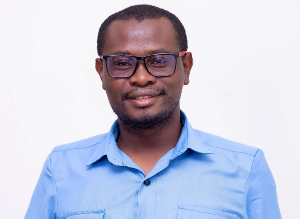
 Samuel Bekoe is the Executive Director of CEDA-GA
The Executive Director of the Centre for Extractives and Development, Africa, Ghana (CEDA-Ghana), Samuel Bekoe, has raised concerns about the lack of transparency on the usage of over 78% of the country’s mineral resources, which used to be allocated to the Mineral Income Investment Fund (MIIF).
The CEDA boss indicated that even though the reforms of the MIIF by the John Dramani Mahama government, which reduced the allocation of the country’s mineral resources to the fund from 80% to 2 percent, are justified because the fund was not performing its mandate under the previous government, there is a need for greater transparency.
Samuel Bekoe, who made these remarks while speaking to the media after a training session of senior journalists in Accra, added that even though the government has indicated that it would be pushing the 78% of mineral royalties into the Big Push Programme, there is a need for the people of Ghana to know how much is raised and the exact projects it goes into.
“If you used to receive 80%, then where is the 78% after giving 2%? The government has created what we call a Mineral Income Holding Account whereby 78% of that money goes into that particular account. The question is, what is the transparency requirement of that account? What is the accountability requirement of that account? What are the quarterly reports from that account?
“Although government intends to use those monies for the Big Push, which is well intended, because over the years, we've all been pushing for investing our mineral resources in infrastructure that may benefit current and future generations, we need to ensure there are clear governance rules, including withdrawal rules, investment rules, and publication of quarterly reports of that particular account, so that we would know whether the monies are usually being used for their intended purpose,” he said.
The CEDA boss also called for greater accountability measures in the usage of the funds from the mineral royalties.
MIIF mineral royalties hit record GH¢5.43 billion in 2025
He pointed out that the state has established the Public Interest and Accountability Committee (PIAC) to ensure accountability in the usage of the country’s petroleum revenue, but there is nothing like that for the revenues the country gets from its mineral resources.
“Our mineral revenue over the years has generated significant monies compared to even oil, but the accountability and transparency over mineral revenues are less than what we have in the oil sector. Today, one in 10 citizens would know about PIAC, but there is nothing like that for mineral revenues. I believe either the expansion of PIAC's mandate or allowing civil society to get information and publish it, or getting the government to publish more information about mineral revenue utilisation, would help us to achieve similar transparency and accountability objectives like PIAC.
“Even if we don't want to create another body like PIAC or expand the mandate of PIAC, we should get the government to be more responsible by publishing more information about how much revenue has come in. Even if it's going to the Big Push, how those projects were selected, which projects are funded, and then letting Ghanaians understand where the monies are being invested,” he said.
He added that these accountability measures would ensure that future generations of Ghanaians benefit from the country’s mineral resources, which are “non-renewable and exhaustible”, by making sure they are invested properly.
BAI
Meanwhile, watch as officials at TMA Day Care 3 speak following Tema helicopter crash:
Watch scenes from helicopter crash at Tema Community 1:

Copyright © 1994 - 2026 GhanaWeb. All rights reserved.










