



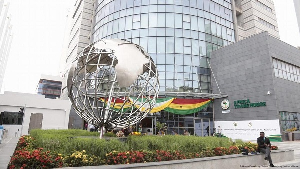
 AfCFTA seeks to eliminate trade barriers and promote intra-African trade
The International Monetary Fund (IMF) says Africa’s growth prospects can be strengthened through effective implementation of the African Continental Free Trade Area (AfCFTA) and responsible use of artificial intelligence (AI).
The Fund said the combination of deeper regional integration and emerging technologies could significantly improve productivity, resilience, and long-term economic transformation across the continent.
Abebe Aemro Selassie, Director of the IMF’s African Department, made the remarks during the Regional Economic Outlook briefing for Sub-Saharan Africa in Washington.
“In a shifting geopolitical landscape, regional integration, particularly through the African Continental Free Trade Area, can boost resilience and open new opportunities,” he said.
Selassie said AfCFTA should not be seen only as a trade agreement but as a tool to help African economies withstand external shocks and build long-term stability.
He called on governments, the private sector and civil society to work together to speed up regional integration through stronger trade links and structural reforms.
Selassie also urged improvements in governance, better business conditions and deeper financial markets to ensure trade reforms translate into real and sustained growth.
On artificial intelligence, he said the technology had the potential to reduce inequality in access to knowledge and opportunity, despite readiness gaps across countries.
“AI holds the potential to make human capital knowledge as accessible to African countries. We’re seeing incredible strides in using AI for design of gardens, houses, et cetera – making tremendous headways in the region,” he noted.
Selassie said some African governments were already using AI to improve tax collection and public service delivery, adding that proper adoption could help accelerate the continent’s convergence with the rest of the world.
“Productivity growth is the long-term prize. The responsible adoption of AI in agriculture, health, and public services can be transformative. But realizing that potential also requires upfront investment in reliable electricity, digital infrastructure, and skills,” he said.
Selassie reaffirmed the IMF’s readiness to support African countries through financing, policy advice and technical assistance.
Amadou Sy, Assistant Director in the IMF’s African Department, said progress had been made under AfCFTA since trading began in 2021, but implementation remained uneven across countries.
“On the African Continental Free Trade Area, we’ve seen real, real progress, but uneven progress,” he said.
Sy said unresolved issues such as rules of origin and tariff concessions could limit the agreement’s impact on trade diversification and economic resilience.
He called for reduced non-tariff barriers and modernised customs systems to make regional trade more efficient.
Sy also identified trade finance as a major constraint, especially for small businesses and smaller economies involved in cross-border trade.
On fiscal policy, he urged African countries to strengthen tax systems and expand fiscal space to support infrastructure and services needed for both trade integration and digital transformation.
Sy stressed that successful reforms would depend on strong institutions and effective communication with stakeholders.
“All of this will require difficult discussions, and that communication and stakeholder engagement are not peripheral activities but central to whether reforms actually take hold,” he said.

Copyright © 1994 - 2026 GhanaWeb. All rights reserved.










