



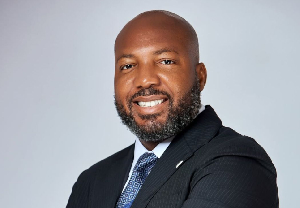
 Governance and digital transformation strategist George Spencer Quaye
Governance and digital transformation strategist George Spencer Quaye has hailed the transition of the Damang Mine to Engineers & Planners (E&P), a wholly Ghanaian-owned company, as a “defining moment” in the nation’s economic history.
Quaye says the event is not just a corporate transaction but a monumental shift toward full Ghanaian ownership and control of the country’s vast natural resources.
“For over 150 years, Ghana has been a land of immense wealth, long before European powers arrived on its shores,” Quaye remarked.
“Yet, it has taken until now for a fully Ghanaian-owned entity to take operational control of a mining asset as significant as Damang. This is not only a corporate milestone but also a statement of intent and self-determination.”
Quaye argued that the Damang takeover represents much more than a business deal.
It symbolises a critical shift in Ghana’s economic narrative from participation to ownership, from foreign dependence to national leadership.
He emphasised the need to recognise the strategic importance of the transition, especially given the long-standing history of foreign control over Ghana’s resources.
According to Quaye, the development is a direct result of policies under President John Dramani Mahama, whose administration laid the foundation for indigenous firms to lead in the commanding heights of the economy.
“The government under President Mahama created the necessary conditions for Ghanaian businesses to step into the driver’s seat,” Quaye said.
“This marks a historic shift not just in corporate leadership but in shaping the country’s economic destiny.”
George Spencer Quaye also drew attention to President Mahama’s long-held vision of empowering Ghanaian businesses to take control of the nation’s wealth.
As far back as 2016, President Mahama advocated for Ghanaians to lead in critical sectors of the economy, including mining, energy and infrastructure. Quaye believes that vision is now becoming a reality, with the Damang takeover serving as its first visible manifestation.
“President Mahama’s policies were forward-thinking and rooted in Ghana’s broader historical mission,” Quaye noted.
“In many ways, the transition at Damang echoes the Pan-Africanist ideas championed by Ghana’s founding father, Osagyefo Dr Kwame Nkrumah. Just as Nkrumah fought for political independence, President Mahama is securing economic independence.”
At the heart of Quaye’s analysis is what he describes as a profound truth: for Ghana to achieve sustainable prosperity, its people must own and control the productive sectors of the economy.
“Wealth is ownership,” Quaye asserted. “For too long, foreign entities have controlled Ghana’s resources.
The Damang takeover signals the beginning of a new era, where Ghanaian entrepreneurs and companies are central to our economic success.”
The Damang takeover, according to Quaye, should be seen as the beginning of a broader national agenda aimed at increasing Ghanaian ownership across all key sectors of the economy.
He believes that for the moment to have lasting impact, there must be a coordinated effort involving policy alignment, financial support, and institutional backing for indigenous businesses.
“The government, private sector, and financial institutions must all work together to ensure that the Damang moment is not isolated,” he urged.
“It should mark the start of a national movement focused on building Ghanaian enterprises and reinforcing local ownership in the country’s economy.”
With the Damang takeover, Quaye believes Ghana has entered a new era — one in which the country can begin to realise its full economic potential.
“Until Ghanaians own and lead in the commanding heights of our economy, our prosperity will remain borrowed,” Quaye warned. “Damang is not the end. It is just the beginning.”

Copyright © 1994 - 2026 GhanaWeb. All rights reserved.










