



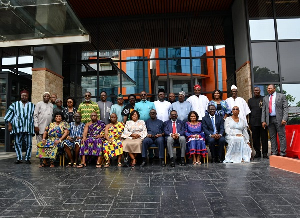
 The briefing took place at the Sheraton Hotel in Accra on Wednesday, April 23, 2026
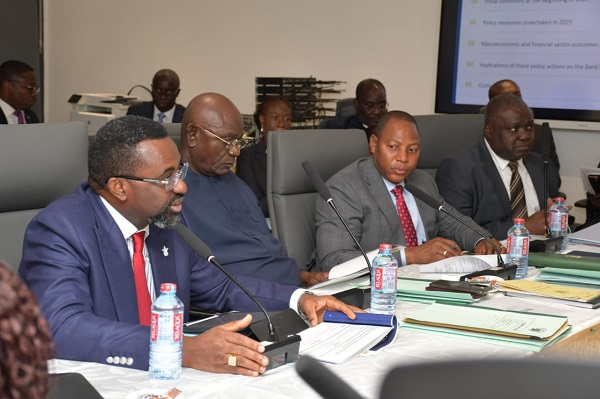
The Governor of the Bank of Ghana, Dr Johnson Pandit Asiama, has briefed the Council of State on the Bank’s monetary operations for 2025, key policy decisions, and the resulting financial performance.
The briefing took place at the Sheraton Hotel in Accra on Wednesday, April 23, 2026, and focused on macroeconomic conditions, policy responses, and the outlook for 2026.
According to the Governor, Ghana entered 2025 under difficult economic conditions.
Ethiopia to build Africa's largest airport in $12.5 billion project
“Ghana entered 2025 with inflation above 23 percent, a weakened cedi, and reserves covering four months of imports,” he said.
He explained that the Bank responded with aggressive tightening of monetary policy, liquidity absorption through open market operations, and efforts to rebuild external buffers through gold programmes and foreign exchange reforms.
On the results achieved, Dr Asiama said inflation has declined steadily, noting that “inflation has fallen to 3.2 percent as of March 2026, the fifteenth consecutive monthly decline.”
He also disclosed that foreign reserves have risen significantly, adding that “reserves have reached a historic high of US$14.5 billion,” while the cedi “appreciated by approximately 41 percent in 2025.”
He further stated that the economy recorded “GDP growth of 6.0 percent,” with the banking sector now stronger and better capitalised.
On the Bank’s financial position, the Governor explained that the 2025 financial results reflect the cost of stabilisation measures, including the impact of the Domestic Debt Exchange Programme (DDEP), open market operations, and foreign exchange valuation effects.
He stressed that these accounting outcomes do not affect the Bank’s mandate or operational capacity.
Looking ahead, he noted that global uncertainties remain a concern, particularly rising oil prices above US$100 per barrel. However, he said Ghana is entering this period with stronger buffers than in previous years.
“The Bank’s focus in 2026 is on credit quality, banking governance, export finance, and sustaining the gains of stabilisation,” he said.
Members of the Council of State commended the presentation and called for stronger public engagement on economic issues.
They urged the Bank to improve communication with the public, particularly young people, with one view noting that “the data is positive and the public deserves to hear it clearly.”
Council members also raised questions on exchange rate policy frameworks, the regulation of virtual assets and digital currencies, and concerns over high import prices affecting households.
The Council encouraged the Bank to simplify economic communication, deepen youth engagement, and help citizens better understand the country’s economic recovery.

Copyright © 1994 - 2026 GhanaWeb. All rights reserved.










